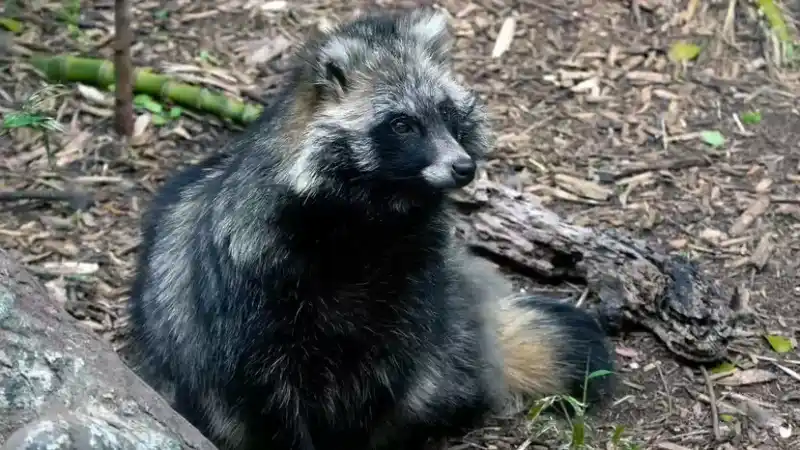
On a farm in Nottinghamshire, England, a "fuzzy monster" that appeared at dawn was mistaken for a hybrid of a raccoon and a dog. In fact, it is a raccoon dog (scientific name: *Nyctereutes procyonoides *), also known as a raccoon dog , tanuki , or raccoon dog , and in Japanese, it is often called a *tanuki* . While they resemble raccoons in appearance and ecological niche, they belong to the Canidae family genetically and morphologically , sharing a lineage with dogs and foxes, and are not related to raccoons.
Species identity and morphological identification
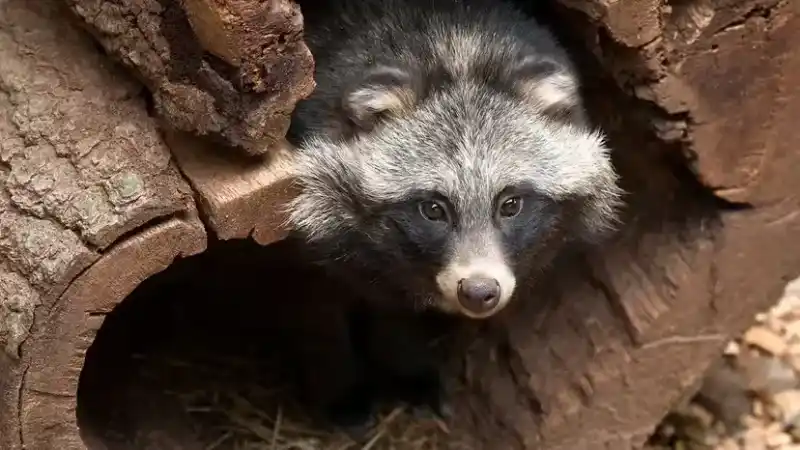
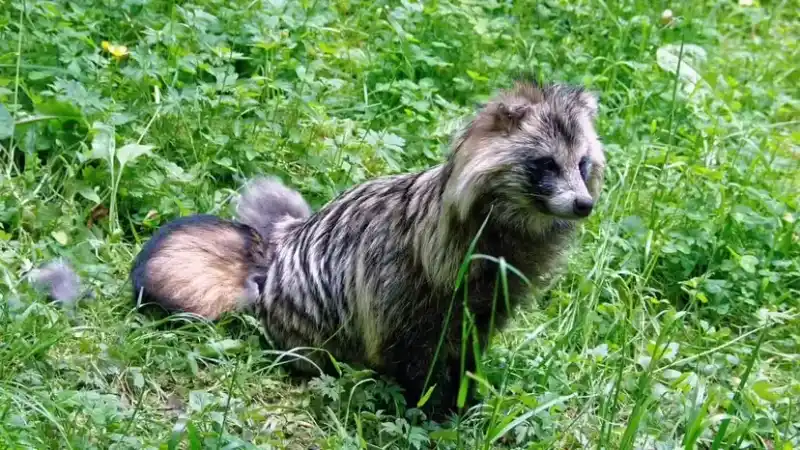
The raccoon dog is a rare " mask-faced " type of canine: a black "mask" around the eyes, long cheek hair, short, rounded ears, and a relatively short muzzle. It measures approximately 45–90 cm in body length, with a tail length of 15–20 cm , and weighs between 3.5–10 kg . Coat color ranges from yellowish-grey to reddish-brown, with black commonly found on the shoulders, limbs, and tail tip. Compared to foxes and dogs, they have shorter limbs, a more "rounded" body , and a low-slung gait. In their native habitat, they grow an extremely thick undercoat and guard hairs during winter, significantly increasing their weight in preparation for the cold and a "sluggish period" (see below).
Key points for quickly identifying easily confused species (text version) : Compared to raccoons , raccoon dogs have no obvious rings on their tails and their claws cannot grasp as skillfully as raccoons ; compared to red foxes/silver foxes , raccoon dogs have rounder ears, shorter legs, and bushier cheek mane ; compared to domestic dogs , raccoon dogs have flatter faces, fixed eye patch patterns , and extreme seasonal molting.
Native distribution, dispersal and habitat selection
The raccoon dog is native to East and Northeast Asia (China, the Korean Peninsula, Japan, the Russian Far East, etc.), and prefers woodland-water complex landscapes: broad-leaved forests, mixed coniferous and broad-leaved forests, reed wetlands, coastal shrublands, and agroforestry transition zones. Introduced to Eastern and Northern Europe in the 20th century for fur farming , some escaped individuals established wild populations in Europe. It is now listed as an invasive species and subject to control measures in many countries. They are highly adaptable to human landscapes, finding habitats in urban-rural fringe areas, urban green spaces, riverbanks, and embankments, but typically still rely on near-water shrublands and forest edges for concealment and raising young.
Behavioral ecology and the "torpor" period
Raccoon dogs are primarily nocturnal , hiding during the day and active at night foraging. They are a rare example of seasonal "sluggishness" in the canine family: in high-latitude or frigid regions, they enter a sluggish state during winter, lowering their metabolism and body temperature , reducing activity, and relying on their autumn fat reserves to survive the cold and food scarcity . Unlike true hibernation, they may still briefly awaken to defecate or eat small amounts during this period of sluggishness. The degree of sluggishness is related to the effect of weight gain during the autumn hyperphagia, the severity of the seasonal climate, and the individual's physical condition. Captive individuals in temperate regions also exhibit varying degrees of seasonal "laziness" and fluctuations in appetite.
Diet and Predation Strategies
Raccoon dogs are broad-spectrum omnivorous/opportunistic foragers . Their animal diet includes frogs, fish, bird eggs and chicks, small rodents, insects, worms, and road dead or injured animals; their plant diet includes various berries, nuts, grains, and fallen fruit . When near human settlements, they may rummage through garbage cans or scavenge for road dead carcasses . In zoos and other artificial environments, they are often provided with pelleted food, cooked eggs, small amounts of fish/meat, and fruits and vegetables . Keepers stimulate their natural foraging behaviors such as sniffing, digging, and tearing by scattering food, providing sniffing toys, and using chewable/dragable enrichment props , thus preventing boredom and obesity caused by monotony.
Reproduction and Social Structure
In the wild, raccoon dogs primarily reproduce through monogamy , with both partners cooperating in foraging and caring for their offspring. The estrus cycle typically occurs in early spring , with a gestation period of about 9 weeks , and litters usually consist of 4–8 pups (averaging about 6). After birth, the pups are cared for by both parents; the high level of male involvement is uncommon among canines. Their lifespan in the wild is usually 8–10 years ; in captivity with good care, it can be even longer. Outside of the breeding season, adults have lower social needs ; if persistent avoidance or conflict occurs between individuals, segregated housing is a common management strategy.
Legal status and whether or not a pet can be kept.
In several European countries and parts of the United States, raccoon dogs are listed as invasive alien species or restricted animals , and private ownership or trade is illegal . Even if regulations permit, they are not recommended from an animal welfare and human health and safety perspective: raccoon dogs are wary and shy, have a strong odor, their diet contains raw meat, they require complex environments and enrichment , and they pose a potential risk of zoonotic diseases . A home environment is unlikely to meet their behavioral and environmental needs . If you are interested in them, educational exhibits and interactive explanations at reputable zoos/nature education centers are a more suitable way to encounter them.
Key differences from "raccoon/fox/domestic dog"
While resembling raccoons in appearance, they are actually phylogenetically distant . Compared to foxes , raccoon dogs are shorter and rounder, rely more on concealed vegetation and near-water environments, and exhibit more pronounced seasonal lethargy . Compared to domestic dogs , they are undomesticated , have limited trainability , rely more on olfactory-auditory-terrain memory for environmental utilization, have weaker social motivation , and exhibit far greater seasonal coat changes and energetic rhythms than domestic dogs.
Human-Wildlife Coexistence and Safety Reminders
In Eastern and Northern Europe, the overlap between raccoon dogs and human activity areas has increased, occasionally leading to minor skirmishes such as rummaging through garbage cans or wandering into yards . If you encounter one in the wild or in your community, please keep your distance and do not feed it . Properly sealing away kitchen waste and garbage , and managing poultry and pet food, can significantly reduce the probability of contact. If you find an individual that appears injured or sick , contact your local wildlife rescue/management agency .
Cultural Imagery and Popular Misconceptions
In Japan, Tanuki is a highly recognizable folk and popular culture symbol , appearing in everything from classical literature and ukiyo-e prints to modern anime and commercial lucky charms. It's important to distinguish that the "changing tanuki/lucky tanuki" in folklore is a cultural symbol and does not represent the personality and behavior of a real animal . Real raccoon dogs are not friendly, can be defensive, and require professional care ; "looks like a pet" does not mean "suitable to be a pet."
Raccoon Dogs at the Zoo: A Glimpse into Care Tips
Standardized enclosures typically provide raccoon dogs with multi-layered hiding places, crawlable bushes/logs/haystacks, water features , and scent trails ; extend their foraging time through methods such as individual food distribution, scent-based dragging, and food concealment ; adjust their energy and coat care during seasonal changes ; and dynamically assess whether to keep them in the same group or separate them based on individual relationships and seasonal behavioral differences in community management . Professional teams not only ensure animal welfare but also help the public understand the balance between "wildness, welfare, and human-animal coexistence" through educational explanations .
Quick Q&A (Text Version)
Is it a dog or a raccoon?
It is a canid , closely related to dogs and foxes; it resembles raccoons in appearance but is not related to them .
Do they hibernate?
It is not a strict hibernation, but rather a seasonal torpor , with decreased metabolism and activity, but it can be awake and go out for short periods.
What to eat?
Broad-spectrum omnivorous : small vertebrates, insects, mollusks, berries and fallen fruit; will scavenge for garbage or roadkill remains when near human areas.
Is it okay to keep it?
It is illegal to keep them as pets in many places; it is recommended that they be trained and observed in a formal institution .
Why was it labeled an "invasion" in Europe?
Early introduction of fur-producing animals led to their escape and reproduction; their strong adaptability and broad predatory range put pressure on local organisms and disease ecosystems, thus requiring their inclusion in regulatory controls.