Cichlids are fish belonging to the family Cichlidae, also known as the cichlid family or cichlid family. They belong to the order Perciformes and comprise approximately 200 genera and over 2,000 species. Most are freshwater fish and are widely distributed in nature, including the Americas (especially Texas and areas south of it in the United States), Africa, the Middle East in Asia, and India. These fish are named "ciichlids" because of their unique parental care behavior.
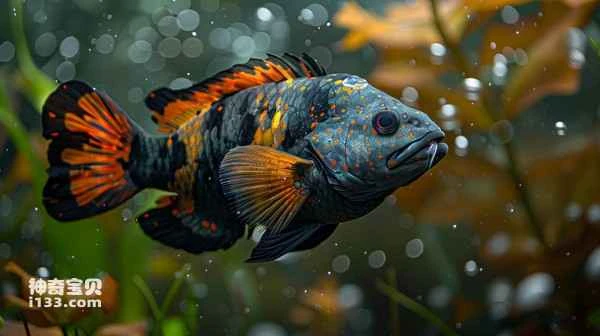
Astronotus ocellatus
Cichlids are popular in home aquariums and are often kept as freshwater ornamental fish. Today, we'll introduce ten of the world's most fascinating cichlid species; let's take a look at their charm.
1. Discus fish
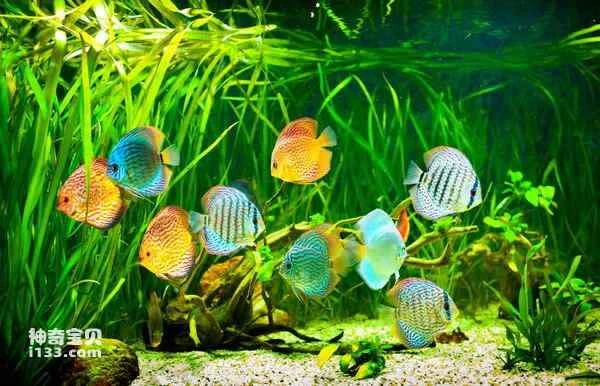
Discus fish are widely considered one of the most striking species among all the fascinating cichlids. This magical creature displays a stunning appearance, with its body displaying vibrant blue, deep green, or even brownish-red hues, and is covered with eight equally spaced reddish-brown horizontal stripes along a distribution area from the gill cover to the caudal peduncle.
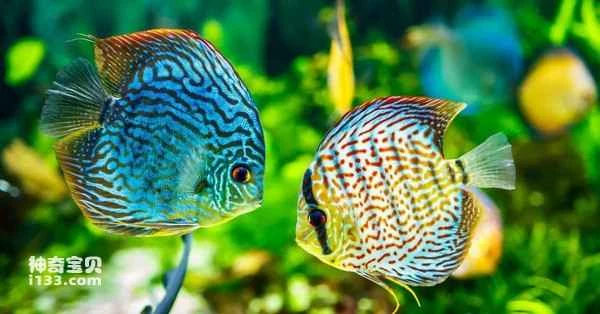
The colors of discus fish change with the light. In dim light, their bodies appear more subdued; while in bright light, their colors become more vibrant and colorful, their entire bodies covered in magnificent and rich stripes. From a distance, their head, body, and fins are difficult to distinguish, resembling a discus on a sports field, hence the name "discus." These amazing creatures, with their rich and vibrant patterns and colors, are highly sought after by fish enthusiasts and are hailed as the "Emperor of Tropical Ornamental Fish."
2. Black Cloud Fish
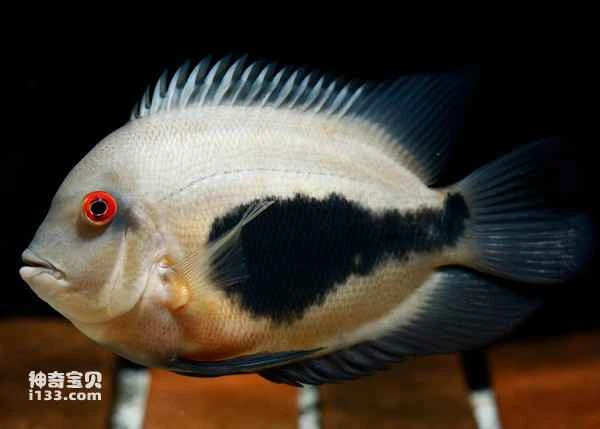
Of all the cichlids, my personal favorite is the Black Cloud Cichlid. The Black Cloud Cichlid has a flat, oval body and is a type of fish that becomes more captivating as it grows. While small Black Cloud Cichlids may not seem particularly striking, their appearance begins to change once they reach about 10 centimeters in length. Their body color gradually turns lemon yellow, black spots appear in the center of their body, the area around their eyes becomes reddish, and eventually, their entire body takes on a near-dark blue base color. Male Black Cloud Cichlids have more vibrant colors than females, are slightly larger, and have longer dorsal and anal fins, while females exhibit a swollen abdomen.
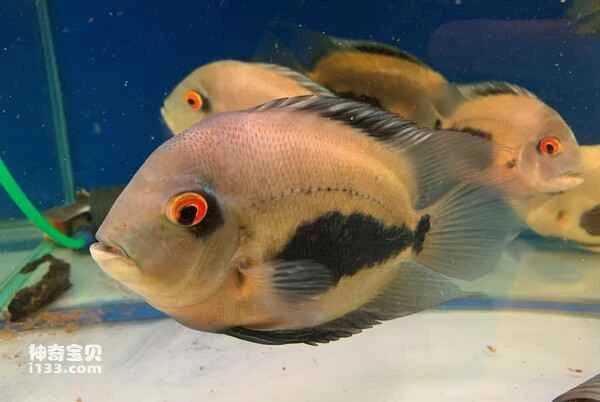
However, the breeding process of the Black Cloud Fish is relatively difficult, which is one of the reasons for its high price. Nevertheless, the Black Cloud Fish remains highly popular due to its unique appearance and characteristics.
3. White-spotted Satan's Bass
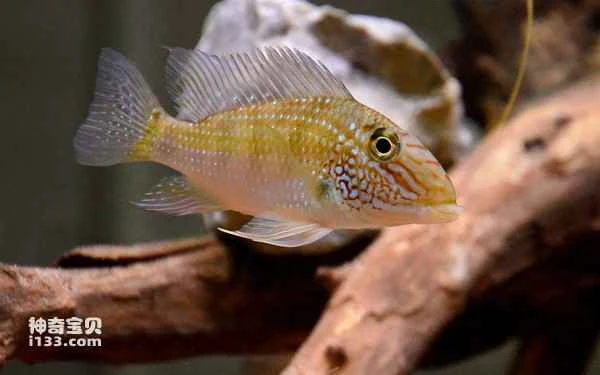
The white-spotted Satan's bass, also known as the Yellow Pearl Jewel cichlid, is a highly regarded member of the South American cichlid family. It typically inhabits tropical freshwater rivers with water temperatures between 27 and 30 degrees Celsius, and generally reaches a length of about 15 centimeters. This fish is named for the bright spots on its cheeks and gill covers, a characteristic that gives it the name "Yellow Pearl Jewel." Furthermore, its snout is covered with horizontal, wavy lines, and its dorsal fin has at least two bright eye spots along its edge.
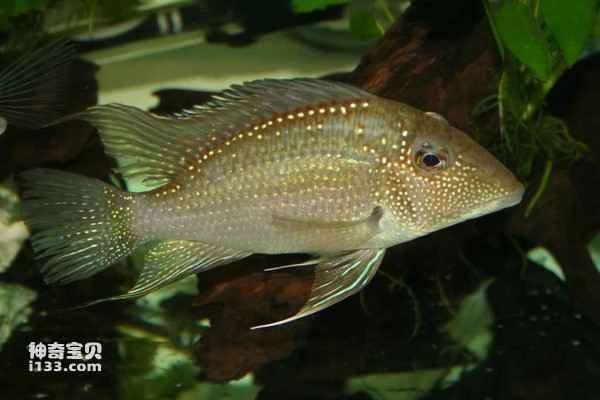
However, the white-spotted Satanic bass can be aggressive, especially during the breeding season, when males may attack females. Since this fish mouthbroods its eggs, attacks by the male can sometimes ruin the breeding process; therefore, it is best to keep the female alone to increase the chances of successful spawning.
4. Rainbow Pineapple
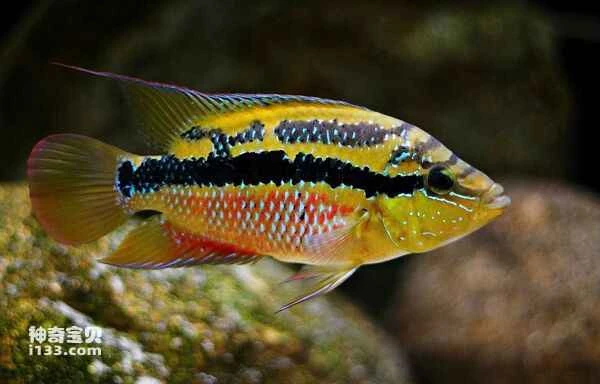
The Rainbow Pineapple is widely recognized as one of the most ornamental cichlids. It often exhibits maturity even at a relatively small size, with males reaching about 15 cm and females about 10 cm. The base color of this fish is typically a bright yellow, but once fully mature, the females are often more vibrant and captivating than the males, frequently displaying a highly translucent yellow hue.
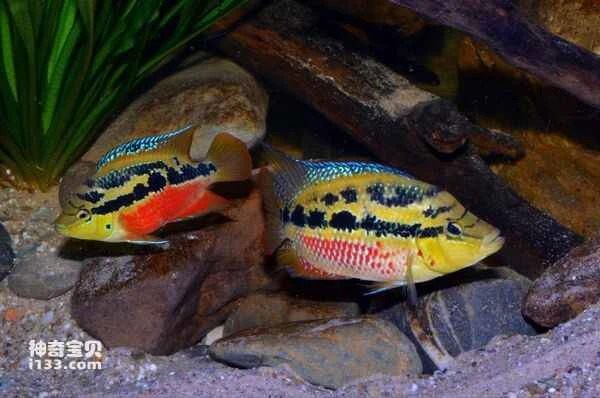
They may have a black spot on their gills or irregular black patches on their dorsal fin. Males typically have a longer anal fin and their entire body is covered in beautiful shimmering scales, an appearance that attracts many cichlid enthusiasts, thus earning them a reputation as show fish or excellent pets.
5. Jade-faced Crown
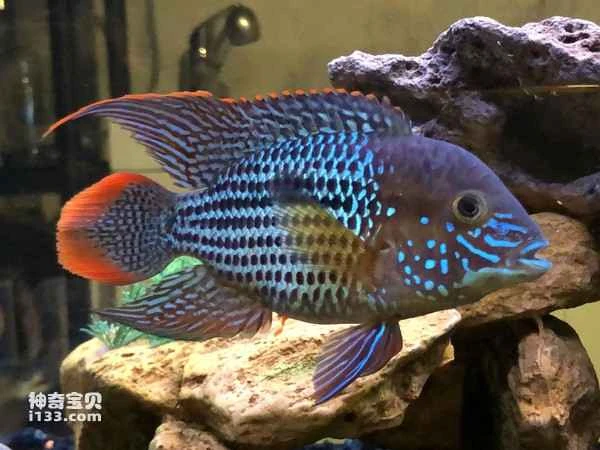
Which South American cichlid is the most captivating? The Jade Crown Cichlid is also quite popular. Originating from the Amazon River in South America, adults reach about 25 cm in length. They are oval-shaped, with a metallic blue body, while their dorsal, anal, and caudal fins are edged with vibrant red, creating a striking contrast. Males have a dark red fleshy growth on the top of their head, resembling a crowned ruler, conveying a visual effect of longevity and prosperity.
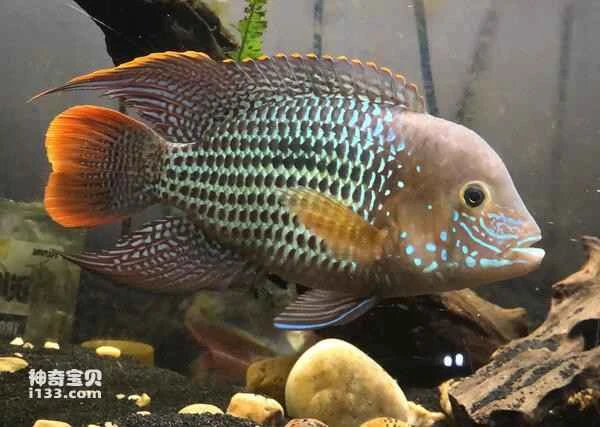
Tip: Crown fish are quite aggressive, so it is not recommended to keep multiple males together to avoid fighting and injury, which would damage their ornamental value.
6. Purple-red fire mouth

The Red-mouthed Cichlid is also a highly prized species among South American cichlids, renowned for its ever-changing colors. With proper care, its body will display a vibrant array of hues, and its forehead will swell, showcasing exceptional ornamental value. Most Flowerhorn cichlids cannot compare. However, it's important to note that improper care will cause it to lose its unique characteristics.

Furthermore, the Purple Firemouth Cichlid is extremely strong and can uproot aquarium decorations; it also eats aquatic plants, making it unsuitable for planted aquariums. As one of the parent species for breeding Blood Parrot Cichlids, it is not commonly found in the market, but it is highly sought after in fish farms.
7. Golden Pineapple
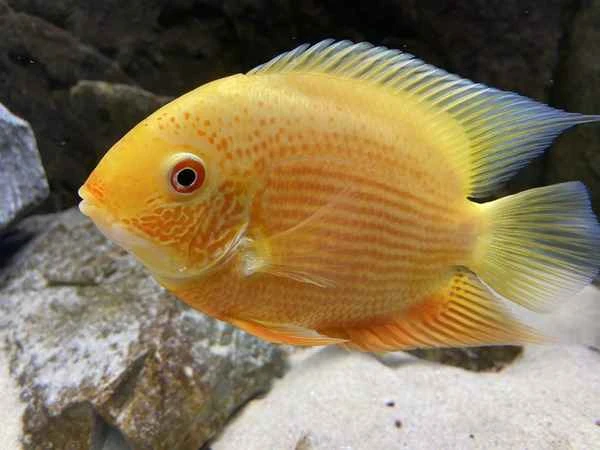
The Golden Pineapple is another popular American sea bream, reaching 18-20 cm in length. They have an oval body, a golden-yellow color, and red markings on their heads. They have large eyes and small mouths, with golden-red irises. Juveniles are yellowish-white and rather unremarkable, but as they grow, they gradually develop a golden-yellow body with red spots and markings, making them very attractive and beloved by many fish enthusiasts.
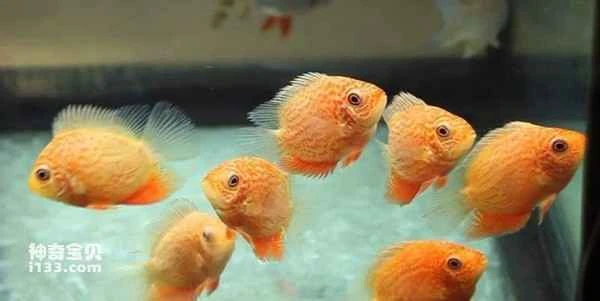
This fish is usually gentle and quiet, but it can become irritable and aggressive during mating season or when extremely hungry.
8. Sapphire Fish

The Sapphire Cichlid, also known as the Blue Jade Cichlid or Blue-mouthed Phoenix, is a cichlid native to Central America. It typically grows to 15-20 cm in length, with a laterally compressed, oval body, a triangular head, and a slightly robust snout. It has a short anal fin near the back of the dorsal fin, and some hard spines in front, while the pelvic fins are located on the chest. The Sapphire Cichlid has an extremely vibrant coloration, initially displaying a cobalt blue base color covered with bright blue spots, and pale lips. As it matures, its body color changes to blue-green, with large patches of silvery-white spots covering its entire body, while the lips remain pale.

This fish is lively and agile, and likes to follow other fish that are shoveling in the sand to steal food. It can be kept with other fish and is a popular and highly valued ornamental fish.
9. Tulip
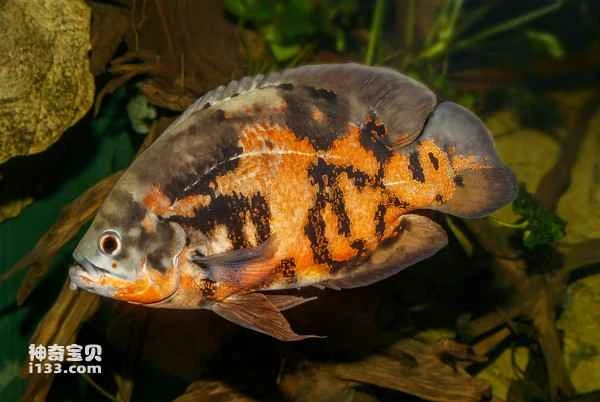
The spotted cichlid, also known as the tulle cichlid, piglet cichlid, or tail cichlid, typically reaches a length of about 35 cm when fully grown. It originates from the Amazon River basin in Guyana, Venezuela, and Brazil in South America. This fish has a robust, oval-shaped body that is thick, broad, and tall, slightly flattened laterally, and has a large mouth. Its body color is usually black, yellowish-brown, or bluish-black, with irregular orange-yellow patches and red stripes covering its sides, resembling a vibrant map.
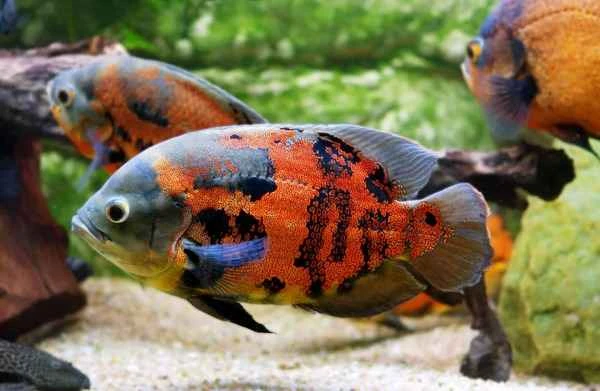
Mature fish will have large black spots with red and yellow edges at the end of their tails, like a pair of bright and piercing eyes. There is a circular black spot above the base of the tail fin, surrounded by an orange-red halo. When swimming, it is dazzling, like stars in the summer night, hence the name "tail star fish".
10. Bolivia Phoenix
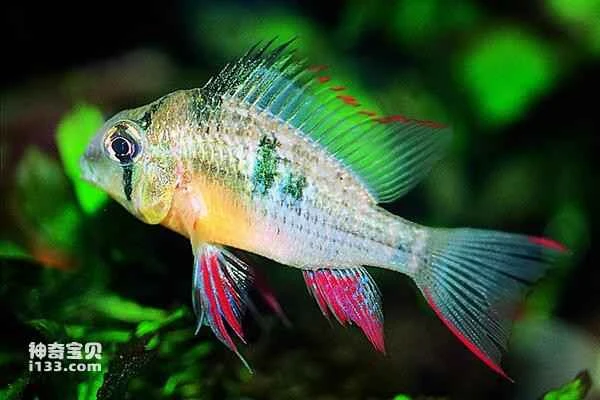
The Bolivian Phoenix, commonly known as the Miniature Butterfly Cichlid, originates from the region from dos Santos to northern Trinidad and Tobago in Bolivia. It is the largest of the South American cichlids. Adults reach about 7 centimeters in length, with a striking bright yellow body, irregular black spots along the edges of their scales, and red edges on their fins. The entire body and fins are covered with blue stripes, and both males and females display exceptionally vibrant colors.
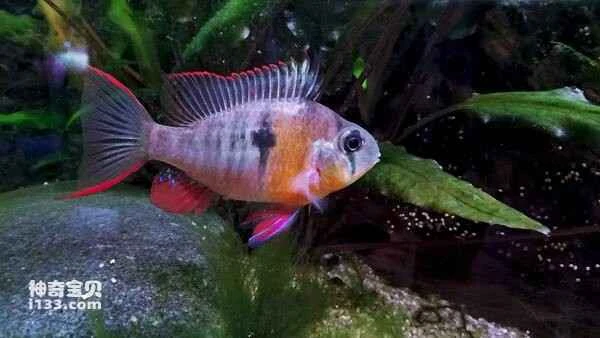
What is particularly striking are their beautiful red tails, which are shaped like graceful lyre strings. It is difficult to distinguish between males and females; only when the female is in heat or fighting will her abdomen turn pink, making her captivating and unique.