Birdsong is not only melodious but also serves as a "language" for communication among birds. Most songs occur during the breeding season and the early morning "morning song" period, primarily serving functions such as courtship, territorial defense, contact with mates, and early warning. Generally, songs are longer, more rhythmic, and melodious than calls , and are mostly sung by males during the breeding season; calls are shorter and used for communication and alerting. Below is a list of 13 classic bird singers, along with their scientific names, distribution, and practical tips on how to listen for and identify them.

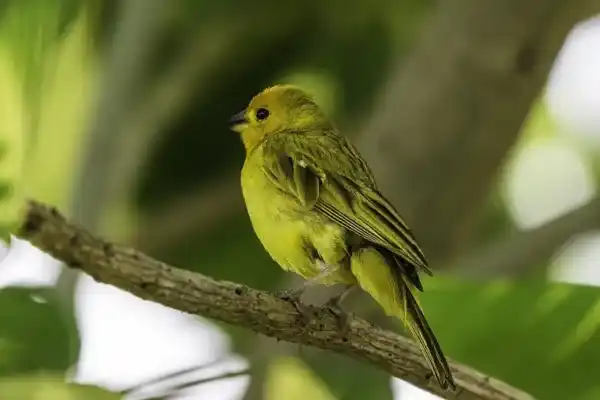
1) Domestic canary ( Serinus canaria domestica )
Distribution and origin : Canaries, native to the Canary Islands, have been domesticated and widely kept as pets. Wild populations also exist in the Atlantic islands and along the western coast of Iberia.
Physical characteristics : Small in size, males are mostly bright yellow or yellowish-green.
Song characteristics : continuous trills and warbles, rich in layers and clear in tone. The song will significantly weaken or cease during molting and when the bird is in poor health.
Key identification points : Most active in the early morning; the song lasts a long time and has dense notes, which is the key to distinguishing it from the "chirping" of sparrows.
2) Nightingale ( Luscinia megarhynchos )
Distribution : From Western Europe to West Asia and North Africa, especially common in the Mediterranean basin.
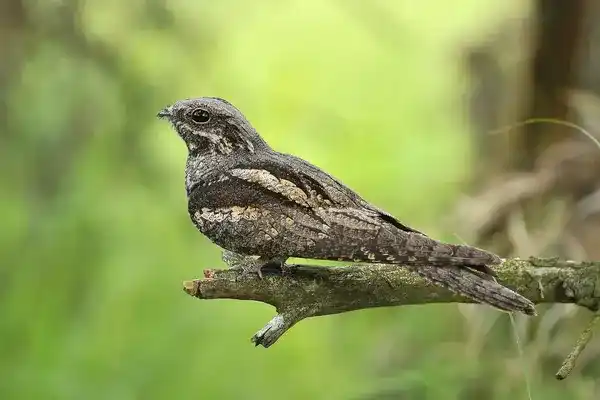
Quick description of appearance : brownish-brown, inconspicuous appearance, often hidden in dense bushes.
Characteristics of its song : It is known as the "master of nocturnes". It has a wide range and a mellow tone, including long trills, whistles and prominent strong beats; it is most beautiful at night and at dawn .
Key identification points : first listen to the sound, then look for the shadow; continuous and highly varied musical phrases are the hallmarks.
3) Red-fronted Goldfinch / Red-fronted Goldenfinch ( Caruelis carduelis )
Distribution : Europe, North Africa and West Asia, commonly found in gardens, farmland and open thickets.
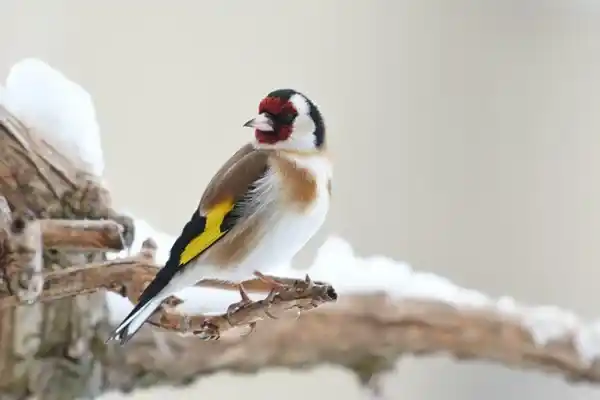
Physical characteristics : Red face, black and white head stripes, and wings with striking yellow wing spots.
Characteristics of its song : alternating between crisp, short phrases and delicate rolling notes, it is especially common to sing while flying.
Key identification points : The flight pattern is wave-like, and it emits sounds simultaneously as it rises and falls.
4) Domestic sparrow ( Passer domesticus )
Distribution : It is found in almost every city and town settlement around the world.
Physical characteristics : The male has white cheeks and a black spot on its throat, while the female is paler.
Song characteristics : mainly short "cheep-cheep" calls; during the breeding season, the male bird will also sing in a "string-like" pattern from a high place.
Key identification points : They are often found clustered on the eaves of houses, power lines, and bushes; their voiceprints are simple and rhythmic.

5) Blackbird/Blackbird ( Turdus merula )
Distribution : Green spaces in cities in Europe, West Asia, North Africa and parts of Asia.
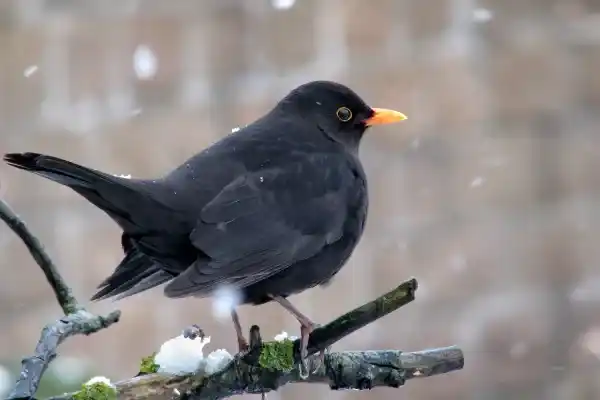
Physical characteristics : The male is entirely black with an orange-yellow beak and eye ring; the female is brown.
Sound characteristics : The musical phrases are warm and smooth like those of a flute , and often end with a whistling upward note; it is most expressive at dusk and dawn.
Key identifying features : They often perform on rooftops or treetops, creating a strong sense of improvisation in segments.
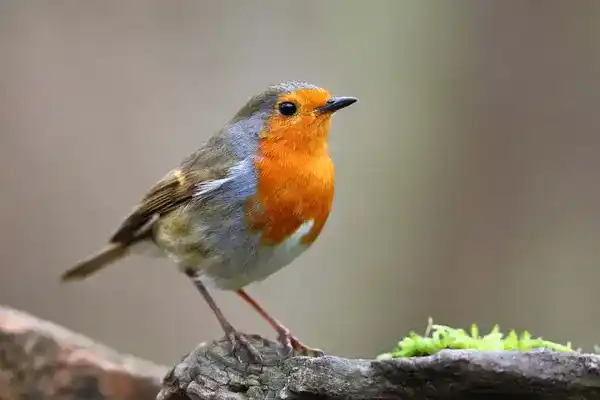
6) European Robin ( Erithacus rubecula )
Distribution : Found almost throughout Europe to West Asia and North Africa; a frequent visitor to parks and courtyards.
Quick description of appearance : The orange-red chest is easily recognizable, and the body is small with a short tail.
Song characteristics : Delicate, silvery , long phrases with a crisp, pearly quality; it will still sing softly outside of the breeding season.
Key identification points : They often sing low at the edge of bushes, and occasionally land to peck at small invertebrates.
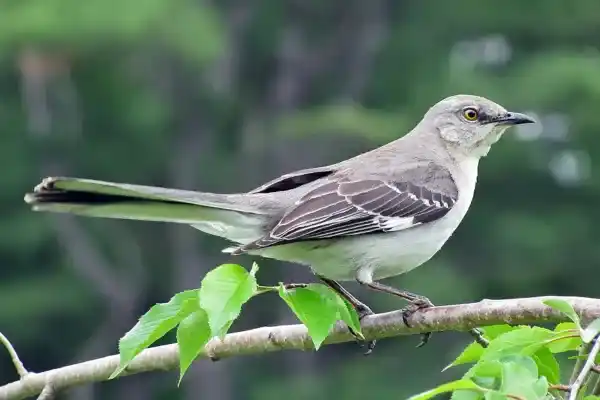
7) Northern Mockingbird ( Mimus polyglottos )
Distribution : North America, Central America, and the Caribbean.
Physical characteristics : gray back, white belly, and prominent white spots on the wings.
Characteristics of its calls : It is famous for its "mimicry ," capable of imitating various bird calls, insect sounds, and even mechanical sounds; it often repeats the same short phrase 2-3 times in a row.
Key identification points : They perform for extended periods while perched on high branches or rooftops, and possess a vast repertoire of songs with diverse musical styles.
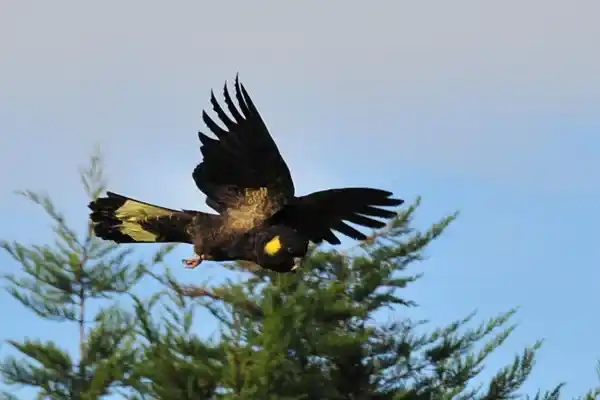
8) Yellow-tailed Black Cockatoo ( Calyptorhynchus funereus )
Distribution : Southeastern Australia.
Physical characteristics : A large black cockatoo with a prominent yellow band at the tip of its tail.
Song characteristics : loud, sharp, hissing calls and long whistles, with strong penetrating power, often echoing when flying over the forest canopy.
Key identification points : Group activity, feeding on woody seeds and pine nuts; rough rather than delicate melodies.
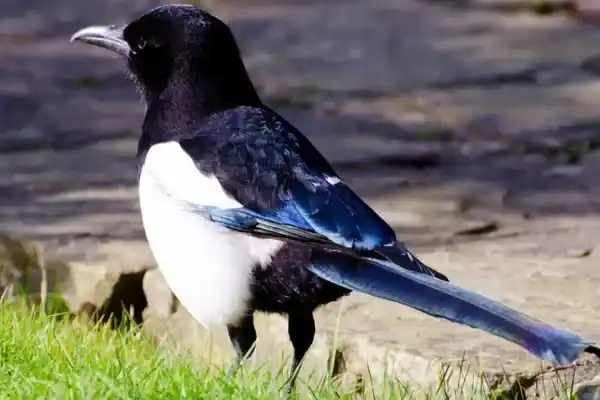
9) Magpie ( Pica pica )
Distribution : From North Africa and Europe to Central Asia and even many parts of East Asia.
Physical characteristics : Black and white stripes, with the longest tail and a metallic green sheen.
Characteristics of its calls : mostly a continuous "clack-clack-clack" sound and hoarse noises, but it can also produce shorter singing segments.
Key identification points : Strong territoriality; the calls are often related to warning and social behaviors.
10) Cuckoo/Cuculus canorus
Distribution : Widely distributed across Eurasia, migrating to Africa for the winter.
Physical characteristics : Gray upper body, horizontally striped abdomen, resembling a small eagle.
Song characteristics : The male bird has a distinctive "cuck-oo" sound that is repeated repeatedly with a steady rhythm; when interacting with the female bird, the rhythm speeds up and is mixed with rough noises.
Key identification points : It often sings in open forest edges; its reproduction is known for its "nest parasitism".

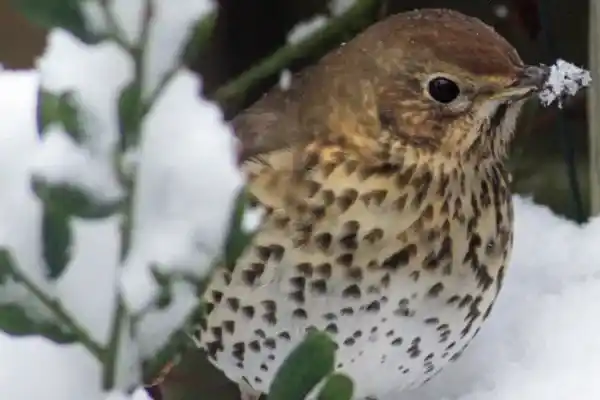
11) Thrush/Singing Thrush ( Turdus philomelos )
Distribution : Woodlands, orchards and wetland edges in Europe and West Asia.
Physical characteristics : Brown back, milky white belly covered with dark round spots.
Sound characteristics : Repetition of musical phrases is a key feature - often 2-4 musical patterns are repeated continuously before the next phrase is introduced; the overall sound is bright and elastic.
Key identification points : Especially common along the Mediterranean coast in winter; also frequently performed during the day.
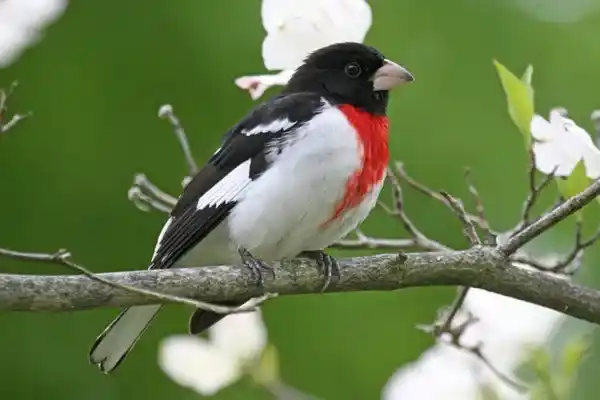
12) Rose-breasted Thick-billed Tannerie / Rose-breasted Bunting ( Pheucticus ludovicianus )
Distribution : Breeds in northern United States and Canada, overwinters in tropical Central America.
Physical characteristics : The male has a strong black and white contrast and a large area of rose-red on its chest; the female has brown markings.
Song characteristics : Both males and females can sing, with lyrical melodies and full notes ; males often sing for long periods of time high in the treetops.
Key identification points : It sings especially actively during migration season; its thick, conical beak is suitable for cracking hard seeds.
13) Pacific Nightingale/Asian Nightingale ( Eudynamys orientalis )
Distribution : South Asia to Southeast Asia, Australia and some islands in the Pacific Ocean.
Physical characteristics : The male is entirely black with red eyes; the female is mottled brown.
Song characteristics : During the breeding season, the male bird continuously emits a long, rising "koo-eeel~" sound and a series of penetrating calls to declare its territory and attract mates.
Key identification points : They belong to the "nest parasite" group, but the young birds usually do not kill the host chicks.

Further exploration: How to more quickly "sound out a bird"
Time : Dawn and dusk are the peak times for singing; nightingales and other "night singers" are more active at night.
Location : Gardens, the edge of bushes, rooftops and treetops are "singing platforms".
Structure : Pay attention to whether there are repeated musical phrases (such as the song thrush), whether it imitates other species (mocking thrush), and whether it uses two fixed notes (cuckoo).
Season : Most species sing most frequently during the breeding season (spring and summer), and their singing weakens during molting or hibernation.
Note: The “singing birds” introduced in this article include typical songbirds that are good at melodies (such as nightingales and song thrushes), as well as species that are known for their high-pitched calls but also have “singing functions” in behavior (such as yellow-tailed black cockatoos and magpies), so that readers can fully identify and appreciate them in both wild and urban environments.
bibliography
Spanish Bird Guide, SEO Bird/Life.
Editorial Team (December 5, 2013): The Amazing Uses of Birdsong. BBC News Online Magazine: Mundo.
Lindner, L. (1996) The Canary: Observation and Cognition. Hispano Europea, pp. 15-23.
Arnaiz-Villena, A.; Gómez-Prieto P. and Ruiz de Valle, V. (2009). Systematic Geography of Finch and Sparrow. Nova Science Publishing House, pp. 25-30.