Starfish (Asteroidea, meaning "star-shaped animal") are among the most representative invertebrates in marine ecosystems. More than 1,500 species have been recorded globally, found in almost all ocean depths: from tropical coral reefs to polar seas, from the intertidal zone to deep-sea canyons above 6,000 m . With few natural predators and strong adaptability, many starfish can rapidly establish stable populations in suitable environments.
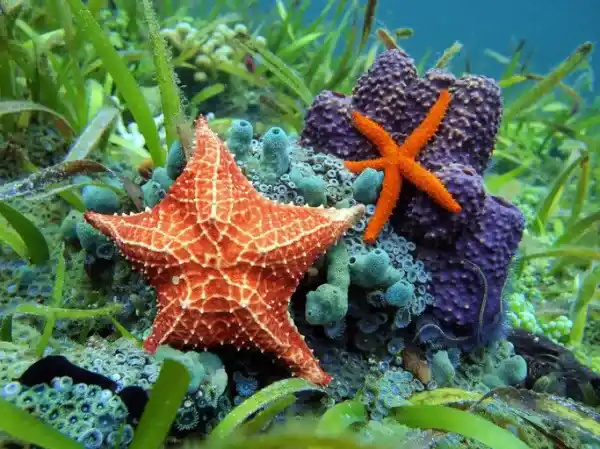
What is a starfish? —Core morphological characteristics
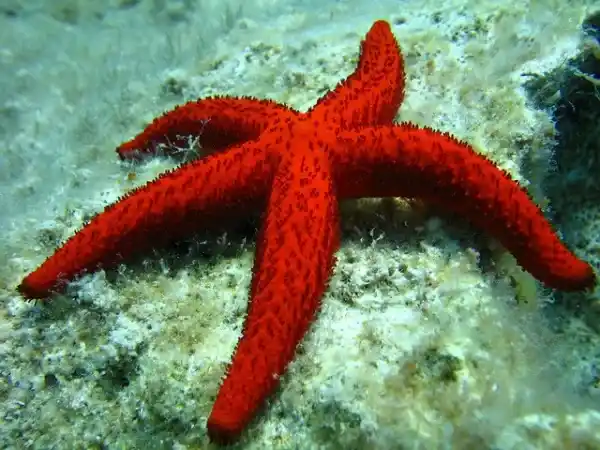
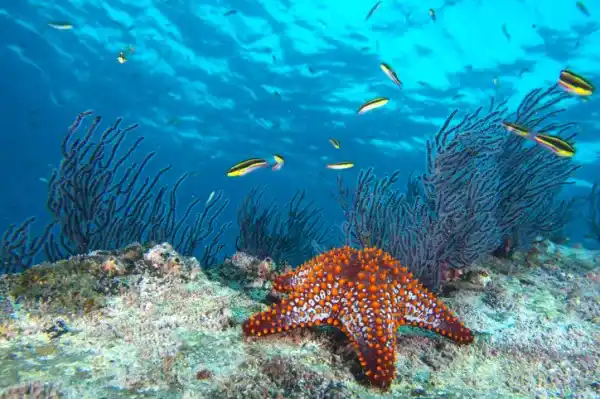
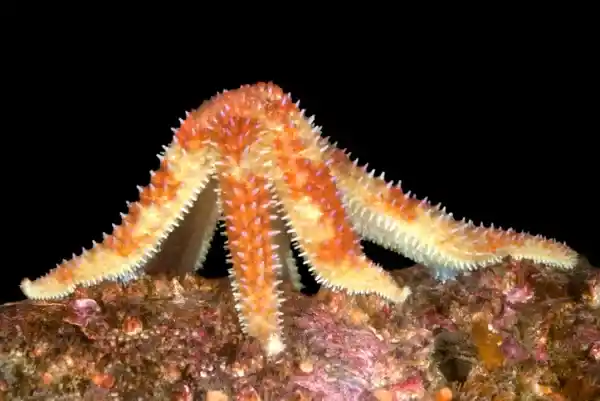
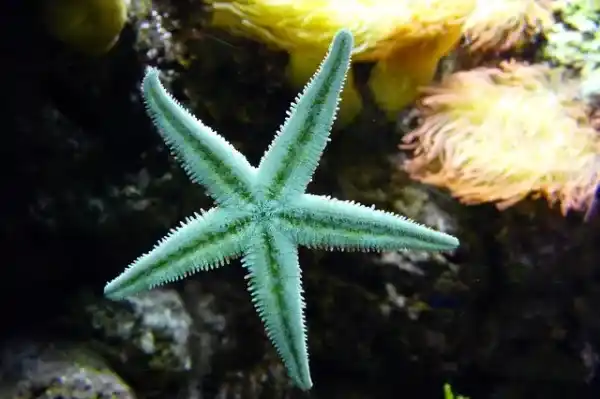
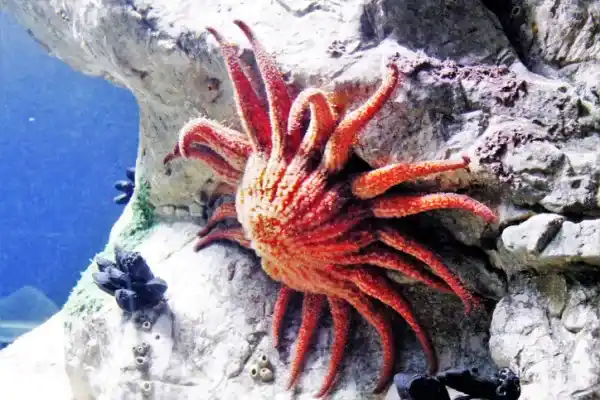
Radial symmetry (primarily five-radial symmetry) : The typical body shape consists of a central pentagonal disc (central disc) and five arms (some species have six–16 or even more). The length and thickness of the arms vary significantly among different species.
It has no brain and no true vascular system : instead, it uses a water vascular system to perform functions such as feeding, breathing, excretion, and movement.
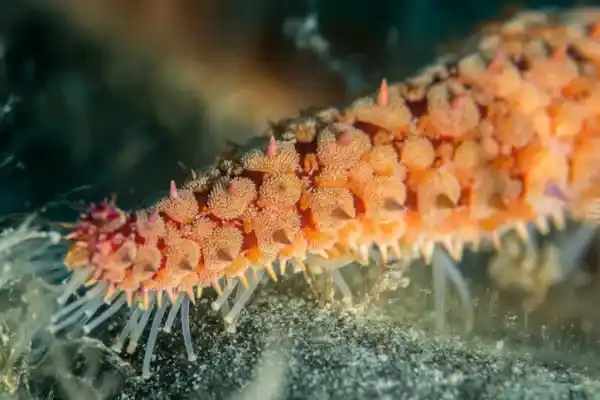
Tough body surface : The skin contains calcium carbonate plates (skin and bone plates), and granules, warts or spines can be seen on the surface; some groups have pedicellariae , which can clean the body surface or assist in hunting and defense.
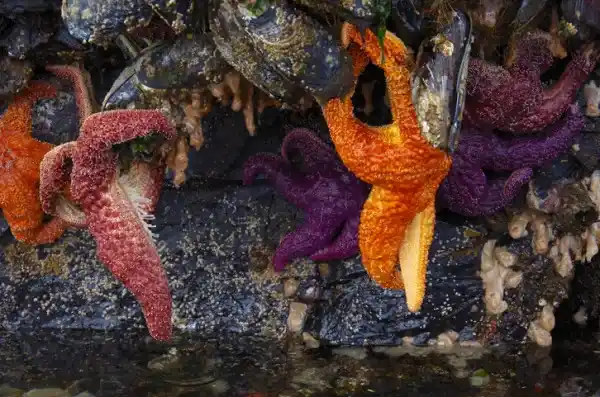
Colorful appearance : Common colors include yellow, orange, and red, but blue, brown, and gray are also available, which can be used for camouflage or alerting.
Breathing method : Seawater enters the water tube system through the **screen plate/mother hole (madreporite, a small hole located on the back)**; gas exchange is completed by the paxillae/papulae and tube feet together, with low energy consumption.
Amazing regenerative ability : severed wrists regenerate from the central disc; most species require the central disc tissue to regenerate completely. A few, such as the " walking wrist " (after detachment) of the genus Linckia , can regenerate a new central disc and the rest of the wrist in reverse.
Growth pattern : Many starfish exhibit amorphous growth (slow growth throughout their lives), and their size is closely related to age, nutrition, and environment.
The taxonomic classification of starfish
Domain : Eukaryota (eukaryotes)
Kingdom : Animalia
Deuterostomia
Phylum : Echinodermata
Eleutherozoa
Class : Asteroidea
Starfish (Asteroidea) are different from **Ophiuroidea (commonly known as "snake tail" or "snake star")**. The central disc and slender arms of the snake tail are clearly distinguishable, and its mode of locomotion and body surface structure also differ from those of starfish; therefore, they should not be confused.
Starfish habitat and diet
Distribution and Habitat
Ocean coverage : It is distributed in the Atlantic, Pacific, and Indian Oceans, as well as the Arctic and Antarctic waters.
From shallow to deep : They can live in intertidal reefs, seagrass beds, coral reefs, and sandy or muddy bottoms, and are also found in the deep sea and abyssal zone (>6,000 m) .
It is highly adaptable to various substrates : it can settle in sandy, muddy, gravelly, coral skeletons and hard substrates.
Diet and feeding strategies
Opportunistic and broad-spectrum : Primarily feeds on benthic invertebrates (bivalves, gastropods, sea urchins, polychaetes, etc.), but can also filter feed on suspended particles/detritus .
External digestion : Many starfish can evert their stomachs into the shell of other shellfish to digest food outside the shell and then recycle the digestive juices and nutrients; they can also digest food in their mouths.
Ecological role : It is both a predator and a scavenger , playing a key role in maintaining benthic community structure and species diversity.
How do starfish reproduce?
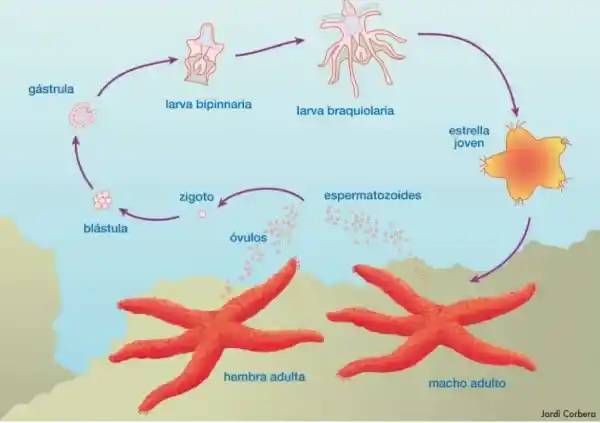
Starfish have a complex life cycle, capable of both sexual and asexual reproduction .
Sexual reproduction
Most are dioecious , but there are also hermaphroditic or hermaphroditic species (depending on the species).
Common in vitro fertilization : Under the trigger of signals such as tides, temperature, and photoperiod, the egg and sperm are released. The fertilized egg develops into a planktonic larva (such as Bipinnaria and Brachiolaria ), undergoes metamorphosis, settles on the bottom, and enters the benthic stage.
Asexual reproduction
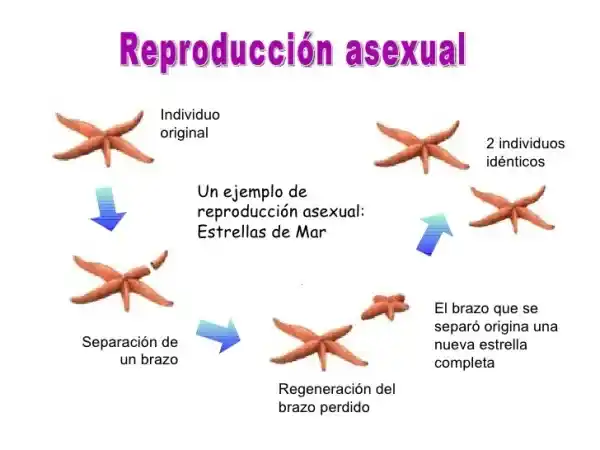
Fission : For example, the Mediterranean species Coscinasterias tenuispina can spontaneously split its central disc into two halves, each regenerating into a complete individual.
Regeneration after fracture : For example, Linckia can regenerate the central disc and the rest of the wrist after a severed wrist; generally, severed wrists (without a central disc) can survive for a short period of time but eventually die due to energy depletion. Linckia is an important exception.
How do starfish move?
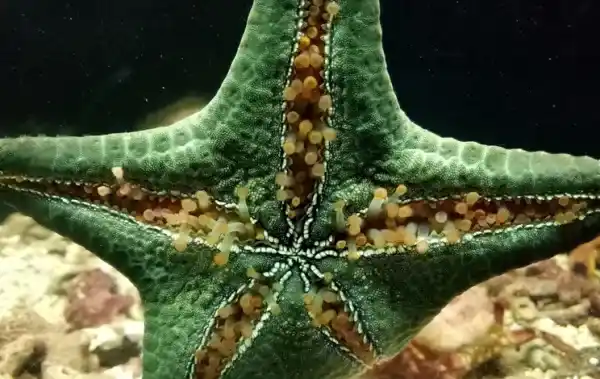
Water pipe system + tube feet : Seawater enters the stone pipe, ring pipe and radial pipe from the mother hole, eventually filling the tube feet . The tube feet have suckers at the ends (most groups) , which enable crawling, climbing and gripping through water pressure and adhesion .
Not fast, but agile : Although slow in movement, it is enough to complete tasks such as hunting, breeding, gathering, avoiding enemies, and migrating to micro-habitats .
Sensory abilities : The body surface is covered with photoreceptor cells and mechanoreceptors , and the wrists often have simple eyespots , which can sense light and darkness and water flow, and help with orientation and movement at night - most starfish are nocturnal .
Main types of starfish (described by "order")
Below are seven common orders within the class Starfish and their representative characteristics; the numbers in parentheses represent the approximate number of known species (which may change with classification revisions).
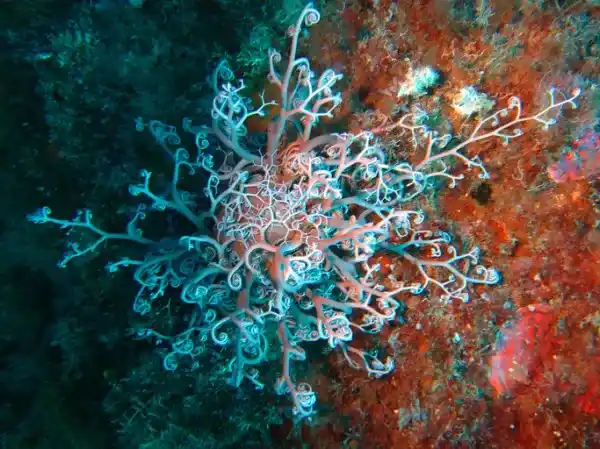
Order Brisingida (approximately 111 species)
Numerous and slender arms ( 6–16 ), commonly found in deep-sea pendulous species, which extend their arms to capture planktonic and suspended particles.Forcipulatida (approximately 269 species)
Their bodies are covered with pincer-like spines (pincer-like organs) used for cleaning, hunting, or defense ; many species common in cold waters belong to this order.Order Notomyotida (approximately 75 species)
Well-developed and flexible wrist muscles facilitate gripping and climbing on complex substrates.Order Paxillosida (approximately 372 species)
They mostly live in soft bottoms (sand/mud) , and their tube feet have no suckers at the end . They move and dive by relying on their spiky structures and adhesion to soft sediments.Spinulosida (approximately 121 species)
Its back is covered with tiny spinules , and its body surface has a "sand-like" texture. It is mostly a small, shallow-sea species.Valvatida (approximately 695 species)
The most species-rich order includes the most familiar " five-armed " starfish, which are diverse in form and widely distributed.Order Velatida (approximately 138 species)
With its wide central disc and thick walls , it is "sturdy" and suitable for cold or deep water environments .
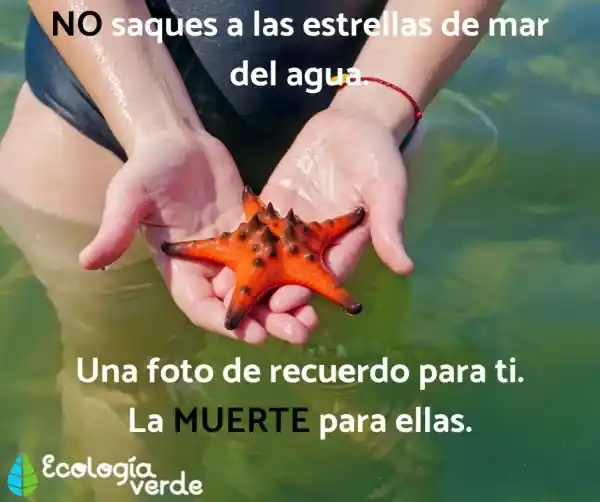
Can we take the starfish out of the water for a photo?
Can't.
Removing a starfish from seawater will rapidly disrupt its osmotic pressure balance and gas exchange , causing it to dehydrate, necrose , and die within a short period of time.
Correct practice : When viewing the items in a tidal pool or shallow water, do not move them, hold them, or expose them to direct sunlight . If you accidentally pick them up, slowly immerse them back in their original position to avoid additional stress and injury to the skin.
One-page summary
Starfish use their duct systems and tube feet to breathe, feed, and move.
They possess strong regenerative abilities , and a few can even regenerate from severed wrists into new individuals.
They reproduce through multiple pathways, including sexual and asexual reproduction. The larvae are planktonic, metamorphose, and then land on the seabed.
They are widely distributed in oceans around the world, from the intertidal zone to the deep sea .
Please appreciate the scenery without disturbing it, and do not handle it out of the water . Let us work together to protect the life of the coastline and tide pool.
bibliography
Calva, LG (2002) Feeding habits of some echinoderms. Part 1: Starfish and snakes. Metropolitan Autonomous University, pp. 59-65.
Mutschke, E. and Mah, C. (2009) Asteroidea. Magellan University, pp. 803-829.
Munar, J. (1984) Symmetry anomalies in the phylum Echinodermata. Cases observed in the waters of Mallorca. Journal of the Balearic Natural History Society, Vol. 28, pp. 59-66.