Birdwatching is a beloved activity for enthusiasts because observing various beautiful birds is both simple and enjoyable. Among the many birdwatching targets, the Golden Oriole ( Oriolus oriolus ) is particularly special. This bird is brightly colored with golden plumage and is highly prized for its beauty, but its wary nature makes it difficult to spot successfully. The Golden Oriole is a quintessential symbol of spring in the Iberian Peninsula. If you would like to learn more about the detailed characteristics, distribution, and diet of this special bird, please continue reading this article.
Basic characteristics of the golden oriole
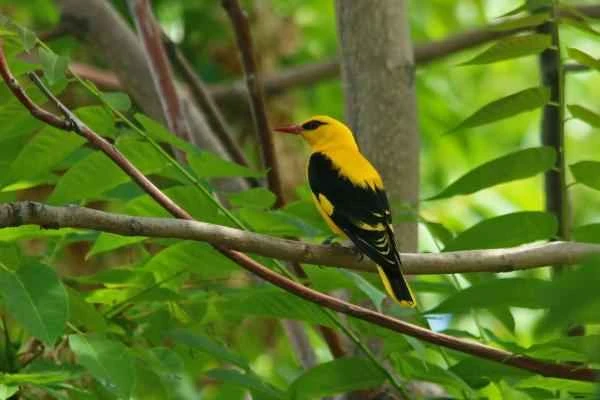
The golden oriole gets its name from its bright yellow plumage; the word means "golden bird" in both Latin and Spanish. It is also known as the Eurasian golden oriole or simply the yellow oriole. Its main characteristics include:
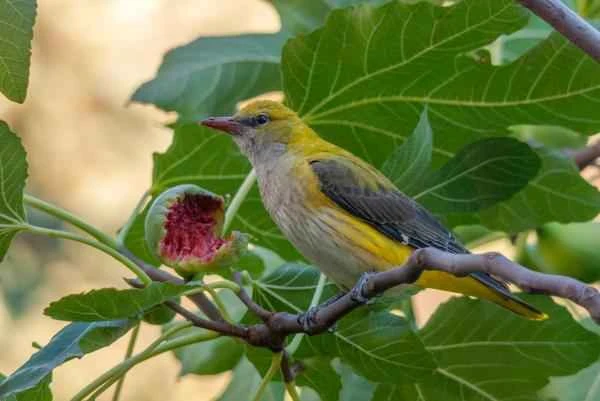
The plumage is vibrant and varied : a ring of black feathers around the eyes makes them appear larger. The wings and tail feathers are black, with slight differences between the sexes. The beak is dark pink.
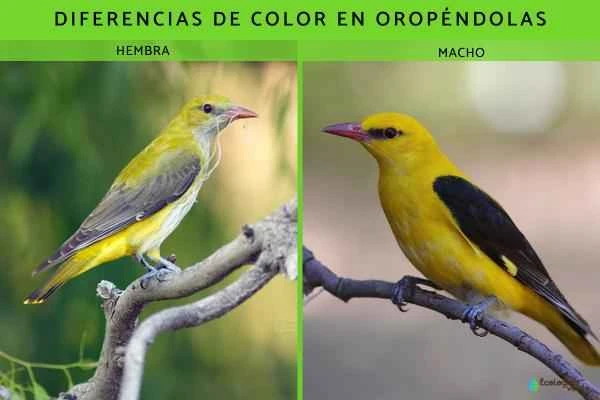
Sexual dimorphism is evident : males are brightly colored with yellow tips on their wing coverts; females are olive-green with a greyish-white belly, lighter-colored eyes, and brown tail feathers and wings. Juveniles resemble females in appearance, with black spots on their chests that gradually disappear with age. These color differences help in determining sex and age.
Distinct molting periods : The bird undergoes three molts—post-breeding, juvenile, and pre-breeding—which help identify its growth stages.
They are elusive and difficult to spot : timid by nature, they usually hide in the bushes. When flying, they alternately fold and flap their wings, gliding in a wave-like motion. Their colors contrast sharply with the green leaves, making them very easy to identify.
Medium size : body length approximately 22 to 25 centimeters.
They are territorial and aggressive , often fighting with other birds over territory.
Unique song : The male bird's song is like a long, resonant flute note, loud and echoing far and wide, accompanied by a rough, hoarse tone. The female bird's song is higher in pitch, and the male bird's song lasts longer.
Social life : The global population is estimated to be between 17 million and 32 million, stable and not listed as an endangered species.
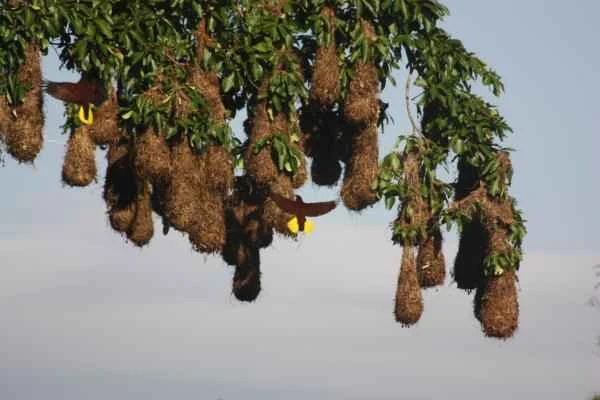
Hanging nesting : The golden oriole has a special nesting method, with its nests hanging on tree branches, unlike most perched bird nests.
Golden Oriole Habitat
The golden oriole is a migratory bird, mainly distributed in Europe and western West Asia during the summer, and migrating to tropical Africa and Asia during the winter. It rarely stops during its migration and prefers to live in:
humid Mediterranean forest
deciduous forest
Forest along the river plain
Swamps and shrublands
They also adapt to artificial vegetation environments, such as gardens, cork oak forests, oak groves and orchards, but usually avoid heavily logged areas and prefer an ecological environment with a mix of dense vegetation and open areas.
Diet of the Golden Oriole
Golden orioles primarily feed on insects and invertebrates, including caterpillars, crickets, flies, spiders, beetles, mollusks, and butterflies. They carefully peck at leaves in search of prey. In addition, golden orioles also eat wild fruits such as blackberries and cherries, which are rich in sugar and provide essential energy for their migration.
Golden Oriole Breeding
The breeding season for golden orioles begins in early April to early May each year. The male arrives at the breeding grounds first, followed by the female to begin courtship. The breeding process includes:
Nest building : The female bird will build a hanging nest at the fork of the branches of the black poplar ( Populus nigra ). The nest is bowl-shaped and woven from twigs, grass stems and bark. It is usually hung about 8 meters above the ground and is often near a water source.
Mating and fertilization : After building the nest, the female mates with the male, and fertilization occurs internally. They are monogamous and are commonly seen in pairs.
Egg laying and incubation : Eggs are laid around June, with a white color and black spots. The incubation period is about 20 days. The mother bird is responsible for incubating and caring for the chicks. Both male and female birds forage together, mainly preying on caterpillars and bees on poplar trees. After the brooding period, the chicks gradually become independent and can fly independently.
With their beautiful appearance, unique habits, and melodious songs, golden orioles are a striking sight in the spring forests. Their protection and habitat maintenance are extremely important for maintaining ecological diversity.
bibliography
Beatty, R., Beer, A., and Deeming, C. (2010). The Book of Nature. Dorling Kindersley, UK.
Young, D. (1999). "Ophiophagus hannah" is available at: https://animaldiversity.org/accounts/Ophiophagus_hannah/
Featherstone, D. (2021). Why are mongooses and snakes enemies? (See: https://www.forestwildlife.org/why-are-mongooses-and-snakes-enemies/)
Global Biodiversity Information (GF) Wild Boar (Sus scrofa) Linnaeus, 1758. Accessible at: https://www.gbif.org/species/113274582