In nature, some animals attract attention for their unique survival skills, and the pufferfish is a prime example. The pufferfish (scientific name: Tetraodontidae family, common genus: Tetraodon) is known for its ability to rapidly inflate into a spherical shape and possesses an extremely deadly neurotoxin. It is not only an "outlier" in the underwater world but also an object of both awe and curiosity for humans. This article will provide a comprehensive understanding of the pufferfish's physical characteristics, toxic mechanisms, habitat, and feeding habits.
Morphological characteristics of pufferfish
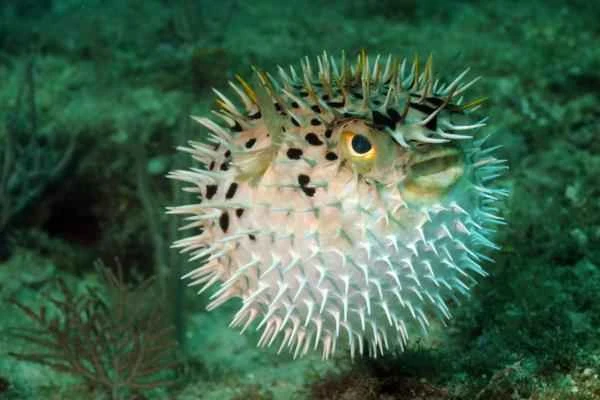
The pufferfish is best known for its ability to inflate itself into a ball when threatened, forming a unique defense mechanism. It inhales large amounts of water or air through its highly flexible stomach, causing its body to swell into a spiky ball, making it difficult for predators to bite. This defense mechanism stems from the pufferfish's slow swimming speed; it relies on its increased size to deter predators.
Besides being able to inflate, pufferfish also have the following characteristics:
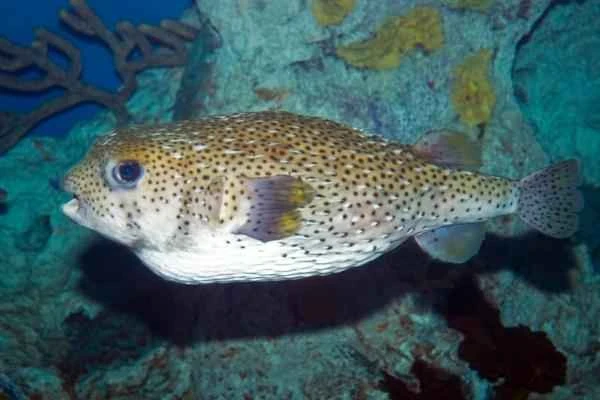
Bright warning colors : Many species have bright blue, yellow and other bright colors to warn predators that they are poisonous; some species have a yellowish-brown or brown surface, which makes them better at camouflage.
Skin with spines : Most pufferfish develop hard spines on their skin when they swell up, which increases their protective effect.
Scaleless and rough skin : In order to expand smoothly, pufferfish are mostly scaleless and have rough skin.
Fierce temperament : Adult pufferfish are solitary, highly aggressive, and usually live alone.
Vast differences in size : ranging from small pufferfish as small as 2.5 cm to large species over 60 cm in length.
The deadly toxins of pufferfish
When discussing pufferfish, their toxicity is unavoidable. Pufferfish are rich in tetrodotoxin, a potent neurotoxin. The toxin secreted by just one pufferfish is enough to kill 30 people, making it extremely dangerous to humans. The toxin is mainly distributed in the liver, skin, and gonads, and poisoning can easily occur through accidental ingestion or contact.
Symptoms of poisoning include:
Dizziness, numbness
Muscle weakness, movement disorders
Respiratory paralysis, paralysis
In severe cases, it can lead to death.
In addition, the toxins of pufferfish can not only kill natural enemies, but also have an extremely bitter taste, which makes predators keep their distance even if they are lucky enough to survive.
Despite this, pufferfish is considered a delicacy in Japan and other regions, and only professionally trained and qualified chefs are permitted to handle and cook it. Statistics show that deaths from pufferfish poisoning still occur frequently, highlighting its significant danger.
Distribution and Habitat of Pufferfish
Pufferfish are mainly distributed in tropical and subtropical seas, widely found in warm waters between the Tropic of Cancer and the Tropic of Capricorn, avoiding cold waters. They can dive to depths of up to 300 meters.
They can survive in freshwater, brackish water, and seawater : some pufferfish can live in freshwater areas such as rivers, lakes, and streams, or reproduce in brackish water environments such as estuaries and mangroves.
Most commonly found in Asian coral reefs : Asian coral reef ecosystems are ideal habitats for pufferfish, which is why pufferfish dishes are common in Japan, South Korea and other places.
They can also adapt to diverse water bodies such as rivers and lakes : some pufferfish can even live in non-marine aquatic environments.
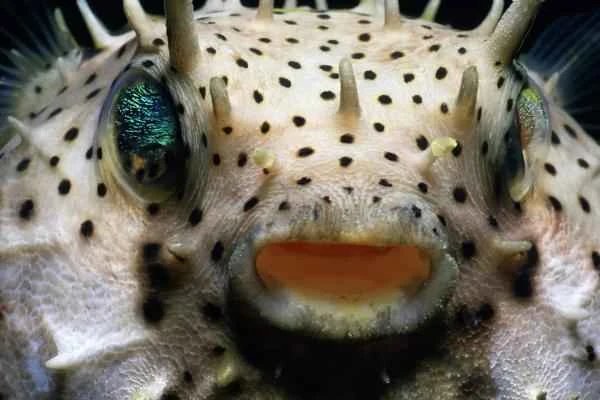
What do pufferfish eat? An introduction to their dietary habits.
Pufferfish primarily feed on small crustaceans, mollusks, and algae. Larger pufferfish can also hunt small fish, crabs, and even shellfish.
"Bird's beak" structure : The pufferfish has four hard tooth plates in its mouth, forming a bird's beak-like structure, which can easily crush hard shells such as shells and snails.
Diet range is wide : small pufferfish mainly feed on algae and plankton, while large pufferfish can eat more animal food, thus being both "predators" and "omnivores".
Auxiliary toxins : Pufferfish sometimes use toxins to paralyze larger prey, making it easier to swallow them.
Pufferfish Reproduction Methods
While male and female pufferfish don't differ much in appearance, their courtship behavior is quite unique. Male pufferfish use their tails and bodies to create intricate circular "sand paintings" or "small hills" on the seabed to attract females to lay their eggs. The eggs are laid on hard surfaces such as rocks or plants, and the male guards them until hatching (about a week). After hatching, the fry feed on tiny plankton.
The ecology of pufferfish and its relationship with humans
Ecological significance : Pufferfish play an important role in maintaining the biodiversity of coral reef and mangrove ecosystems.
Relationship with humans : As a rare aquatic resource and ornamental fish, pufferfish are both a delicacy and a unique souvenir. However, due to overfishing and environmental pollution, the populations of some pufferfish species have declined.
Conclusion <br />Pufferfish are world-renowned for their unique defense mechanisms, potent toxins, and distinctive ecological value. Understanding pufferfish not only allows us to better appreciate the wonders of nature but also reminds us to cherish and protect aquatic ecosystems.
bibliography
Parisse, G. (2016). The Complete Guide to Tropical Fish. Vecchi Publishing House, Ireland.
Heymann, D. (2005). Infectious Disease Control. Pan American Health Organization: Washington, D.C.