In the vast and mysterious depths of the ocean lives a wondrous creature whose appearance resembles more of a marine plant than an animal. This is the leaf-shaped seadragon (scientific name: *Phycodurus eques*, also known as the leaf-shaped seahorse or leafy seadragon), a species of sea fish belonging to the family Syngnathidae in the order Syngnathiformes, closely related to the genus *Phycodurus*, and the only member of the genus *Phycodurus*. It inhabits the shallow, warm waters of southern and western Australia. This elegant marine sprite, seemingly straight out of a fairy tale, attracts countless people's attention and curiosity with its remarkably mimicking appearance and slow, leisurely lifestyle.
Scientific classification
Kingdom: Animalia
Phylum: Chordata
Class: Actinopterygii
Order: Syngnathiformes
Family: Syngnathidae
Genus: Phycodurus
Species: Phycodurus eques
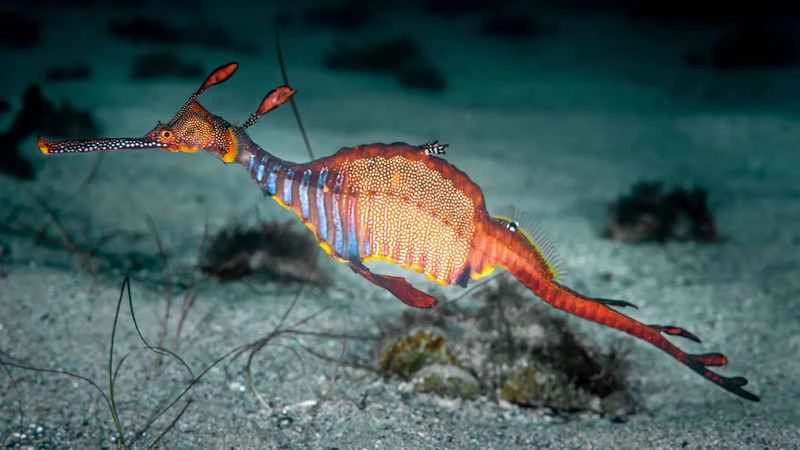
Leaf-shaped seadragons are native to the temperate waters of southern Australia, primarily inhabiting shallow seas rich in seaweed. These waters resemble underwater labyrinths, with dense and intricate seaweed formations that provide excellent hiding places for the leaf-shaped seadragons.
Origin of Name and Appearance: The Master of Disguise in the Deep Sea
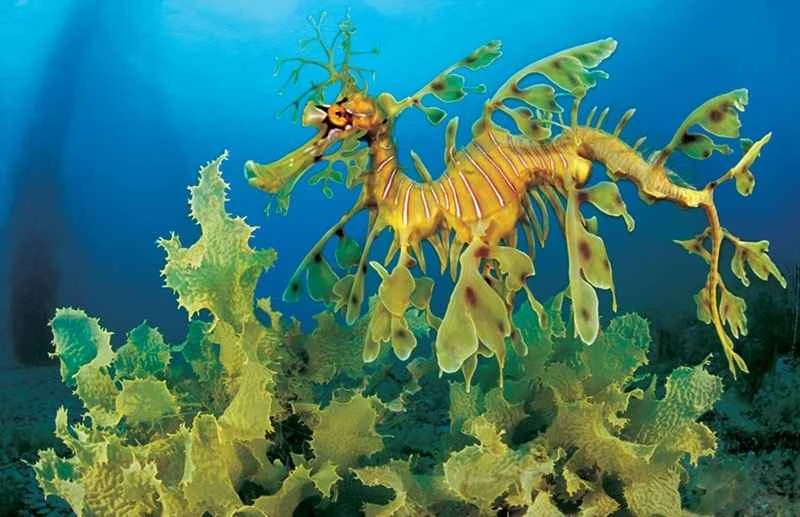
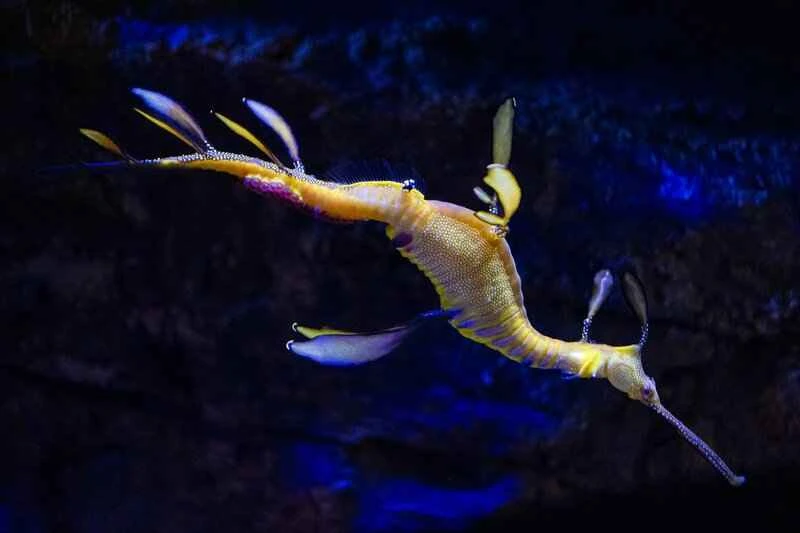
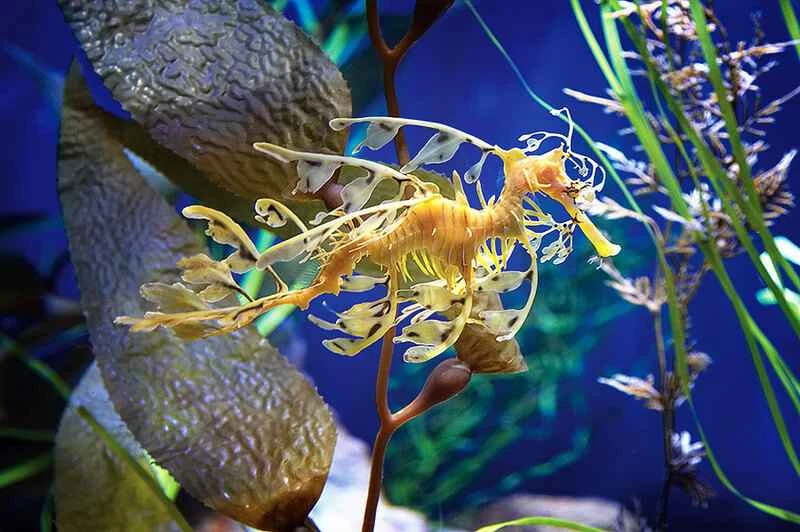
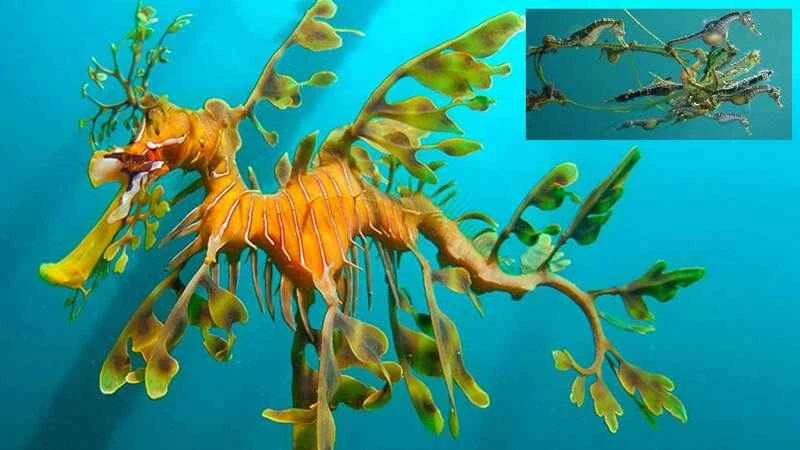
Those who see the leaf-shaped seadragon for the first time are often amazed by its deceptively charming appearance. It has a slender body and transparent fins, most notably the leaf-like appendages covering its entire body, resembling seaweed or floating algae. This is how it got its name. These raised, leaf-like structures are not used for swimming, but merely for camouflage. Its actual propulsion comes from the pectoral fins around its neck and the dorsal fin at the end of its tail. These tiny fins are almost completely transparent and difficult to see, as their rapid movement makes the leaf-shaped seadragon appear even more like seaweed swaying with the current.
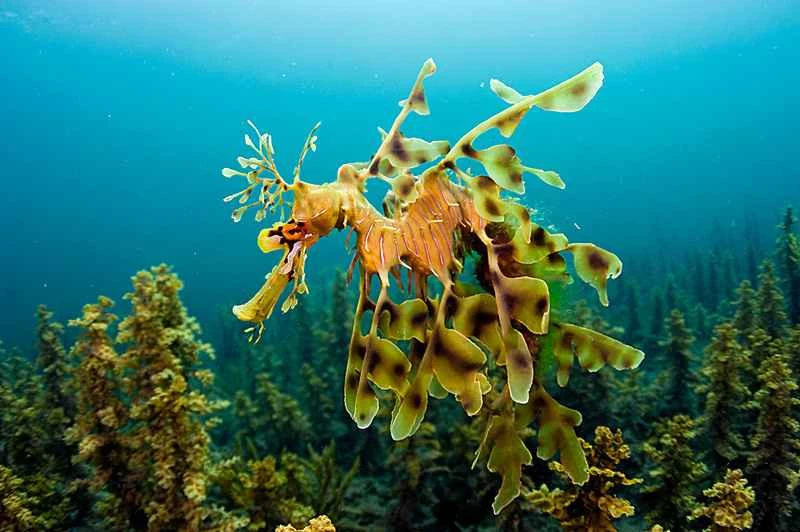
✔ Leaf-like protrusions : The leaf-like protrusions covering the entire body are not actually leaves, but a perfect disguise.
✔ Transparent fins : The tiny fins are almost transparent, appearing and disappearing in the water.
✔ Flexible and versatile colors : The colors can change with the environment, from yellowish-green to brown or even a hint of red.
✔Larger size : It can grow to at least 45 cm, which is significantly larger than that of an ordinary seahorse.
This superb camouflage technique allows the leaf-shaped seadragon to not only avoid the sight of predators but also to hunt its own food more effectively—small crustaceans, plankton, seaweed, and other small floating debris.
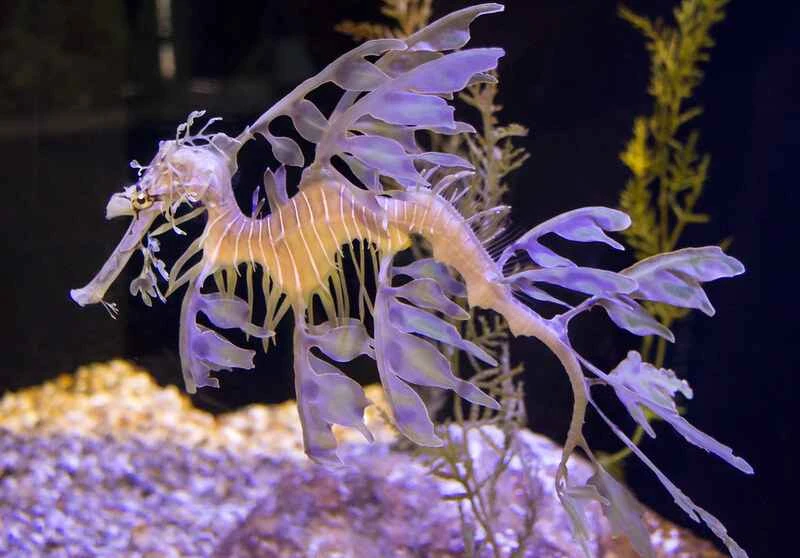
Habits: An elegant, slow-paced lifestyle
The leaf-shaped seadragon spends its life at an extremely slow and elegant pace. They are not obviously aggressive, and skillfully capture their prey by slowly floating among the seaweed.
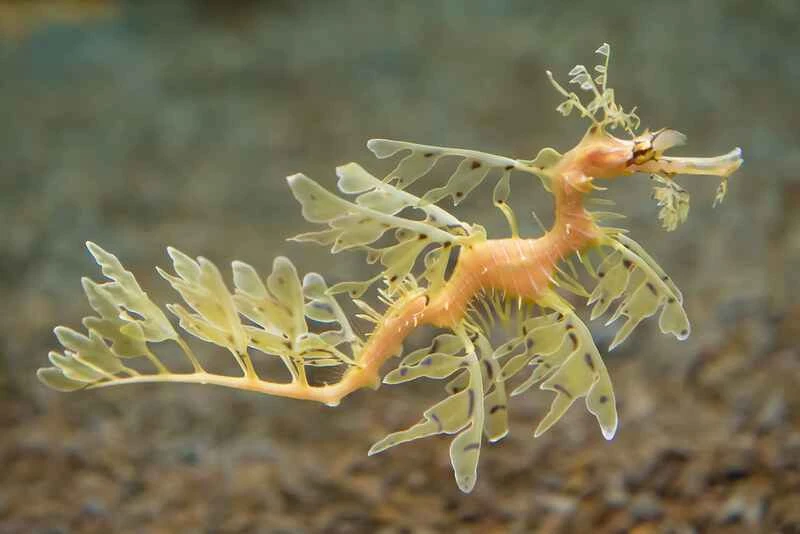
✔ Slow-moving : They have almost no swimming ability and usually drift with the current, relying on the water flow to move.
✔ Stable environmental requirements : Requires specific temperature, water quality and sufficient seaweed cover, has high ecological requirements, and is therefore relatively rare.
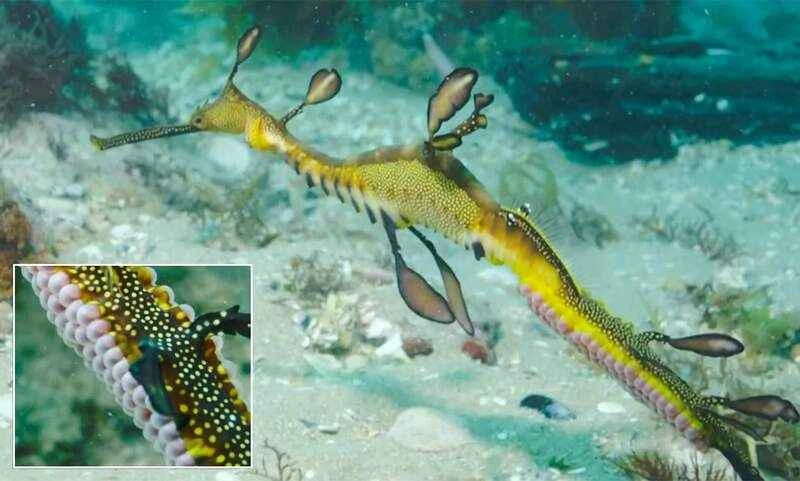
✔ Unique parenting style : Similar to seahorses, male leaf-shaped seadragons are responsible for caring for the eggs and larvae. During incubation, the male will incubate the eggs in a special incubation area under its tail until the young dragons are born.
Current Status and Conservation
Despite their impeccable camouflage, leaf-shaped seadragons still face severe survival challenges. Human activities, particularly marine pollution, habitat destruction, and overfishing, put these mysterious marine creatures at risk of population decline.
✔ Habitat loss : Coastal development and pollution have led to a decline in the kelp forests on which the leaf-shaped seadragon depends for survival.
✔ Illegal fishing and collection : Due to their unique appearance, leaf-shaped seadragons have become high-priced pets in the aquarium market, and illegal fishing has exacerbated the threat to the population.
✔ Ecological fragility : Leaf-shaped sea dragons are extremely sensitive to environmental changes. Changes in water temperature or a reduction in algae can have a fatal impact on them.
Conservation efforts: Protecting the marine life
Fortunately, Australia has listed the leafy seadragon as a protected species, strictly prohibiting illegal fishing and trade. Meanwhile, marine protected areas are being established in various locations in an attempt to provide them with a safer habitat.
✔Legislative protection : Australia strictly prohibits the fishing of leaf-shaped sea dragons and lists them as a protected species.
✔ Artificial breeding attempts : Many aquariums and research institutions have successfully bred leaf-shaped seadragons in hopes of alleviating pressure on wild populations through artificial breeding.
✔Public Education and Awareness Enhancement : Through popular science promotion and educational activities, raise public awareness of the conservation of leaf-shaped sea dragons.
The meaning of existence: works of art from nature
The existence of the leaf-shaped seadragon not only demonstrates the wonder of biodiversity, but also highlights the ingenuity and wisdom of life on the path of evolution.
In that dreamlike underwater forest, they drifted slowly and gracefully, like silent dancers, telling the story of marine life with their unique steps. The leaf-shaped seadragon reminds us that the beauty of life exists not only in the bustling world we can see, but also in those corners we rarely pay attention to.
The depths of Earth's oceans still hold countless wonders unknown to us, and the leaf-shaped sea dragon is undoubtedly one of the most beautiful and captivating chapters in this story.