Parrotfish (family Scaridae) are among the most colorful and ecologically unique reef fish in tropical oceans. They attract divers not only with their vibrant appearance but also because of their irreplaceable role in beach formation and coral ecosystem maintenance. This article will detail the parrotfish's physical characteristics, edibility, distribution and habitat, feeding habits, reproductive methods, and its significant impact on the marine ecosystem.
Characteristics of parrotfish
Size and lifespan: Most parrotfish are between 20 and 50 centimeters in length, with some species reaching 1.5 meters, and the smallest only 10 centimeters. Their lifespan is generally around 7 years.
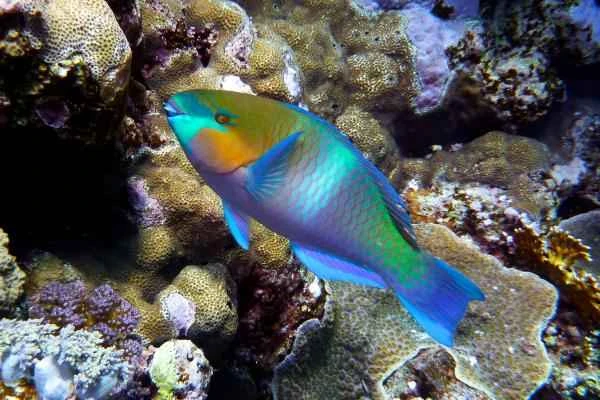
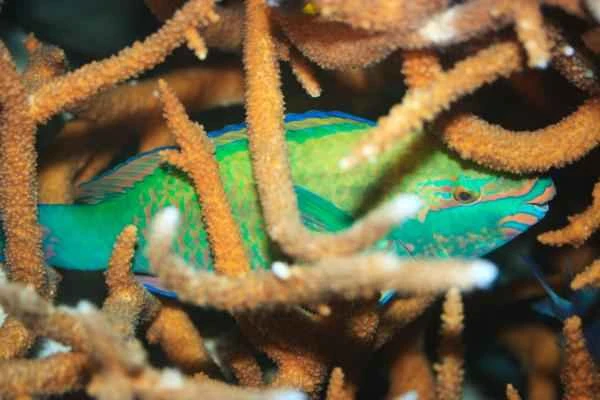
Vibrant colors: Body color is extremely vibrant and diverse, encompassing blue, green, yellow, red, etc., and color variations are also related to gender and life cycle.
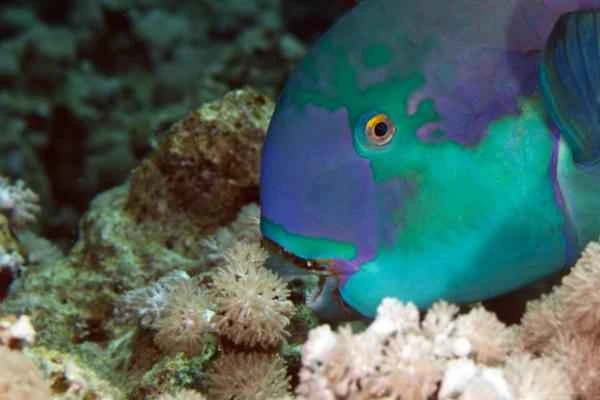
Unique structure: Parrotfish get their name from the "beak"-like teeth formed by the fusion of their upper and lower jawbones, which they use to scrape algae from hard surfaces.
Nighttime protection mechanism: After nightfall, parrotfish secrete mucus to coat their entire body, forming a "sleeping bag" to mask their scent and prevent predators from attacking.
Are parrotfish edible? Are they safe to eat?
Parrotfish have delicate flesh and are rich in Omega-3 fatty acids. Historically, they were considered a delicacy, an exclusive ingredient for Polynesian royalty. Currently, they are still regarded as high-end seafood in some countries such as Egypt and Australia. However, some parrotfish may accumulate ciguatoxin, posing a risk of poisoning (such as muscle pain and paralysis) if consumed.
More importantly, parrotfish play a vital role in the ecosystem , and from an ecological conservation perspective, it is not recommended for them to be hunted by humans.
Habitat distribution of parrotfish
Parrotfish are mainly distributed in tropical coral reef waters around the world, including the Caribbean Sea, Indian Ocean, and Pacific Ocean, and can also be found in rocky reef areas or seagrass beds.
Parrotfish , a core species in coral reef ecosystems, plays an irreplaceable role in the health of coral reefs.
They are active in shallow waters: they are mostly active in shallow waters, foraging during the day and resting in the crevices of rocks at night.
The diet of parrotfish and its sand-making function
Main food: mainly algae attached to the surface of corals or rocks, and occasionally nibbles on coral skeletons.
Physiological mechanism: The parrot-like teeth are used to scrape algae and ingest some of the coral's calcareous material, which is then crushed in the pharyngeal plate.
Excrement = New Beach: Undigested coral fragments are expelled from the body and become clean, fine beach sand.
Scientific estimates suggest that an adult parrotfish can "produce" 900 kilograms of new sand per year, and 85% of the new sand in the Maldives comes from the "contribution" of parrotfish.
Parrotfish Reproduction Methods
Hermaphroditism: Most parrotfish are "sequential hermaphroditic", meaning that the fish will change from female to male as they age, and their body color will also change during the sex change.
Social structure: They often live in a "harem" structure, with one male fish leading several female fish.
Reproductive behavior: The eggs are buoyant and drift with the ocean currents. During the juvenile stage, they often move in groups.
Ecological importance of parrotfish
Maintaining coral reef health: Parrotfish effectively prevent corals from being suffocated by overgrown algae by feeding on them, thus providing a growing space for coral larvae.
Beach-forming engineers: Parrotfish are important "sand-building" organisms on coral islands and tropical beaches, and are an indispensable part of marine biodiversity.
Conservation Status and Initiatives: Although currently listed as a "Least Concern" species, overfishing has led to fishing bans in some areas. For example, countries such as Belize have enacted regulations to protect parrotfish.
Ecologists and environmental organizations are calling for a halt to the consumption and fishing of parrotfish, in order to protect the future of coral reefs and tropical beaches.
Conclusion
Parrotfish are not only among the most visually appealing fish in the ocean, but also irreplaceable guardians of coral reef ecosystems and tropical beaches. Understanding and protecting parrotfish is the responsibility of everyone who loves the ocean and cares about the Earth's ecology. If you'd like to learn more about coral reefs, tropical fish, and marine ecology, please browse other related articles on this site!
bibliography
Encyclopædia Britannica. (2012). Atlas of Science: Fishes. Barcelona: Sol 90 Publishers.
The Nature Conservancy. (2022). Parrotfish. Access link: https://www.nature.org/en-us/get-involved/how-to-help/animals-we-protect/parrotfish/