Among the many ornamental fish, live-bearing fish such as guppies, mollies, swordtails, and moonfish are the top choice for aquarium enthusiasts due to their high reproductive rate and ornamental value. Unlike most fish that reproduce by spawning, live-bearing fish give birth to live fry directly, which not only increases the survival rate but also allows novice fishkeepers to experience the joy of aquarium breeding. This article will introduce live-bearing fish in detail, analyze their main characteristics, and select six typical live-bearing fish to help you better understand and care for these popular ornamental fish.
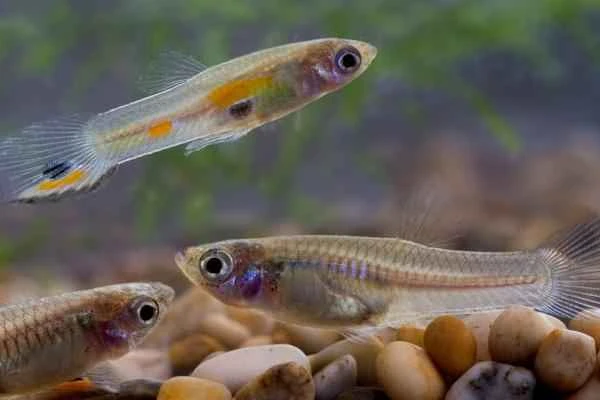
What are viviparous fish? What are the main characteristics of viviparous fish?
Many fish enthusiasts easily confuse "viviparous fish" with "ovoviviparous fish." In fact, there is a fundamental difference between the two:
Viviparous fish : The fertilized egg develops inside the mother fish, and the embryo receives nutrition directly from the mother through a cord-like structure called the "nutrient zone" or "trofotaenia". After the embryo is fully developed, the mother fish gives birth to a small fish that can swim independently.
Ovoviviparous fish : The embryo also develops inside the mother's body, but its nutrition comes only from the yolk sac, and there is no direct exchange of nutrients with the mother. After the embryo develops into a juvenile fish, the mother "gives" the hatched fry.
In practice, the aquarium industry typically categorizes both as "viviparous fish." The vast majority of viviparous fish are freshwater, though some can tolerate slightly salty environments. They generally reproduce internally, with males possessing specialized reproductive organs (such as a "copulatory organ" or "male genital protuberance," i.e., a modified anal fin). Some females can also store sperm for extended periods, enabling multiple fertilizations.
Common viviparous fish families include: Poeciliidae, Goodeidae, and Anablepidae.
Six representative viviparous fish and their characteristics
1. Guppy (Poecilia reticulata)
Guppies are stars in the aquarium world due to their vibrant colors and ease of breeding. Males are smaller (generally no more than 3 cm), with a broad, brightly colored tail fin and a prominent copulatory organ near their abdomen, making their sexual characteristics more distinct. Females are larger and have more subdued colors. Besides their ornamental value, guppies are also used in disease research and biological control.
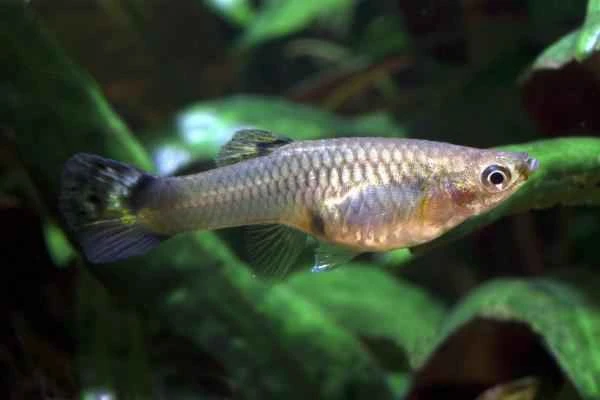
2. Molly fish (Poecilia sphenops)
Molly fish are gentle, lively, and prefer to live in groups. Native to both freshwater and brackish water environments, they can adapt to various water conditions. Primarily omnivorous, their health depends heavily on consuming aquatic plants and algae. In aquariums, they also help purify algae. They range in length from 6-10 cm, with females generally larger, while males possess a specialized anal fin (copulatory organ).
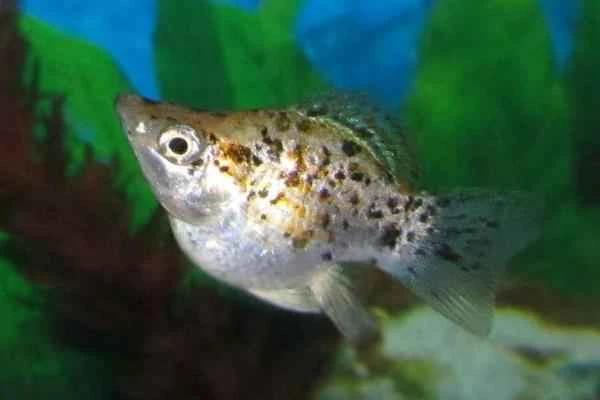
3. Moonfish/Red Swordfish (Xiphophorus maculatus)
Moonfish belong to the Poeciliidae family. They have a raised flank on their sides, a large dorsal fin with a radial distribution, and body colors including yellow, orange, green, and blue, often with black spots. Males are smaller, more brightly colored, and have prominent copulatory organs. They reproduce ovoviviparously, and adults often prey on juveniles.
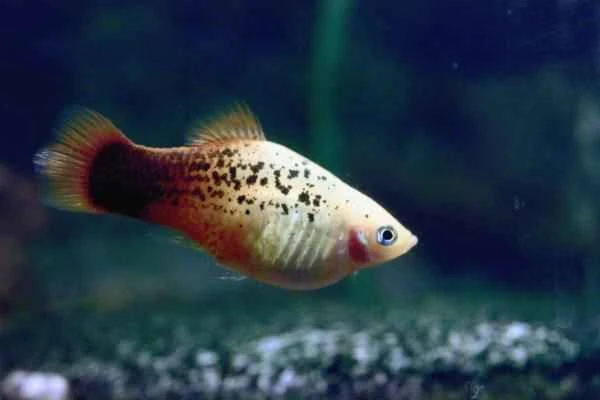
4. Mexican killifish/butterfly killifish (Ameca splendens)
Belonging to the Poeciliidae family, its body is silvery-gray with a leaden tinge, covered with black spots. The dorsal fin is positioned further back, parallel to the anal fin. Males have fewer spots and their caudal fin has black and yellow stripes. Females can produce up to 30 fry per litter, and the fry retain a distinct nutrient band at birth.
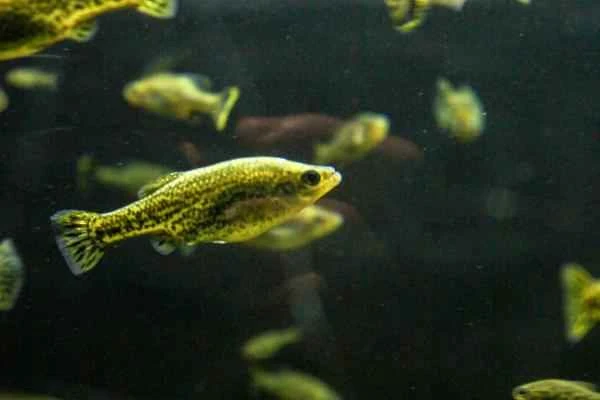
5. Xenotoca eiseni
Also known as the Red-tailed Killifish, it has a slightly rectangular body with a pointed head and an upward-facing mouth. The male is olive-green with a bluish-green sheen, while the female is predominantly olive with an orange tail fin. The female has a distinct gestation spot on its abdomen. Unlike other killifish, the Eisen killifish requires mating for each breeding cycle. The male's anal fin is specialized into a copulatory organ.
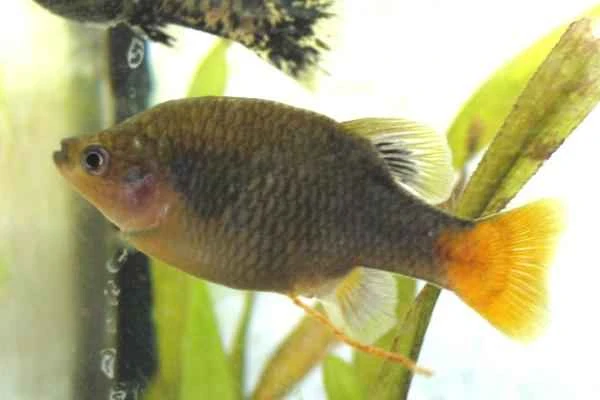
6. Half-mouthed fish (Nomorhamphus liemi)
Belonging to the family Tetraodontidae, this fish has a slender body with a prominent head and mouth, and its eyes are located at the top. It has a silvery-white body with orange and reddish-green stripes on its fins. Its lower jaw remains almost motionless, and it primarily feeds using its upper jaw. In the wild, it feeds on insects and larvae. Males are more brightly colored, especially their lower lip. Parents exhibit obvious egg-eating and juvenile-eating behaviors; therefore, timely separation into different tanks is necessary for artificial breeding.
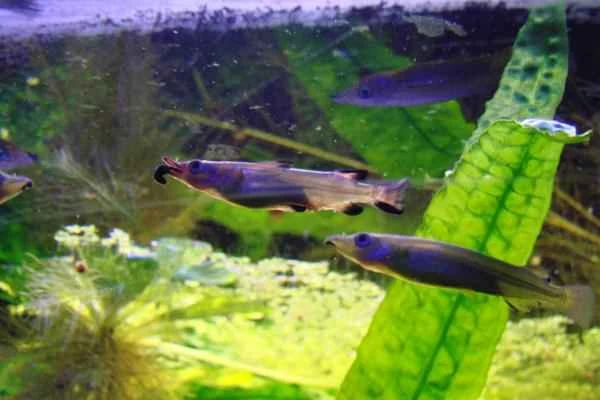
Feeding advice for live-bearing fish
They are easy to raise and suitable for beginners.
The stocking density should not be too high to avoid mutual attacks and the prey being eaten by the juvenile fish.
Ensuring clean water and a diverse supply of feed is beneficial for the healthy growth of fish.
Viviparous fish are a popular choice for home and office aquariums due to their high reproductive rate, ease of care, and vibrant colors. For more fish science and husbandry tips, please follow our aquarium channel!
References
Céspedes A. (2015). Viviparous fish in an aquarium. Access link: https://acuaristas.cl/los-viviparos-en-el-acuario/
Measuring the invasiveness of alien species in Mexico. (2014). Reticulated guppy. Access link: http://www.conabio.gob.mx/institucion/proyectos/resultados/LI007_Anexo_11_Ficha_Poecilia_reticulata.pdf
Devezé Murillo P., Reta Mendiola JP., Sánchez Luna B. (2004). Culture of reticulated guppies (Poecilidae) in tropical waters of Veracruz, Mexico. Website: https://www.scielo.sa.cr/scielo.php?script=sci_arttext&pid=S0034-77442004000400017