In the reptile world, tortoises are a highly regarded group. Unlike sea turtles and freshwater turtles, tortoises are popular pets due to their adaptability, docile temperament, and ease of care. Tortoises not only vary in appearance but also differ significantly in their physiological structure, habits, diet, and reproductive methods. This article will introduce five common tortoise species and their characteristics to help you better understand these fascinating reptiles.
Basic characteristics of tortoises
The most common characteristic of tortoises is their hard shell. This shell, divided into a carapace and a plastron, serves as an important protective barrier for their internal organs. The shell also helps tortoises absorb sunlight to regulate their body temperature, as reptiles are cold-blooded animals and cannot generate heat on their own.
Other notable characteristics of tortoises include:
It can retract its head into its shell to avoid danger;
It has movable eyelids to protect the eyes;
With strong limbs and separated toes, it is suitable for walking, digging, and self-defense.
Its mouth has a hard, beak-like structure, which makes it easy to cut food. It usually swallows food directly without chewing it thoroughly.
Most tortoises are carnivorous when they are young, but become omnivorous or herbivorous as adults.
The female has a flat plastron, while the male's is slightly curved, which is a clear sexual dimorphism.
Most tortoises belong to the family Testudinidae, with nearly 40 known species worldwide.
Next, we will introduce five typical tortoise species and their characteristics.
1. Terrape spp.
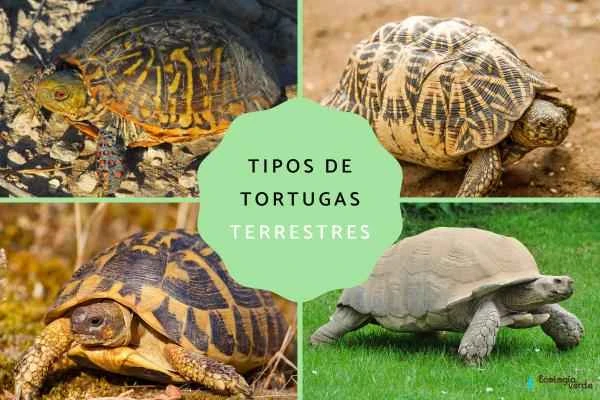
Box turtles belong to the family Emydidae, but because they can completely close their shells for self-protection, they are also broadly classified as tortoises. Box turtles are distributed in the United States and Mexico, inhabiting grasslands and semi-deserts. Their most distinctive feature is the hinged plastron, which allows them to completely close their shells like a "box." Common species include:
Eastern Box Turtle (Terrapene carolina carolina)
Florida Box Tortoise (T. carolina bauri)
Mexican Box Turtle (T. carolina mexicana)
Three-toed box turtle (T. carolina triunguis)
wait.
Box turtles hibernate in winter and often dig their own burrows to survive the cold season.

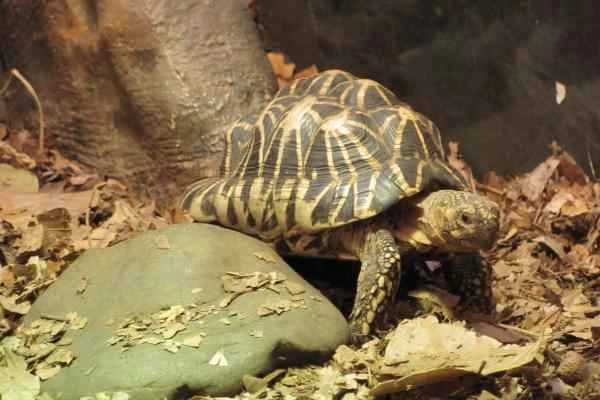
2. Spotted Tortoise (Geochelone elegans)
The Spotted Tortoise is native to India, Pakistan, Sri Lanka, and other regions, and its habitat ranges from forests and semi-arid grasslands to semi-deserts. It gets its name from its black shell with yellow lines, resembling radiating stars. Adults can reach 35 cm in length and live over 80 years. This species has high environmental requirements and requires careful care as a pet. Breeding is mainly concentrated in the rainy season, and hatchlings need sunlight and warmth to incubate.
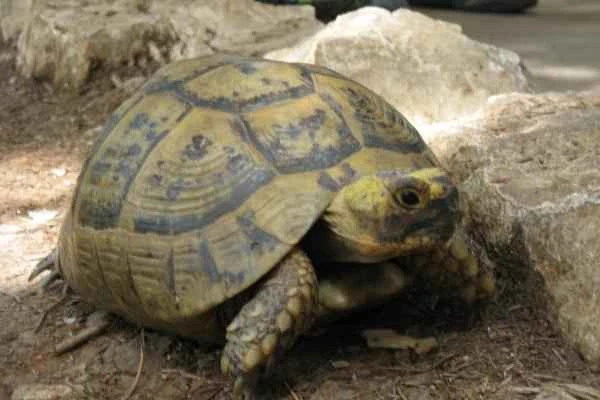
3. Russian Star Tortoise (Testudo horsfieldii)
Also known as the Afghan tortoise, it measures approximately 16-23 cm in length, with females being slightly larger. Native to Central Asia, it can adapt to extreme temperatures, typically digging its own burrows to escape heat and cold, and has a long hibernation period. It is docile and suitable for keeping as a pet, primarily feeding on grass and vegetables, making it a popular beginner-level pet tortoise.
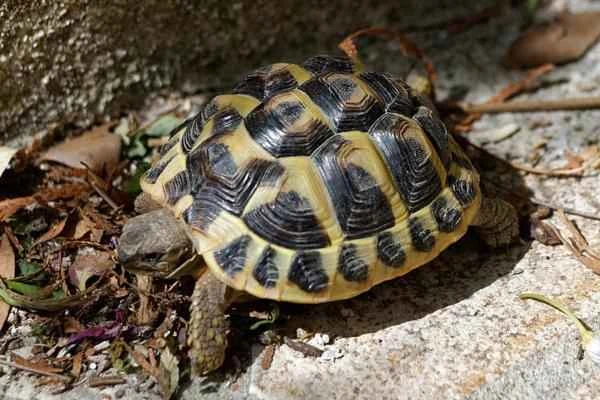
4. Mediterranean Star Tortoise (Testudo hermanni)
The Mediterranean tortoise is found in Spain, Italy, Greece, Croatia, France, and other regions. Its shell displays a beautiful black and green pattern, and its tail has a hard, horny protrusion, making it easily distinguishable from other species. Due to illegal capture and habitat destruction, its numbers in the wild have drastically declined. When keeping it as a pet, it is essential to protect the species' origin.
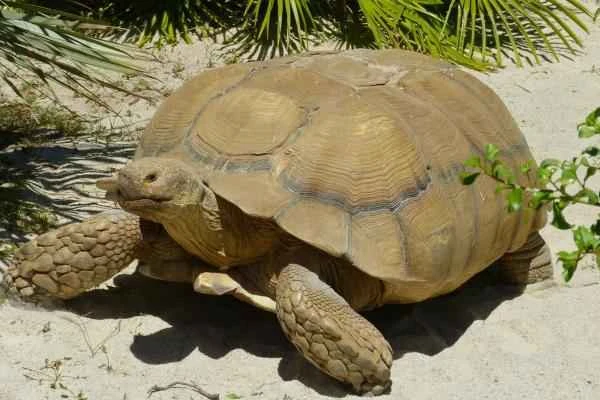
5. Sulcata tortoise (Centrochelys sulcata)
Also known as the African savanna tortoise or African spiny tortoise, it is one of the largest tortoise species in the world, reaching up to 85 cm in length and weighing over 100 kg. It is mainly distributed in the grasslands and semi-desert areas south of the Sahara in Africa. The Sulcata tortoise is solitary and mostly lives alone in the wild, and is endangered due to habitat loss. Its shell is yellow or brown, with distinct grooves on its carapace.
Conclusion: Recommendations for Protection and Adoption
With the loss of wild habitats, more and more tortoises are facing a survival crisis. Whether you are an enthusiast or planning to adopt a tortoise, you should prioritize captive-bred individuals to avoid illegal collection. Providing them with ample sunlight, suitable temperatures, a scientifically designed living environment, and a varied diet is the responsibility of every tortoise keeper.
bibliography
Beatty, R., Beer, A., and Deeming, C. (2010). The Book of Nature. Grand Brittany: Dorin Kindesley.
Bouchard, K. (2009). *C. elegans*, a type of nematode found in giant tortoises. Available at: https://animaldiversity.org/accounts/Geochelone_elegans/