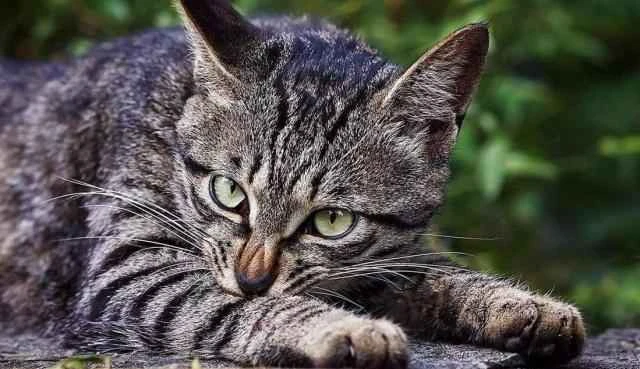
Cats are intelligent, cute, and quiet, making them popular pets. However, cats are emotional animals, and they can hold grudges if ignored or mistreated. This article shares ten signs that a cat hates its owner, including disobeying commands, vandalism, urinating or defecating indiscriminately, running away from home, resisting being petted, and turning its ears back. If you're a cat owner, has your cat ever exhibited any of these behaviors? Let's take a closer look.
1. Disobeying the master
Because cats are intelligent and adorable, more and more people are becoming "cat owners." If your cat is usually well-behaved and obedient, but recently it has suddenly changed, ignoring all commands, you need to pay attention. This is because a cat only ignores its owner when it harbors resentment. So why doesn't your cat like you? You should probably consider whether you've done something to upset your cat and try to remedy the situation.
2. Start causing damage
Comparatively speaking, cats are more docile than dogs. Some dogs will destroy things when bored, while cats are generally quiet and will only stay at home quietly, sleeping when bored. Most of the time, cats won't destroy things, but when their owners upset them, they may retaliate by causing damage around the house – this is one way a cat can show its hatred. At this point, you need to quickly find out why your cat is angry; if you don't correct the behavior, your cat will continue to cause trouble at home.
3. Urinating or defecating anywhere
We all know that cats are very clean animals, and well-trained cats will usually find their own litter box to relieve themselves. If, for reasons other than litter box issues or illness, your cat starts urinating or defecating anywhere and refuses to use the litter box, it indicates dissatisfaction and shows that the cat doesn't like its owner. In this case, the owner should consider whether any recent behavior has upset the cat, find the cause, and quickly comfort the cat.
4. Will run away from home
Cats are very sensitive animals. When a cat likes someone, it becomes incredibly clingy, spending all its time near that person during the day and sleeping next to them at night. Conversely, if a cat dislikes someone, it will not only reject your touch but also constantly try to run away from home—a sign that the cat doesn't like its owner. If the owner is harsh or unkind to the cat, it may also run away from home, quickly fleeing the place that harms it—a sign that the cat is afraid of its owner.
5. Resisting the owner's touch
While cats are generally considered proud pets and need their own independent living space, they aren't as aloof as many people imagine. They still enjoy spending time with their owners, playing with them and petting them daily, which they find very enjoyable. If a cat suddenly becomes wary of its owner's touch, or even resists being petted all day, then the owner has definitely done something to upset the cat. This resistance to being petted is one sign that the cat doesn't like its owner, and only by finding the cause as soon as possible can you get the cat to accept you again.
6. The ears are turned back.
Cats don't have as many complex emotions as humans, and we can clearly sense when they're unhappy. For example, their ears are one of their tools for communicating; when a cat pulls its ears back, it indicates that it's very agitated and upset. This could be due to fear or anxiety. In this situation, the owner shouldn't blindly comfort the cat, but rather first find the source of its anxiety and then address it. The cat will naturally relax.
7. The tail keeps slapping the ground.
Don't think only humans get sulky; cats get angry too. One sign a cat dislikes people is when it's sitting or lying down and its tail keeps thumping the ground. This indicates impatience and dissatisfaction, and is one indication that the cat doesn't like its owner. This behavior usually occurs after the cat has been scolded by its owner.
8. Calling incessantly
Cats are usually quiet, mostly resting with their eyes closed when bored; compared to dogs, they are considered "silent" animals. If your cat starts meowing incessantly and for extended periods every day, aside from the possibility of it being in heat, it's very likely expressing its dissatisfaction through meowing. It could be that it's out of food, wants you to hold it, or the litter box isn't clean and you haven't cleaned it. In any case, you, as its owner, must pay attention and address the issue promptly.
9. Will attack its owner
Don't be fooled by a cat's usual quiet, well-behaved, and adorable nature. If a cat suddenly becomes aggressive, even attacking its owner, it means the environment makes it feel unsafe. This is one of the ten signs a cat hates its owner. When a cat hates its owner, it might gently bite their hand or leg, or even more seriously, it might sneak up on them from time to time. At this point, the owner should try to figure out what they did to offend the cat and then address the problem accordingly.
10. Hindering the owner's actions
Most cats are quite well-behaved and quiet. Unlike dogs, they don't necessarily need to be clingy and can have a lot of fun on their own. When you're working, reading, or using your phone, and your cat jumps up and sits on your keyboard or blocks your reading, it's a way for them to express their dissatisfaction. Either you've done something to upset them, so they're deliberately causing trouble; or they simply want your attention and to play with you.
11. Refusing to be fed by its owner
Cats are naturally wary and won't eat just anything; they'll only eat what their owners offer. However, if one day your cat refuses to eat what you feed it, and after ruling out picky eating or illness, it's almost certainly because you've done something to hurt it, causing it to distance itself. This indicates that your cat has become wary of you, doesn't trust you, and it's a sign that your cat doesn't like you.