Fish are aquatic vertebrates, and their physiological characteristics and behaviors differ greatly from those of terrestrial animals such as mammals and birds. A common question is: Do fish sleep? If so, how do they sleep? Because fish lack eyelids, they do not close their eyes when sleeping like humans or other animals, and they do not completely lose consciousness in the water. This article will comprehensively analyze the sleep behavior of fish from the aspects of the definition of sleep, physiological mechanisms, sleep postures, environmental influences, and sleep patterns of different fish species .
I. Overview of Fish Sleep
1.1 Do fish sleep?
From a biological perspective, fish do indeed enter a sleep-like resting state . Although their sleep differs from that of mammals or birds, most fish exhibit the following characteristics when resting:
Reduced activity : Not swimming for extended periods, hovering in the water or remaining in one position.
Slowed reaction : The response to external stimuli is slower, but the person can still be alert to danger.
A slower metabolism : Heart rate, respiratory rate, and energy expenditure decrease in order to restore physical strength.
1.2 Differences between fish sleep and mammalian sleep
Fish sleep patterns differ significantly from those of mammals:
Fish do not experience rapid eye movement (REM) sleep , unlike mammals that dream or lose consciousness completely.
Fish do not close their eyes because they do not have eyelids (except for some sharks).
Some fish will continue to swim , even when they are asleep. Some fish still need to keep swimming to keep the water flowing through their gills so that they can breathe.
II. How do fish sleep?
2.1 Sleeping posture and state
Different species of fish adopt different sleeping postures, but generally they will choose the following methods:
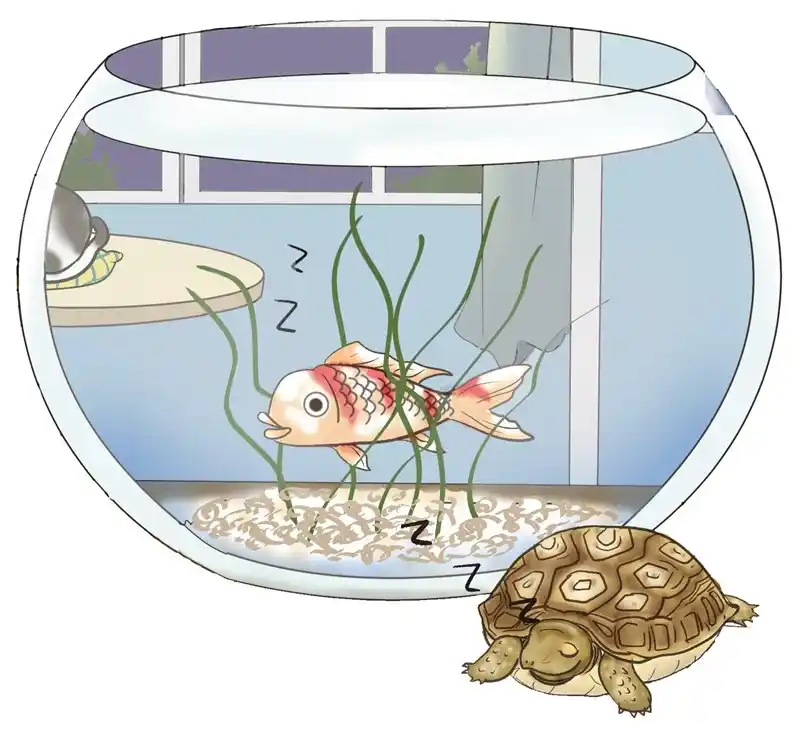
Suspension : Many fish suspend themselves in the water, using the tiny movements of their fins to maintain their balance, such as goldfish and catfish .
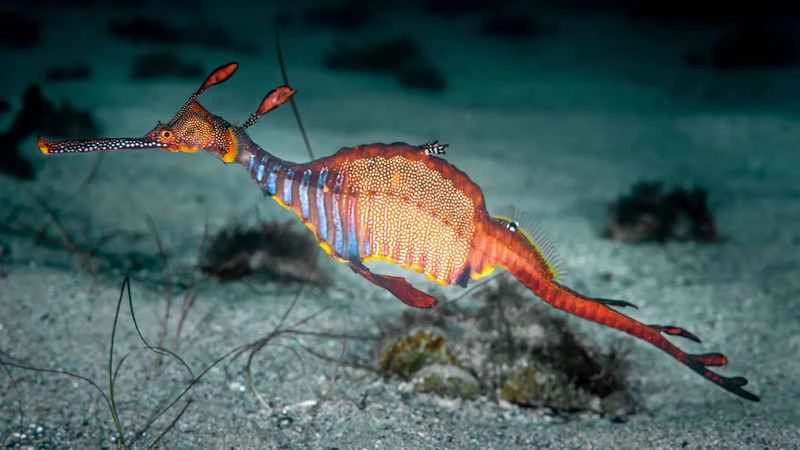
Hiding and resting : Some fish choose to hide among corals, rocks, or aquatic plants to avoid being discovered by predators, such as clownfish and seahorses .
Lying on the bottom : Benthic fish (such as flounder and catfish) will rest close to the bottom to reduce energy consumption.
Continuous swimming during sleep : Some fish that rely on water flow for oxygen (such as sharks and tuna) continue to swim slowly while sleeping to ensure that their gills continue to receive oxygen.
2.2 Brain activity in fish during sleep
Unlike the deep sleep of mammals, the nervous system of fish remains active during sleep:
Some areas of the brain remain active in response to potential predator threats.
Electroencephalogram (EEG) data during sleep showed that the fish entered a state of low activity but not complete unconsciousness , similar to the light sleep stage in humans.
2.3 The duration and cycle of fish sleep
Fish sleep patterns are influenced by diurnal variations , ambient light , water current intensity , and food availability .
Diurnal fish (such as tropical ornamental fish and goldfish) usually sleep at night.
Nocturnal fish (such as catfish and eels) rest during the day and are active at night.
Because deep-sea fish live in darkness for long periods, their sleep patterns are not affected by light, but are regulated by their biological clock.
III. Sleeping Patterns of Different Fish Species
3.1 Quiet sleep (most freshwater and tropical fish)
Typical fish species: goldfish, guppies, koi
These fish will stay or float in slow-moving water to conserve energy by reducing their swimming.
They enter a light sleep state at night and are easily awakened by external stimuli.
3.2 Benthic hibernation (bend-dwelling fish)
Typical fish species: catfish, flounder, loach
These types of fish are accustomed to hiding in the mud or crevices of rocks at the bottom of the water, where they remain still.
Because of their relatively secluded environment, they typically have longer sleep durations and more stable periods of deep sleep.
3.3 Continuous Swimming Sleep (Sharks and Pelagic Fishes)
Typical fish species: tuna, shark
These fish do not have a swim bladder and cannot suspend themselves in the water, so they must swim slowly to allow water to flow through their gills and provide oxygen.
Some shark species (such as the great white shark) employ "hemispheric dormancy," where one side of the brain enters a state of rest while the other side remains active to maintain swimming and alertness.
3.4 Hiding-type sleep (coral reef fish)
Typical fish species: clownfish, seahorse
These types of fish usually hide in corals, seaweed, or caves to reduce the risk of being preyed upon.
Some fish (such as parrotfish) will even secrete a layer of mucus to coat themselves in order to mask their scent and prevent predators from finding them.
IV. Factors Affecting Fish Sleep
4.1 Ambient Lighting
Light has a significant impact on the sleep rhythms of fish:
Most fish have a biological clock adapted to the day-night cycle , and excessive light can cause sleep disorders.
If artificially bred ornamental fish are exposed to artificial light for extended periods, they may experience problems such as decreased sleep quality and increased stress response .
4.2 Water Flow Velocity
Slow water flow helps fish enter a resting state.
Fish in strong current environments (such as fast-flowing rivers) need to adapt to a constantly moving lifestyle and reduce the time spent in deep sleep.
4.3 Water temperature and oxygen content
Water temperatures that are too high or too low can affect a fish's metabolism, which in turn can affect its sleep.
When oxygen levels are low, fish may reduce their sleep time in order to increase their oxygen intake.
4.4 Predators and Predator Pressure
In the wild, fish must balance their sleep with their survival needs, so they do not enter a deep sleep to avoid becoming prey.
V. Conclusion: The sleeping patterns of fish vary depending on the species.
Fish do "sleep," but they don't completely lose consciousness like mammals.
Most fish remain still while sleeping, but pelagic fish such as sharks and tuna need to keep swimming.
Fish sleep is affected by a variety of factors, including ambient light, water flow, oxygen levels, and predator threats.
Different species of fish employ different sleep strategies, such as suspending to rest, remaining still at the bottom, swimming continuously, or hiding to sleep.
Understanding how fish sleep helps us better raise ornamental fish and gain a deeper understanding of the ecological adaptations of aquatic animals. This unique way of resting reveals survival strategies that fish have developed during evolution, enabling them to survive efficiently in underwater environments.