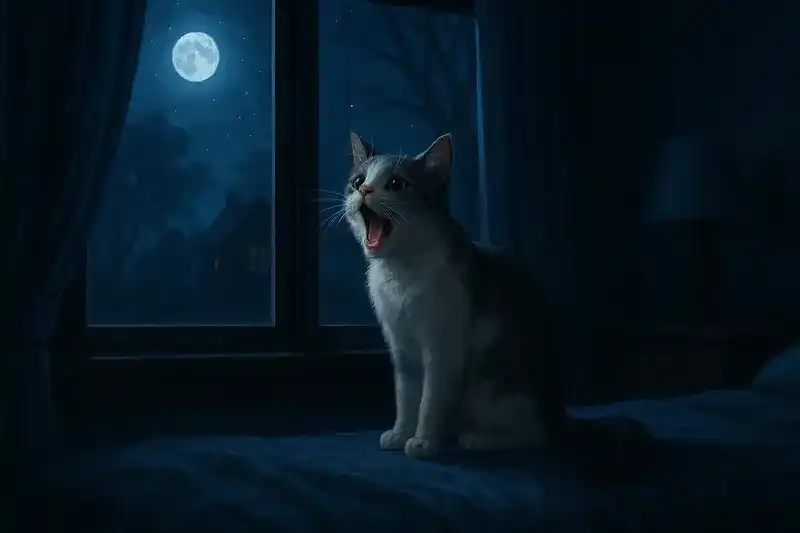
Cats' nocturnal running and incessant meowing are the root cause of many cat owners' sleepless nights. Have you ever experienced a night like this: at 2 a.m., your cat is meowing and jumping around the house, waking you from a sweet dream? This isn't just your cat being "whimsical," there's a reason behind it. As a pet expert, this article will systematically analyze the reasons why cats don't sleep and meow at night from multiple perspectives, including behavioral science, physiological health, and environmental factors, and offer solutions to help you sleep peacefully with your cat.
I. Common Reasons for Cats Crying at Night
1.1 Physiological Habits: Nocturnal Animal Nature
Cats are typical crepuscular animals, with their peak activity times being dusk and dawn. Although domesticated cats have become accustomed to human schedules, they still retain their primal instincts.
1.2 Excessive Energy
If a cat sleeps too much and doesn't get enough exercise during the day, it will naturally be full of energy at night and will express boredom or look for playmates by meowing.
1.3 Estrus Behavior
Unneutered male or female cats will meow frequently at night during their heat cycle, which is a courtship signal and is often accompanied by behaviors such as restlessness and rolling on the ground.
1.4 Hunger or dissatisfaction with food
Some cats will meow to get their owners' attention when they feel hungry or want something more delicious late at night.
1.5 Loneliness or lack of security
When cats spend too much time alone, experience significant changes in their environment, or lack companionship from their owners, they will seek emotional comfort at night.
1.6 Illness or discomfort
Health problems such as stomatitis, hyperthyroidism, joint pain, and cognitive impairment can all cause cats to become restless and meow at night.
II. How to determine the real reason for a cat's meowing?
2.1 Observing Behavior
Does it involve rolling or rubbing against the ground? — This could indicate it's in heat.
Does it walk around the food bowl? — It might be hungry.
Does it come close to you and meow or lick you? — Maybe it's lonely.
2.2 Inspection Time Pattern
Does your cat meow at a fixed time? Does it only start after you're about to fall asleep?
2.3 Physiological Examination
Check gums, breath, and weight changes.
Pay attention to whether there is vomiting, diarrhea, or changes in appetite.
If you suspect you have a health problem, you should seek medical attention as soon as possible.
III. Effective Response Strategies
3.1 Increase daytime activity levels
Interactive toys and cat wands for at least 30 minutes a day.
Set up cat trees and jumping platforms to encourage exploration.
3.2 Arrange feeding reasonably
Providing a main meal before bedtime helps cats feel satisfied for longer throughout the night.
A timed feeder can be used to automatically feed a small meal in the early morning to prevent the baby from crying due to hunger.
3.3 Sterilization surgery
Unneutered cats almost always meow during their heat cycle, and neutering is one of the most effective ways to control their behavior.
3.4 Create a peaceful sleep environment
Keep the bedroom door closed to allow the cat to become accustomed to its private space.
Reduce nighttime light interference (turn off TV, nightlights).
Provide a soft, warm sleeping pad or cat bed.
3.5 Avoid "reward-based responses"
Responding immediately to a cat's meow (such as by feeding or petting) reinforces the logic that "meowing equals getting attention," so you should gradually reduce the frequency of your responses.
IV. Be vigilant in special circumstances
4.1 Elderly cats meowing at night
Older cats may meow loudly at night due to cognitive impairment (feline dementia), disorientation, and anxiety.
Provide nightlights, establish a regular daily routine, and seek veterinary help.
4.2 The cat suddenly cries out loudly
If a cat that never meows at night suddenly starts howling loudly and continuously, it may be suffering from a sudden illness, urinary retention, fracture, or other serious conditions, and should be taken to the vet immediately.
V. Conclusion: Let the night fall silent again.
There could be multiple reasons why a cat won't sleep and keeps meowing at night. By understanding its nature and combining behavioral adjustments, environmental improvements, and veterinary examinations, owners can effectively improve this situation.
Nighttime is a time for family members to rest, and it's also a crucial period for cats to develop a sense of security. With love, patience, and scientific methods, you and your cat can both enjoy peaceful and wonderful nights.