Many fish enthusiasts wonder: are fish male and female? The sex of fish significantly impacts their reproduction, behavior, and lifestyle. Different fish species have distinct characteristics in appearance, behavior, and reproductive methods. Therefore, understanding whether fish are male and female, and how to distinguish between them, is crucial for fish keepers. This article will explore the basics of fish sex, how to differentiate between male and female fish, and the impact of fish sex on aquarium management, helping you better care for your fish.
Do fish have males and females? An overview of fish sex.
First, the answer is yes: fish are male and female . Like other animals, fish are divided into males and females, which is closely related to their reproductive methods. Most fish reproduction occurs through the pairing of males and females, with the male providing sperm and the female providing eggs. Different species of fish exhibit different characteristics in their sexes; some species show clear differences between males and females, while others are difficult to distinguish.
According to Zhang Guoliang's (2020) research, the book "Aquatic Biology" points out that most fish have clear sex distinctions, but some fish also have hermaphroditic characteristics or can change sex under certain conditions. For example, some species of fish undergo sex reversal during their life cycle, a phenomenon called "sex reversal".
How to tell the sex of a fish? Common methods of differentiation.
Although fish generally have distinct sexes, the differences between males and females are not significant in some species. Therefore, understanding how to distinguish between male and female fish is very important for fish enthusiasts. Below, we will introduce some common methods for differentiation.
1. Observe differences in body shape and color.
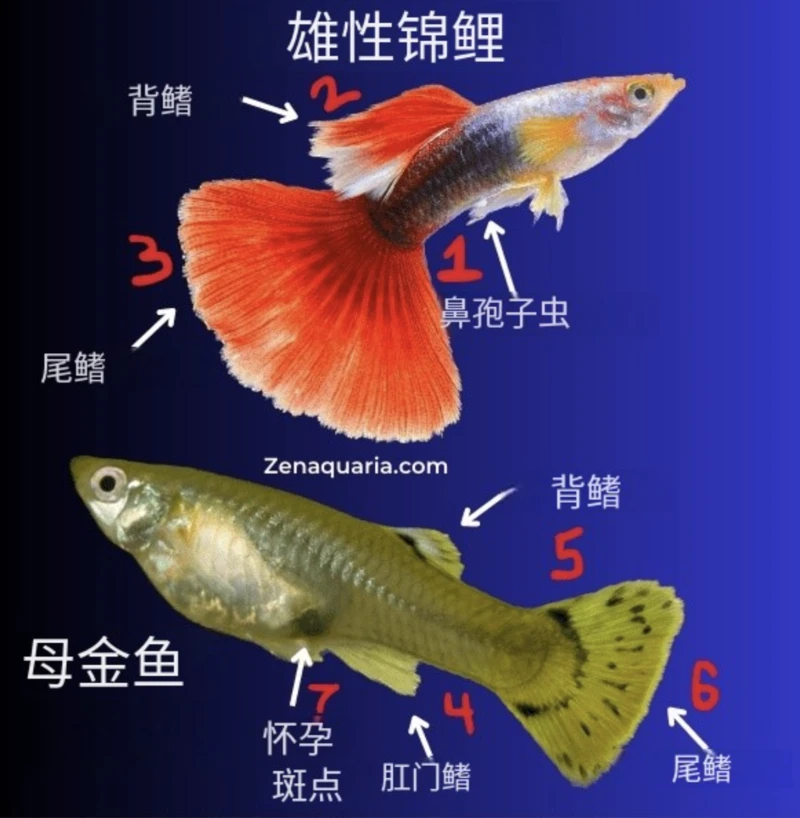
Among many fish species, males and females differ significantly in size, color, and body shape. Wang Junsheng (2018) mentioned in Fish Biology that male fish are usually smaller than females and become more colorful during the breeding season to attract the attention of females.
Goldfish: Male goldfish are smaller than female goldfish, and the pectoral fins of males are usually longer and more brightly colored than those of females.
Koi: Male koi are generally more slender and their colors are often brighter than those of females. Female koi are larger and have more rounded back lines.
2. Observe behavioral differences
Male and female fish often exhibit different behaviors, especially during the breeding season. Li Hong (2021) mentions in her book "Fish Reproduction and Behavior" that male fish engage in a series of courtship behaviors to attract females, which are usually more intense and expressive than those of females.
Male courtship behavior: Male fish typically attract females by displaying their tail fins, wagging their tails, or using other methods. For example, male betta fish exhibit vibrant colors and unique behaviors to compete for territory.
Female response: When choosing a mate, female fish often choose males that are larger, brightly colored, and more active.
3. Observe the fish's reproductive organs.
For some fish species where sex is difficult to determine, observing their genitals is the most direct method. Male fish usually secrete sperm during the breeding season, and there may be small, hard "genital ridges" or "fin-like protrusions" near the genital opening. Yang Xue (2019) mentioned in her book "Aquarium Breeding Technology" that the male genitals of some fish species are more obvious, while those of females are usually smoother.
For example, in tropical fish, males tend to have more prominent reproductive organs, while females have a fuller abdomen to accommodate eggs.
Which fish species exhibit significant sex differences? A list of sex characteristics in fish.
Different species of fish exhibit significant differences in size, color, and behavior between males and females. Below are some common sex characteristics of fish to help you easily distinguish between male and female fish.
| Fish | Male characteristics | Female characteristics |
|---|---|---|
| goldfish | It is relatively small in size, brightly colored, with long pectoral fins and a more attractive tail fin. | It is relatively large in size, dark in color, and has a rounder abdomen. |
| Koi | They are slender with bright colors and are very active during the breeding season. | It has a large body size and a relatively rounded back. |
| Douyu | With its bright colors and large tail, it exhibits intense courtship behavior. | It is small in size and has a relatively simple color. |
| Guppies | It has long, brightly colored fins and a small body. | It is large in size and has a noticeably distended abdomen. |
| Siamese fighting fish | They are small in size, brightly colored, and very active. | It is relatively large in size, with a rounded body and short fins. |
How do the sexes of fish affect reproduction and care?
The sex of fish not only affects their appearance and behavior, but is also closely related to reproduction. Zhang Kai (2020) points out in his book "Aquarium Aquaculture and Management" that understanding the sex differences of fish helps to better manage aquariums in aquaculture, especially in terms of reproduction.
Reproduction Management
Pair breeding: For successful breeding, it is usually necessary to keep female and male fish together. To ensure successful breeding, it is recommended that breeders choose suitable pairs based on the characteristics of the fish species.
Sex ratio: In some fish species, such as guppies, a skewed sex ratio can negatively impact the reproductive efficiency of the population. Ensuring an appropriate number of males and females is crucial to avoid excessive competition and fighting.
Gender and Fish Social Structure
Some fish exhibit distinct gender roles and social structures within their groups. For example, in group fish, males often play a dominant role during the breeding season, while females are responsible for laying the eggs. Understanding these gender roles helps in creating a more suitable environment for fish during aquaculture.
In conclusion: Are there male and female fish?
In conclusion, fish do have sexes, and there are certain differences between males and females. By observing the body shape, color, behavior, and behavior during the breeding season, we can relatively easily distinguish the sex of fish. Furthermore, understanding the sexual characteristics of fish and the role of sex in reproduction is crucial for fishkeeping enthusiasts. Whether it's choosing the right aquarium setup or better managing fish breeding, mastering basic knowledge about fish sex will help enhance the enjoyment and success rate of fishkeeping.
References:
Zhang Guoliang (2020). Aquatic Biology. Aquatic Publishing House.
Li Hong (2021). Fish Reproduction and Behavior. Fisheries Science and Technology Press.
Wang Junsheng (2018). Fish Biology. Journal of Aquaculture.
Yang Xue (2019). Aquaculture Technology. Modern Aquaculture Magazine.