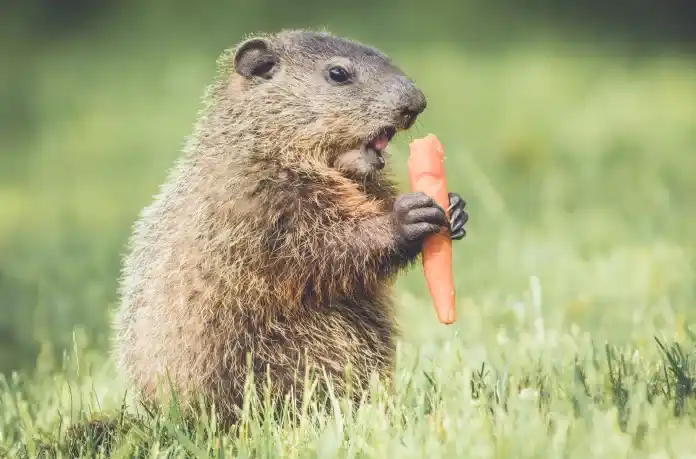
Marmots (also known as American groundhogs) are burrowing rodents commonly found in backyards and farmlands. Due to their voracious appetite for vegetation, they are often considered troublemakers by farmers and gardeners. If you're wondering "What do groundhogs eat?" and whether they pose a threat to pets, especially cats, this article will provide comprehensive answers.
Quick answer: Do groundhogs attack cats?
In short, groundhogs primarily feed on plants and do not actively prey on cats . While there are rare reports of groundhogs attacking small animals (such as kittens or chickens), this is mostly defensive rather than predatory. Groundhogs are typical herbivores; their diet consists mainly of grass, vegetables, and fruits, not meat.
What do groundhogs eat?
Marmots primarily eat herbaceous plants, but they also occasionally consume insects or other protein sources.
| Food types | Example | intake frequency |
|---|---|---|
| Green leafy plants | Clover, wild grass, alfalfa, dandelion | Daily intake |
| vegetable | Carrots, beans, peas, cabbage | Frequently (when conditions permit) |
| fruit | Soft fruits such as apples and berries | Occasionally consumed |
| Insects and grubs | Beetles, caterpillars, earthworms | Occasionally |
| Protein sources | Chicks, bird eggs (very rare) | Extremely rare |
Foraging habits of herbivores
Groundhogs spend a significant amount of time each day foraging in their surroundings. During the warmer months, they may spend up to six hours a day foraging for herbs, filling their cheek pouches with plants before carrying them back to their burrows to continue eating at night.
This plant-based diet and physiological adaptations make the marmot very well suited to a "vegetarian" lifestyle.
Occasional omnivorous behavior
Although marmots are primarily herbivores, they sometimes exhibit opportunistic omnivorous behavior:
They eat insects, grubs, and other small invertebrates as a source of supplementary protein.
In rare cases, there have been reports of marmots carrying dead cottontail rabbits back to their burrows, but it is currently uncertain whether they are actively hunting or simply collecting the carcasses.
Nevertheless, the teeth and claws of groundhogs are not well-suited for hunting live prey. Their sharp incisors are better suited for biting through plants than for attacking prey.
Do groundhogs eat cats?
The answer is no . Groundhogs do not consider cats prey. Healthy adult cats are fast, agile, and possess sharp claws, posing a significant threat to the relatively clumsy groundhog. Therefore, groundhogs rarely attempt to attack adult cats. The risk may be slightly higher for smaller kittens or miniature cat breeds, but it remains rare.
Do groundhogs exhibit aggression towards cats?
Although groundhogs do not usually attack unprovoked, they can pose a threat to cats under certain circumstances:
| Condition | The behavior shown | explain |
|---|---|---|
| Territory defense | Grinning teeth, stomping feet, charging towards the threatening object. | During the breeding season, groundhogs exhibit a strong sense of territory. |
| Protect the cubs | Charge at or make a sound towards the threatening object | Female marmots become more aggressive when they are young. |
| Cat approaches cave | It may launch defensive attacks, such as biting and scratching. | If a cat gets too close to the burrow, the groundhog will instinctively protect its home. |
Kittens and small cat breeds are at higher risk
Groundhogs pose a slightly greater threat to kittens and miniature cats because their smaller size makes them more easily perceived as potential threats. In contrast, adult cats often deter groundhogs.
How to protect cats from the threat of groundhogs
To avoid conflict between cats and groundhogs, the following preventative measures can be taken:
1. Keep pet food indoors.
Groundhogs are opportunists with an extremely sensitive sense of smell; they are attracted to scattered cat food or canned food outdoors.
| Recommended measures | reason |
|---|---|
| Indoor feeding | Avoid attracting groundhogs with food scents |
| Sealed food | To prevent food from spilling or developing odors |
2. Install protective fencing
Installing a sturdy fence is an effective way to prevent marmots from entering your yard.
| Fence characteristics | Recommended configuration |
|---|---|
| Material | Galvanized wire mesh or welded wire mesh |
| Grid size | The aperture should be less than 1/4 inch. |
| Burial depth | The fence must be buried at least 12 inches underground. |
| Bottom slope | The bottom of the fence slopes outwards to prevent marmots from digging burrows in. |
Regularly inspect the fence for holes or looseness, and repair it promptly to maintain its protective effect.
3. Take humane measures to drive them away.
If the groundhogs have already settled in the yard, you can use humane methods to drive them away to ensure the cat's safety.
Scent repellency method : Sprinkle particles of urine from predatory animals (such as fox urine) at the entrance of the burrow.
Seal the burrow : When the groundhog leaves, seal the burrow entrance with mud to prevent it from re-entering.
Professional removal : If the situation is serious, contact wildlife control experts for safe relocation.
Be sure to release any captured marmots in a safe area away from residential areas and roads.
Warning signs of groundhog aggression
If groundhogs feel threatened, they will typically give the following warning signals:
Crackling teeth: Making a sound by rapidly biting down to warn intruders to stay away.
Stomp your foot : Stomp your front foot quickly to create a vibration as a threat.
Sprint Attack : Charge directly at the threat to drive it away.
Adult cats usually avoid these behaviors quickly, while kittens may not be able to detect the danger in time.
In conclusion: Do groundhogs threaten cats?
Groundhogs primarily feed on plants such as grasses, dandelions, and vegetables , occasionally eating insects and fruits. Although they sometimes exhibit omnivorous behavior, they are not natural predators. Groundhog attacks on cats are extremely rare; most attacks occur when they feel threatened, such as when protecting their burrows or young.
By taking the following preventative measures— feeding pets indoors, setting up fencing for protection, and properly deterring marmots —you can effectively reduce conflicts between marmots and cats and protect your pets' safety.
In short, understanding what groundhogs eat and their behavior can help protect cats while coexisting peacefully with these "underground inhabitants" and creating a safer living environment.