Chameleons are among the most amazing reptiles in the animal kingdom. They can not only change their color, but also independently rotate their eyes and use their long tongues to catch insects. This article will provide a detailed comparison of the leopard chameleon and the veiled chameleon to help you choose the right chameleon for your needs.
Quick Comparison: Key Differences
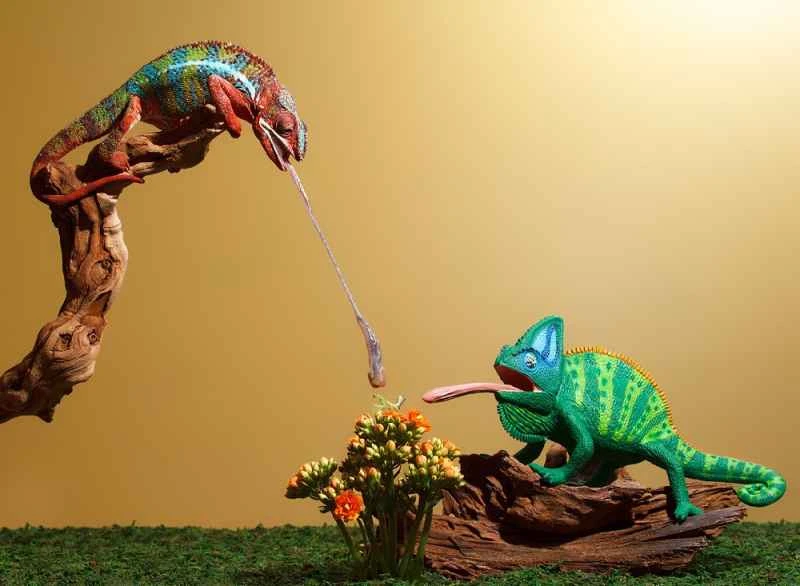
Here are some key differences between the leopard chameleon and the veiled chameleon :
| feature | Leopard Chameleon | Veil Chameleon |
|---|---|---|
| scientific name | Furcifer pardalis | Chamaeleo calyptratus |
| body shape | Males can reach 20 inches, and females can reach 10 inches. | Males can reach 24 inches, and females can reach 16 inches. |
| character | Living alone, shy, territorial | More docile and more tolerant |
| Body color range | Bright red, blue, green, yellow | Low-key colors such as green, brown, and gold |
| country of origin | Madagascar rainforest | Arid regions of the Arabian Peninsula |
Origin and Habitat
Origin and Habitat of the Leopard Chameleon
Leopard chameleons are native to the rainforests and woodlands of Madagascar . They prefer environments with abundant vegetation and high humidity, typically living at altitudes of 500-2100 feet , primarily inhabiting branches and bushes.
The origin and habitat of the veiled chameleon
The veiled chameleon is native to arid regions of the Arabian Peninsula , such as Yemen and Saudi Arabia . They are adapted to semi-arid grasslands and desert scrublands , but also prefer to inhabit areas with trees and shrubs for foraging and to avoid predators.
Comparison of physical features
Physical characteristics of a leopard chameleon
The leopard chameleon is known for its vibrant colors; the following are its main physical characteristics:
| feature | describe |
|---|---|
| body shape | Males: up to 20 inches long; Females: up to 10 inches long |
| crown | Arched and prominent crown |
| Eye | It can rotate 180° independently and has excellent vision. |
| Tail | Thick and flexible to maintain balance |
| body color | A variety of vibrant colors including red, yellow, green, blue, and orange. |
Male leopard chameleons have brighter coat colors, which they typically use to attract females. They can change color in a short period of time to camouflage themselves or display their emotional state.
Appearance characteristics of the veiled chameleon
The veiled chameleon gets its name from the high crest on its head, which makes it look like it's wearing a veil. Here are its main physical characteristics:
| feature | describe |
|---|---|
| body shape | Males: up to 24 inches long; Females: up to 16 inches long |
| crown | The tall headdress resembles a veil. |
| body color | Predominantly green, with brown, yellow and gold stripes. |
| Scales | The skin has fine, ridge-like scales, which adds to its texture. |
The veiled chameleon's ability to change its body color is mainly used for camouflage and to display emotions. Compared to the leopard chameleon, its colors are more understated, but it still has the functions of protection and communication.
Color-changing ability and camouflage
Both types of chameleons can quickly change their body color to camouflage themselves. Below is a comparison of their color-changing abilities:
| feature | Leopard Chameleon | Veil Chameleon |
|---|---|---|
| Color range | Red, orange, green, blue, yellow and many other colors | Low-key colors such as green, brown, and gold |
| Color-changing uses | Disguise, attracting a spouse, expressing emotions | Mainly used for camouflage and demonstrations |
| Color change speed | It can be completed in seconds | It can be completed in seconds |
The leopard chameleon has more vibrant and diverse color variations, while the veiled chameleon's color variations lean more towards natural tones to better camouflage itself in the environment.
Personality and Interaction
The personality of a leopard chameleon
Leopard chameleons are typical solitary reptiles ; they do not like to interact with their own kind or humans.
Behavior : Shy personality, territorial, easily influenced by environmental changes.
Warning signs : Hissing, swelling of the body, and opening the mouth to show teeth indicate a feeling of threat.
Recommendations : Avoid frequent touching as much as possible, and if necessary, move slowly to reduce fright.
The personality of the veiled chameleon
Veiled chameleons are generally gentler and more tolerant of humans and the environment.
Social behavior : Although they are solitary animals, they adapt relatively easily to captive environments.
Interaction behavior : If they are exposed to humans from a young age, they are more likely to adapt to being gently touched.
Warning signs : Opening its mouth and darkening its body color are typical signs that the veiled chameleon is feeling uncomfortable.
Rearing environment requirements
Size of breeding box
Both types of chameleons require spacious, well-ventilated enclosures with vertical climbing space:
| Chameleon species | Recommended enclosure size |
|---|---|
| Leopard Chameleon | At least 2ft x 2ft x 4ft (tall enclosure) |
| Veil Chameleon | At least 2ft x 2ft x 3ft |
Temperature and humidity requirements
| condition | Leopard Chameleon | Veil Chameleon |
|---|---|---|
| Daytime temperature | 75-85°F (24-29°C) | 80-90°F (26-32°C) |
| Nighttime temperature | 65-75°F (18-24°C) | 65-75°F (18-24°C) |
| humidity | 50-60% | 60-70% |
Diet and Nutrition
The leopard chameleon and the veiled chameleon primarily eat insects , occasionally supplementing their diet with some plants.
| Food types | Details |
|---|---|
| insect | Crickets, Dubia cockroaches, black soldier fly larvae, etc. |
| plant | Hibiscus flowers, rose petals, mulberry leaves, etc. |
| Nutritional supplements | Calcium powder + Vitamin D3, supplemented 2-3 times per week. |
To ensure your chameleon's health, it is recommended to mist it daily to maintain humidity and provide fresh drinking water. Avoid insufficient water intake to prevent dehydration symptoms such as sunken eyes and loose skin.
Lifespan and Health Issues
| Chameleon species | Average lifespan | Common health problems |
|---|---|---|
| Leopard Chameleon | Males: 5-7 years old; Females: 3-5 years old | Respiratory tract infection, metabolic bone disease |
| Veil Chameleon | Males: 5-10 years; Females: 3-5 years | Stomatitis, egg retardation, dehydration |
Leopard chameleons are quite sensitive to environmental changes and are more prone to stress-related illnesses. Therefore, owners need to provide a stable and comfortable environment and take their chameleons for regular health checkups.
in conclusion
Both leopard chameleons and veiled chameleons are highly prized reptiles. Leopard chameleons attract countless enthusiasts with their stunning colors, but they require more sophisticated care. Veiled chameleons, on the other hand, are more suitable for beginners due to their gentle temperament and ease of care.
Before deciding which type of chameleon to keep, it's crucial to understand their individual differences and environmental needs. With a suitable environment and meticulous care, your chameleon will surely thrive and add a unique charm to your life!