Salmon (Salmo salar), a fish species widely inhabiting the Atlantic Ocean and surrounding waters, has become one of the core species in global aquaculture and wild fisheries due to its high-quality flesh, unique migratory behavior, and important ecological role. This article will provide an in-depth analysis of salmon from multiple aspects, including its morphological characteristics, migration patterns, ecological behavior, reproductive process, and conservation status, and will discuss its importance in ecology, economy, and culture.
Species nomenclature
Scientific name : Salmo salar
Salmo comes from Latin and means "jumping," referring to the frequent leaping behavior of salmon during their anadromous breeding season.
salar means "healthy" or "strong," used to describe its physique and adaptability.
Common names : Atlantic salmon, Atlantic salmon, salmon, salmon (Atlantic Salmon, Salmon)
Ahi (In some regions, especially Hawaii, "ahi" is often used to refer to tuna, particularly some related skipjack tuna species, but it is not directly related to salmon).
Scientific classification of salmon
Kingdom : Animalia
Phylum : Chordata
Class : Osteichthyes
Order : Salmoniformes
Family : Salmonidae
Genus : Salmo
Species : Atlantic salmon ( Salmo salar )
This is a simplified scientific classification of Atlantic salmon. Salmon belong to the family Salmonidae and are closely related to other fish such as rainbow trout and red-spotted salmon. They occupy an important position within the genus Salmon, especially known for their reproductive and migratory behaviors.
1. The Zoological History of Salmon
Salmon, scientifically known as *Salmo salar*, belongs to the family Salmonidae and is an important species of fish in the genus *Salmo*. Salmon have a long history, serving as a food source and cultural symbol for inhabitants of Northern Europe and North America since ancient times. They typically live in the ocean, returning to freshwater rivers to reproduce, a unique life cycle that has attracted extensive research from biologists. Through studying their migration routes, habitat changes, and species evolution, scientists have not only deepened their understanding of this species but also provided valuable scientific evidence for conservation and sustainable fishing.
2. Morphological characteristics and physical properties of salmon
physical characteristics
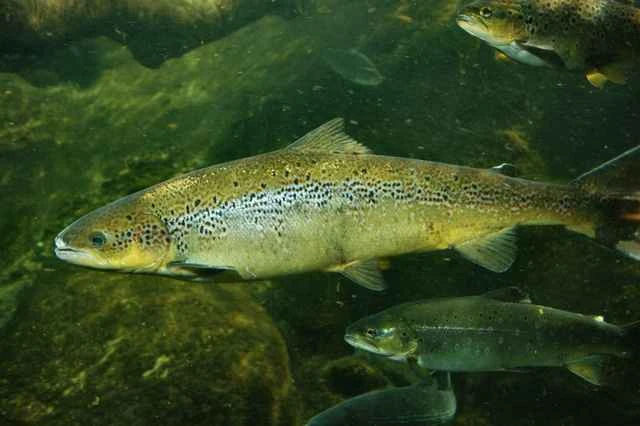
Salmon have a streamlined body, adapted for fast swimming. Adult salmon typically measure 60 to 100 cm in length and weigh between 5 and 10 kg, but some individuals can reach 150 cm in length and weigh over 15 kg. Their backs are bluish-grey to dark green, while their bellies are silvery-white with prominent black spots, aiding in camouflage in both marine and freshwater environments. Males become more brightly colored and exhibit a more pronounced protruding mouth during the breeding season.
Body length and weight
Salmon typically range in length from 60 to 100 centimeters, but mature salmon can reach 120 to 150 centimeters in length, especially in high-latitude regions. In terms of weight, salmon usually weigh between 5 and 10 kilograms, but some individuals can grow to over 15 kilograms, and in very rare cases, even reach 20 kilograms.
life
Salmon typically live 6 to 10 years, but some individuals can live over 15 years. They spend most of their lifespan in the ocean, only venturing into freshwater during the breeding season. Due to predation and habitat challenges, many salmon die after breeding, which is a natural part of their life cycle.
3. Global distribution and habitat of salmon
Global distribution
Salmon are widely distributed in the North Atlantic region, primarily inhabiting the coastal waters of Europe, North America, and Asia. Besides the Atlantic, salmon have also been introduced to other parts of the world for aquaculture, especially in the cold waters of New Zealand and South America. The habitat of salmon depends on water temperature, oxygen concentration, and water quality; they prefer clean, oxygen-rich waters, especially areas with abundant food sources.
Habitat
Salmon inhabit both marine and freshwater environments. Adult salmon live in open marine waters, especially cold waters. They are born in freshwater rivers near their birthplace, then migrate to the marine environment, and finally return to freshwater rivers to reproduce. Clear, oxygen-rich freshwater rivers provide ideal spawning grounds for salmon, especially during their maturity period.
4. Salmon ecology and behavior
Ecological role
The role of salmon in the ecosystem is undeniable. As predatory fish, they play a regulatory role in the aquatic environment, preying on small fish and plankton. Their deaths, especially those occurring during reproduction, provide valuable nutrients to the aquatic ecosystem, promoting the material cycle of the surrounding environment. Salmon themselves are also prey for many carnivores, including seals, whales, and birds.
Behavioral Habits
Salmon exhibit highly migratory behavior. Every year, they undertake migrations of thousands of kilometers from their birthplace in freshwater rivers to the ocean, returning to their birthplace to reproduce after reaching adulthood. Their migration routes are controlled by their biological clock and are usually guided by external conditions such as changes in water temperature and light intensity.
5. Salmon migration patterns
The migratory behavior of salmon is one of the core characteristics of their life cycle. This process, from freshwater to the ocean and back to their birthplace in the river, can last for several years. Salmon migration begins in spring or autumn, with schools of salmon migrating from the ocean back to freshwater to prepare for reproduction. They breed in suitable locations, then either die or return to the ocean.
Challenges of the migration process
Salmon face many challenges during their migration, including strong currents, waterfalls, predator threats, and changes in water temperature. Despite these challenges, salmon, with their excellent swimming ability and keen sense of smell, manage to find their way back.
6. Salmon's diet and foraging strategies
Salmon are predatory fish, primarily feeding on other small fish, plankton, and insects. Newly hatched salmon fry mainly eat plankton, but their diet becomes more diverse as they grow. Adult salmon mainly prey on sardines, cod, and shrimp. Salmon rely on their streamlined bodies and powerful swimming abilities to quickly capture prey in the ocean.
7. The salmon breeding process
The reproductive process is a crucial part of the salmon's life cycle, involving complex migratory behaviors and physiological changes. They reproduce sexually, typically in freshwater environments, but the salmon's life cycle alternates between freshwater and saltwater.
1. Breeding season and spawning period
Salmon breeding typically occurs in the autumn and winter, with the exact timing depending on the geographical location of their habitat. In the native habitat of Atlantic salmon ( Salmo salar ), spawning usually takes place between September and December. Female salmon choose relatively flat riverbeds, dig nests (called "nests") under suitable water flow conditions, and lay their eggs in these nests.
2. Courtship and mating
During the breeding season, male and female salmon engage in courtship behaviors. Males compete for females by displaying their vibrant colors, robust physique, and fierce fighting. Typically, the colors of male salmon become more vibrant during the breeding season, especially on their backs and scales, where they exhibit green or red hues, which helps attract females.
3. Egg laying and fertilization
During spawning, female salmon lay thousands to tens of thousands of eggs in their nests. The male then releases sperm to externally fertilize the eggs while they are laying. The fertilized eggs are then covered with sand to protect them from predators.
4. Hatching and growth of fry
After an incubation period of about 1 to 3 months, the fertilized eggs will hatch into fry. The newly hatched salmon fry are called "alevin". These fry initially rely on the yolk sac for nutrition, and as they grow and begin to forage independently, they become "fry". At this time, they begin to adapt to the environment and gradually increase their survival ability.
5. Fry stage and migration
When salmon fry reach maturity, they typically enter the "smolt" stage, at which point they acquire the ability to adapt to saline environments and prepare for long-distance migrations. Salmon migrations are usually triggered by external environmental conditions (such as changes in water temperature and light), and the migration routes are usually very fixed. The fry will swim upstream back to their native freshwater rivers to reproduce.
6. Death and Life Cycle
The reproductive process of salmon has a profound impact on their lives. Many salmon die after spawning, especially adult salmon that return to their birthplace. At this time, they undergo tremendous physiological changes, devoting most of their energy to reproduction, and then weaken and die. This process is known as "semelparity" (one-time birth). However, some salmon species can survive spawning and return to the ocean to reproduce multiple times.
7. Artificial breeding and propagation
In modern fisheries, the artificial breeding of salmon is also very common. Farms promote salmon reproduction by simulating the breeding conditions of salmon (such as water temperature, salinity, and ambient light). Farmed salmon typically complete their life cycle under controlled conditions and are harvested at the appropriate time.
The impact of reproduction on populations
Salmon's reproductive cycle and behavior directly impact the health and population size. Because they reproduce in large numbers annually, they maintain their population through this reproductive process. However, changes in the natural environment and human factors (such as water pollution, habitat destruction, and overfishing) can sometimes threaten salmon reproductive success and population survival.
In summary, salmon reproductive behavior is complex and precise, relying on a combination of environmental factors and physiological mechanisms. Understanding these reproductive characteristics is crucial for the conservation of salmon populations and their habitats.
8. Current Status and Conservation Level of Salmon
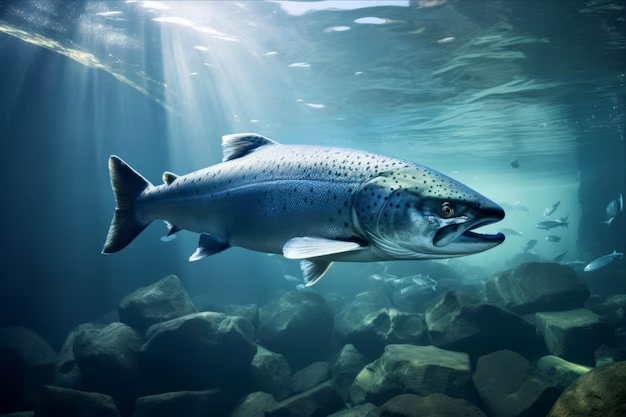
Salmon populations face severe challenges due to habitat destruction, overfishing, and climate change. Atlantic salmon, in particular, are experiencing a sharp decline in wild populations in many regions. To address this crisis, many countries and regions worldwide have implemented stringent conservation measures, including banning illegal fishing, restoring habitats, and raising water quality standards.
Protection level
In many countries and regions, salmon has been listed as an "endangered species" or a "protected species." For example, the Atlantic salmon (Salmo salar) is listed as a "vulnerable" species by the International Union for Conservation of Nature (IUCN). In some key habitats, salmon fishing is strictly controlled to ensure the recovery of its population.
9. Economic value and annual catch of salmon
Economic value
Salmon is one of the world's most important farmed aquatic species, especially in countries such as Northern Europe, Canada, the United States, and Chile. Commercial salmon farming not only meets the global market's demand for high-quality seafood but also provides employment and livelihoods for millions of people. The global annual salmon catch reaches millions of tons, particularly in Europe and the Americas, where it has become a vital economic pillar.
Annual catch
According to data from the International Fisheries Organization, the annual salmon catch continues to increase, with the global total exceeding 2 million tons. Aquaculture has become a significant source of salmon supply, while the catch of wild salmon is limited by environmental protection policies.
10. The ecological value and cultural significance of salmon
Ecological value
Salmon not only play a vital role in aquatic ecosystems, but their life cycle directly impacts the growth and reproduction of various aquatic organisms. The organic matter left behind by dead salmon provides valuable nutrients for river and marine ecosystems, promoting ecological cycles and biodiversity.
Cultural significance
In Northern Europe and North America, salmon is an important symbol of local culture and tradition. In these regions, salmon is not merely food, but a core element of social rituals, artworks, and festivals. Furthermore, the commercial and ecological value of salmon makes it a significant topic in many discussions of environmental protection and fisheries policies.
Summarize
Salmon, a miraculous life phenomenon in nature, possesses immeasurable ecological, economic, and cultural value. By conducting in-depth research on various aspects of salmon, including their life cycle, behavior, and habitat, we can not only better understand the ecological needs of this species but also take more effective measures to protect them and ensure the survival and prosperity of this precious species.