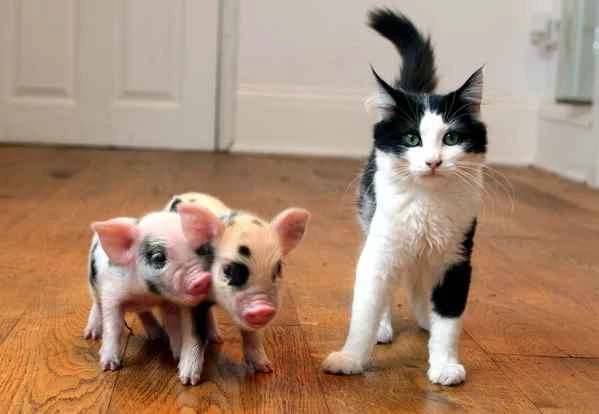
Teacup pigs—often marketed as tiny, adorable pets—are gaining popularity in households today. However, many people are unaware that these “mini pigs” are actually ordinary potbellied pigs, kept small due to malnutrition. While they may look cute in photos, there are many misconceptions about these pets that can affect their health and your lifestyle.
Let's learn more about teacup pigs and why they might not be the ideal pet for you.
What is a teacup pig?
Contrary to popular belief, teacup pigs are not a distinct breed. They are simply regular belly pigs that have been forced to remain small through unhealthy feeding practices such as malnutrition. Often, breeders keep these pigs small by starving them and falsely promote them as miniature animals.
While belly pigs are smaller than regular farm pigs, typically weighing between 100 and 200 pounds, teacup pigs are often misrepresented as weighing around 10 to 12 pounds. Even the smallest belly pigs weigh 60 to 80 pounds when fully grown. Therefore, the promise of "teacup pigs" is usually just a misconception.
1. The "Teacup Pig" does not exist.
The term "teacup pig" is a marketing tactic. In reality, teacup pigs are not a separate breed, but simply ordinary belly pigs that have been kept smaller by unhealthy feeding practices. These pigs are usually much larger than the promised "mini" size, eventually reaching 60 to 100 pounds or even more, depending on their genetics and health.
2. Keeping "teacup pigs" small can seriously affect their health.
Unfortunately, many teacup pig farmers use cruel methods, such as malnutrition or inbreeding, to stunt the pigs' growth. By restricting their food intake, farmers can prevent the pigs from growing larger. However, this causes their internal organs to grow to a normal size, while their bones and other body parts do not develop accordingly, ultimately leading to skeletal deformities, organ failure, and other serious health problems.
Malnourished or inbred pigs may suffer from health problems such as a weakened immune system, which means they are more susceptible to illness, have serious bone problems, and may even die prematurely.
3. You can't predict the size of a "teacup pig".
Another common misconception about teacup pigs is that their adult size can be predicted based on their parents' size. This is inaccurate. Because pigs can reproduce from three months old, the parents of teacup pigs are often also newborn piglets, making it impossible to predict the final size of a teacup pig based on its parents' size.
Even worse, some unethical "teacup pig" breeders may simply show off pigs that are still in their calves and falsely advertise them as "teacup pigs," ignoring the fact that they will eventually grow into adult pigs.
4. Teacup pigs are very expensive.
If you're planning to buy a "teacup pig," be prepared to pay a hefty price tag ranging from $750 to $3,500. And the cost of raising the pig will continue to increase after you purchase it.
Many teacup pig breeders believe their pigs will remain small, so they often don't consider the costs of raising a pig that weighs over 100 pounds. From an ample food supply (teacup pigs have large appetites), regular veterinary checkups, vaccinations, to other necessities for the pig, raising one can cost several thousand dollars a year.
In addition, spaying or neutering pet pigs is recommended to reduce undesirable behaviors and lower the risk of certain cancers. However, this can be challenging, as you may need to find a veterinarian specializing in pigs.
5. Teacup pigs have a very short lifespan.
While healthy belly pigs can typically live 12 to 18 years, teacup pigs usually only live to around 5 years old. This is mainly due to factors such as health problems, skeletal issues, and a weakened immune system. Genetic diseases resulting from inbreeding can also affect their lifespan.
6. Teacup pigs need a lot of space.
Pigs are typically large, not just because of their length. They need ample space for daily exercise; otherwise, they may become bored and exhibit destructive or aggressive behavior.
Some pigs may even become aggressive towards humans, biting or charging at them. Many pigs are abandoned or sent to shelters simply because their owners do not have enough space to ensure their well-being, health, and vitality.
7. Raising pigs in your area may be illegal.
You might not believe it, but in some places, keeping pigs as pets is illegal. Regional laws in many areas consider pigs farm animals and do not permit them to be kept in non-agricultural settings.
If you are considering keeping a pig as a pet, be sure to first understand the local laws. A little research can help avoid the tragedy of many pigs being abandoned or sent to shelters every year.
8. Pigs are social animals.
Pigs are highly social animals. Like dogs, they form groups and typically play, rest, and sleep together. Without sufficient social interaction, pigs may become bored, irritable, or depressed, and may even exhibit aggressive behavior.
Therefore, it's best to keep two pigs at a time, but many "teacup pig" owners who find it difficult to manage a single pig weighing over 100 pounds often find it even harder to manage two. Furthermore, keeping two pigs means that food, supplies, and veterinary costs will double.
9. Raising pigs and raising cats and dogs are completely different.
Pigs are very intelligent and lively animals that can form deep emotional bonds with humans. For some families, pigs are the perfect pet. However, raising pigs is completely different from raising cats and dogs. Many first-time pig owners are often surprised by the amount of work and expenses involved.
Unfortunately, many people who buy "teacup pigs" don't expect them to grow into full-size teenage or adult pigs. When the pigs grow too big, develop health problems, or exhibit destructive behavior, they are often sent to shelters or even abandoned.
10. Teacup pigs may not get along with other pets.
If you already have other pets, such as dogs or cats, or plan to get more in the future, consider that teacup pigs may not get along well with them, potentially causing stress and problems for everyone in the household. Some pigs get along well with other pets, while others may not. Fights, especially between dogs and pigs, are possible, and the pig may be provoked by the dog or even injured.
Although pigs are social animals and enjoy being with other pigs, this does not mean that they will happily live with other animals.
Conclusion: Is the teacup pig right for you?
While teacup pigs may look like tiny, adorable pets, there are many challenges and responsibilities behind their lives. These pigs are often misunderstood as remaining miniature, but they actually grow much larger than you might expect. In addition, raising them requires special care, including a proper diet, ample space, and regular veterinary checkups.
Before purchasing a "teacup pig," make sure you fully understand the needs of this pet, are aware of potential health issues, and consider the long-term responsibility. If you are prepared to take on this responsibility and choose a reputable breeder, raising pigs can be a wonderful experience.