Dogs and children can build some of the most precious and heartwarming relationships. But fostering this harmonious bond requires effort, training, and mutual respect. This article delves into five key techniques for helping dogs and children get along, answers common questions, and provides actionable advice.
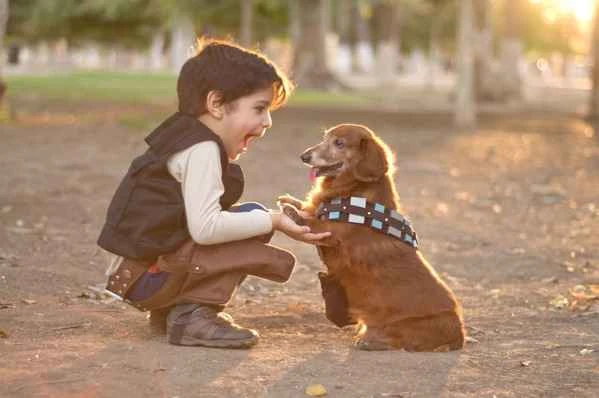
Dogs playing with children
Why do dogs and children need special guidance?
While dogs are known for their loyalty and friendliness, they can also feel stressed when faced with the unpredictable behavior of children. Children may unintentionally cross boundaries with dogs, leading to misunderstandings or tension. Therefore, teaching both parties to respect each other and ensuring adult supervision are fundamental to building a good relationship. Through these measures, dogs and children can develop a relationship filled with trust, love, and companionship.
1. Teach children how to safely approach dogs.
The foundation for a healthy relationship between dogs and children is teaching children how to approach dogs safely and respectfully.
Why this is important
Dogs rely on body language and subtle cues to communicate, which children often don't understand. Teaching children how to properly interact with dogs can prevent them from being startled by sudden movements or loud noises, thus laying the foundation for building trust.
How to teach children safe interaction
Ask for permission first : Teach children to ask for permission from an adult or dog owner before approaching a dog.
Move slowly : Encourage children to approach the dog with slow and gentle movements, avoiding fast or violent movements.
Avoid touching sensitive areas : Teach children to touch the dog's back or side, not its face, ears, or tail.
Understanding Dog Signals
Teach children how to interpret a dog's body language and avoid misunderstandings:
Happy and relaxed : Wagging tail, gentle eyes, and an open mouth usually indicate that a dog is relaxed.
Discomfort or fear : If a dog growls, its ears are flattened back, or its tail is tucked in, it usually means that the dog needs space.
2. Always monitor the dog's interactions with the child.
No matter how friendly the dog or child is, adult supervision is essential to ensure safe interaction.
Why Supervision is Important
Children might unintentionally pull a dog's tail or climb on it, and dogs may react unpredictably when stressed. Proactive supervision can minimize these risks and ensure that interactions between dogs and children are both safe and enjoyable.
Best practices during supervision
Pay close attention throughout : Don't just "passively observe," but actively observe the interactions between the dog and the child.
Establish rules : Teach children not to disturb the dog when it is eating, sleeping, or playing.
Timely intervention : If the interaction becomes too abrasive or tense, intervene promptly to ensure both parties remain calm.
Establish boundaries
Establish physical boundaries for dogs and children to ensure both have their own safe space. For example:
Use baby doors to restrict your dog's activity area.
Create a dedicated "safe zone" for your dog so it can rest quietly when it needs to.
3. Train your dog to behave in a way that is suitable for children.
Well-trained dogs are more likely to remain calm and patient in front of children, so training is an important step in promoting harmonious relationships between dogs and children.
Essential commands for dogs to interact with children
Sit down : This prevents the dog from jumping and keeps it calm.
Keep the dog in place and prevent it from running towards the child.
Leave : Prevent the dog from getting into the child's toys or treats.
Gentle : Teach your dog to use gentle movements when interacting with children.
Successful training techniques
Use positive reinforcement, such as rewards and praise, to encourage your dog to exhibit the correct behavior.
Practice these instructions regularly and reinforce consistency in different environments.
Gradually guide the dog to interact with children, allowing them to establish a comfortable and interactive relationship.
4. Encourage safe and fun games.
Play is a great way for dogs and children to bond, but it's important to ensure safety during play.
Games suitable for dogs and children
Catching : This is a highly interactive game that allows children and dogs to interact without physical contact.
Obstacle course : Set up simple obstacles and let the dog and child complete the task together to enhance their sense of cooperation.
Treasure hunt : Hide some treats or toys and let the dog and child find them together to increase the fun.
Avoid game types
Chasing : This can trigger a dog's hunting instincts, leading to unpredictable reactions.
Rough play : Overly vigorous rough play and tug-of-war can cause dogs to become overexcited, leading to accidental injuries.
Provide suitable toys
Make sure your dog has its own toys to play with, and prevent children from taking away your dog's toys to prevent your dog from becoming possessive.
5. Respect the dog's needs and personal space.
Dogs, like humans, need rest and personal space. Teaching children to respect a dog's needs can help reduce stress and build trust.
Create a safe zone for your dog
Set up a quiet area, such as a doghouse or bed, so that your dog can rest peacefully when it is tired.
Teach children to understand a dog's personal space and respect its "safe zone".
Identifying stress signals in dogs
The dog may feel tired or overstimulated during interaction. Here are some common signs of stress:
Frequent yawning or licking of the lips.
Walk away or avoid it.
Body stiff.
When your dog exhibits these signs, encourage your child to give the dog some rest.
6. Frequently Asked Questions: Common Questions about Dogs and Children
Which dog breeds are suitable for living with children?
Breeds such as Golden Retrievers, Labrador Retrievers, Beagles, and Bernese Mountain Dogs are known for their friendly, patient, and gentle nature, making them ideal for interacting with children.
At what age is it appropriate for children to start interacting with dogs?
Children aged two and above can begin to learn how to interact with dogs, but they still need full adult supervision.
What should I do if my dog shows fear or aggression towards children?
If your dog shows fear or aggression towards a child, it is recommended to seek help from a professional dog trainer or behaviorist. Never force a dog to interact with a child; instead, use a gradual approach and positive reinforcement.
7. Breed-specific recommendations: Dogs suitable for families
Family-friendly dog breeds
Some dogs, due to their nature, patience, and energy, are better suited to be with children. Here are some recommended dog breeds suitable for living with children:
| dog breeds | Personality traits | Reasons why it is suitable for families |
|---|---|---|
| Golden Retriever | gentle and patient | Because of her gentle personality and love of playing. |
| Labrador Retriever | Full of energy and loyalty | Suitable for active families who enjoy outdoor activities. |
| Beagle | Curious and peaceful | Petite stature and a friendly personality. |
| Bernese Mountain Dog | Stable and highly protective | Although large in size, it has a gentle temperament and is very suitable for families with space. |
| Cavalier King Charles Spaniel | Affectionate and adaptable | She enjoys being hugged and gets along well with children of all ages. |
Dog breeds that require more attention
Some breeds may require additional training or monitoring:
Sheepdogs (such as Border Collies) : These dogs may instinctively try to "drive" children away and may exhibit mild biting behavior.
Small dogs (such as Chihuahuas) : Due to their smaller size, they are more likely to be treated roughly, which may cause them stress or injury.
8. Problem Solving: How to Deal with Disharmony Between Dogs and Children
Despite our best efforts in training and supervising, problems sometimes arise when dogs and children interact. Here are some common issues and how to deal with them:
Problem: Dogs growl or attack children
Reasons : The dog may feel threatened, overstimulated, or protective of its resources (such as food, toys, etc.).
Solution :
Identify the causes of the problems and avoid triggering these situations.
Provide your dog with a safe space where it can rest when needed.
If the dog's aggression persists, seek help from a professional dog trainer.
Problem: Children pull on the dog's tail or ears.
Reason : The child may not understand that this will make the dog uncomfortable.
Solution :
Teach children how to interact with dogs gently, avoiding pulling their tails, ears, or other parts.
Guide children to interact with dogs correctly through appropriate games (such as fetch and peek-a-boo).
Problem: The dog jumped on the child.
Reason : Dogs may jump due to excitement or the emotion of welcoming people.
Solution :
Train your dog to say commands like "sit" or "stop" to prevent it from jumping.
Reward calm behavior, such as verbal praise or a treat.
Problem: My dog is showing possessiveness towards food or toys.
Reason : Dogs have a resource possession instinct, especially for food and toys.
Solution :
Teach children not to disturb dogs when they are eating or playing.
Through "exchange" training, you teach your dog to give up resources in exchange for something more attractive (such as a treat).
9. Optimization suggestions for specific audiences
How new parents can help their dog adjust to their baby.
Before the baby is born, let the dog get used to the baby's scent.
When meeting your puppy for the first time, keep the interaction brief and gentle.
Use tools such as baby fences to ensure a safe distance between your baby and dog, and gradually build a close relationship.
For active families and energetic children
Choose a breed suitable for active families, such as a Golden Retriever or Labrador Retriever, as they can keep up with children's activity levels.
Encourage group activities, such as family hikes and dog training courses.
For families with limited space
Here are some recommended dog breeds suitable for small spaces, such as French Bulldogs or Dachshunds.
Emphasis should be placed on daily walks and appropriate psychological stimulation to keep the dog active and healthy.
For families who are getting a dog for the first time
I recommend some gentle and easy-to-train dog breeds, such as Golden Retrievers and Huskies.
Provides detailed guides on basic dog care and training to help families smoothly adapt to dog ownership.
10. The most suitable dog breeds for families
When choosing a dog for your family, the most important thing is to select a friendly, patient, and adaptable breed. Some dogs are particularly well-suited to getting along with children due to their nature, energy levels, and playful personality. Here are some of the best dog breeds for families :
1. Golden Retriever
Personality traits : friendly, tolerant, sociable
Why they're family-friendly : Golden Retrievers are known for their gentle nature and love of play. They generally get along well with children of all ages, making them one of the best family dogs.
2. Labrador Retriever
Personality traits : active, intelligent, loyal
Why they're family-friendly : Labrador Retrievers are very easy to train and get along well with children. Their energy makes them perfect for families who enjoy outdoor activities such as hiking or playing frisbee.
3. Beagle
Personality traits : Curious, friendly, and easy to get along with.
Why they're family-friendly : Beagles are small but very sturdy, with a friendly temperament, making them ideal for families. They are also playful and good with children.
4. Bernese Mountain Dog
Personality traits : calm, kind, loyal
Why they are suitable for families : Bernese Mountain Dogs are gentle, large dogs. Although they are large in size, their gentle personality and patient nature make them very suitable for families with children, especially those with a large yard.
5. King Charles Spaniel of Cavalier
Personality traits : kind, adaptable, friendly
Why they're suitable for families : These small dogs are very affectionate and especially good with children. Their gentle nature makes them wonderful family companions.
6. Boxer Dog
Personality traits : lively, protective, and energetic
Why they're family-friendly : Boxers are very active, playful, and protective. They are perfect for energetic families, especially those with young children.
11. How to train a dog for a child to keep?
To ensure a harmonious relationship between a dog and children, it's crucial to understand how to train a dog to be child-friendly. Here are some methods for training a dog to be compatible with children:
1. Basic obedience training
Start with basic commands such as "sit," "stay," and "put down." These commands can help you maintain control when your child and dog are interacting, especially when things get too exciting.
2. Socialization training
Expose your dog to different environments and people, especially children. The more time your dog interacts with children, the more accustomed it will become to their presence, and the friendlier its behavior will be.
3. Actively strengthen
Use rewards, such as treats and praise, when the dog behaves docilely in front of a child. This teaches the dog that calm and friendly behavior when interacting with children is rewarding.
4. Church Boundaries
Teach children about boundaries with dogs. Guide children on how to approach dogs gently, and teach them when dogs can be touched and when they need their own space (such as when eating or resting).
12. Safe games between dogs and children
Play is one of the most enjoyable interactions between dogs and children, but it's always important to ensure the games are safe. Here are some safe games suitable for dogs and children to play together:
1. Ball Retrieval Game
This classic game is perfect for active families. It encourages the dog to run and fetch, while also providing exercise for both children and the dog. Make sure to use non-toxic toys and control the dog's level of excitement.
2. Hide and Seek
Hide toys or treats in the house or yard and let the dog and child find them together. This is a fun game that can enhance the bond between the dog and the child.
3. Tug-of-war game
While some breeds of dogs enjoy tug-of-war, it's important to ensure the game doesn't escalate into violent behavior. Use sturdy, safe toys and teach your dog to "let go" of the toy during play to avoid over-excitement.
4. Obstacle Course
You can set up simple obstacle courses in the yard or living room using pillows, boxes, and other items. This game helps dogs and children improve their coordination and promotes cooperation between them.
5. Water games
If your dog loves water, playing with water guns or sprayers with them is a fun and refreshing activity. Children can play in the water with their dogs, and everyone can enjoy the splashing fun.
Avoid the game
Chasing games : Chasing may trigger a dog's hunting instincts, leading to unnecessary behavior.
Overly vigorous play : Wrestling or overly rough play can cause injury to children or dogs.
13. How to introduce a new puppy to a child
Introducing a new puppy to a child is an exciting experience, but ensuring safety is crucial for a smooth process. Here are some tips:
1. Stay calm
Avoid making the puppy feel uneasy with loud noises or sudden movements. Ensure the first meeting is calm and controlled, allowing the puppy to gradually adapt to the environment.
2. Supervise the first contact
In the initial stages, it is essential to supervise the child's interaction with the puppy. Guide the child on how to approach the puppy gently, allowing it to sniff them first before touching them.
3. Teach the correct way to interact.
Teach children how to gently pet a puppy and respect its boundaries. Explain to children that puppies are very fragile and should not be picked up or treated roughly. Teach children not to pull the puppy's ears or tail.
4. Progressive contact
Over time, allow the puppy to interact with other family members. Involving children in feeding, walking, and caring for the puppy helps strengthen the bond between the puppy and the child.
14. The safest dog breeds for young children
Some dog breeds are particularly suitable for young children due to their calm temperament and patience. Here are some of the safest dog breeds for young children:
1. King Charles Spaniel of Cavalier
These gentle and affectionate small dogs are perfect for young children; they are adaptable and very willing to spend time with kids.
2. Basset Hound
Basset Hounds are gentle and calm, making them suitable for families with young children. They are patient and not easily agitated.
3. Golden Retriever
Golden Retrievers are known for their tolerant and patient nature, making them an excellent breed for young children. They are typically very gentle and have a keen sense of their surroundings.
4. Pug
Pugs are small, sturdy, and affectionate. They are usually gentle and make them very suitable for young children.
5. Beagle
Beagles are friendly and patient, making them ideal for young children to play with. They are energetic and good at interacting with children, making them a perfect choice for active families.
15. How to deal with a dog that is afraid of children?
Some dogs may be afraid of children due to past experiences or a lack of socialization. If your dog is afraid of children, here's how to handle it:
1. Do not force interaction.
If the dog shows fear or anxiety, do not force it to interact with the child. Allow the dog to approach the child at its own pace, avoiding coercion.
2. Actively strengthen
Gradually expose the dog to the child, but ensure the environment is calm and orderly. Reward the dog whenever it remains calm, so that the dog gradually associates the child with positive experiences.
3. Provide a safe space
Make sure your dog has a safe, quiet area to rest in. If your dog feels uneasy, you can let it retreat to that area.
4. Seek professional training
If the dog's fear persists or worsens, consider seeking help from a professional dog trainer or behaviorist. They can help the dog build confidence and learn how to feel safe around children.
In conclusion: Building lifelong friendships
A safe and happy relationship between a dog and a child requires time, patience, and consistent effort. By teaching children how to respect dogs, supervise interactions, and properly train the dog, you can create a loving and harmonious family environment.
Remember, every successful interaction deepens the trust between the dog and the child, paving the way for a lifelong friendship.