Among the invertebrates of the phylum Arthropoda, there is a remarkable group of animals classified as Arachnida, which includes the well-known "scorpion" (Latin name: Scorpiones). Indeed, scorpions and spiders are "close relatives," both belonging to the class Arachnida, which explains some similarities in their body structure and lifestyle.
This article will provide you with a comprehensive overview of scorpion species worldwide, including the distribution, characteristics, and toxicity levels of representative species. If you'd like to know exactly what kinds of scorpions there are, how many species there are, which are venomous, and which are harmless, please continue reading.
Total number of scorpion species
There are approximately 2,000 known species of scorpions worldwide, distributed across 13 different families. Almost all scorpions possess venom, used for hunting or self-defense, but the vast majority are harmless to humans. Only 30-40 species of scorpions are truly lethally venomous, their venom capable of causing severe poisoning and even death. Most scorpion stings only cause mild allergic reactions or discomfort.
A Selection of Common Scorpion Species
1. Argentine Scorpion (Tityus argentinus)
Distributed in Argentina, South America, this is a typical representative of the genus *Tityus*. It has a dark gray body and yellow or brown limbs. Its venom contains neurotoxins that can affect the human nervous system, but it is a non-aggressive scorpion that typically only stings when threatened.
2. Centruroides limpidus (Morelos scorpion)
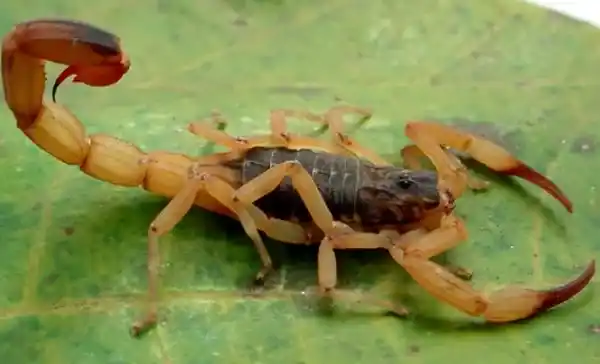
It is one of the most venomous scorpions in Mexico, and its stings can cause serious respiratory problems. It can reach 12 centimeters in length and is brownish in color, especially on its chelipeds.

3. Common yellow scorpion (Buthus occitanus)
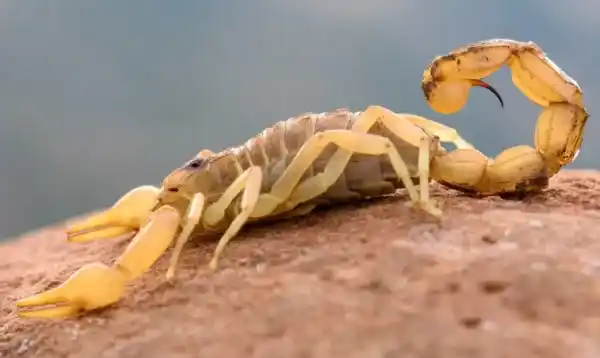
It is widely distributed in Spain, France, and Italy. Its body is yellowish, with a slightly darker body. It is moderately toxic, but may pose a fatal risk to children and the elderly.
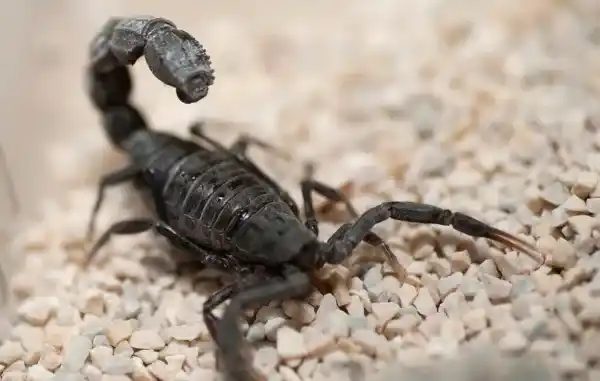
4. Black-tailed Scorpion (Androctonus bicolor)
These highly venomous scorpions, found in Africa and the Middle East, are dark in color with a particularly thick, black tail. Their venom is extremely potent, directly affecting the nervous system and possessing deadly potential.
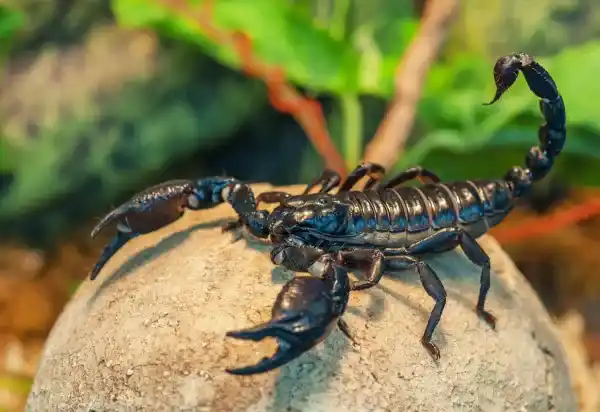
5. Emperor Scorpion (Pandinus imperator)
One of the world's largest scorpions, measuring about 20 centimeters in length. It has a glossy black body and a majestic appearance. Native to West Africa, it is docile and has very weak venom, often sold as a pet. 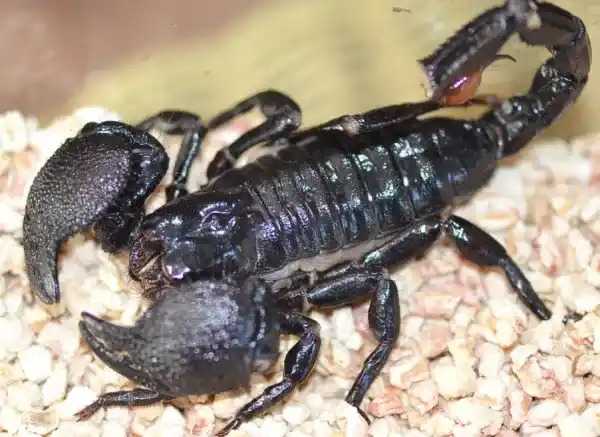
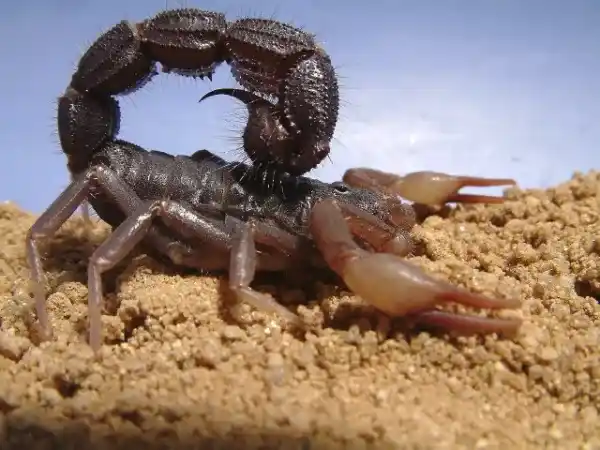
6. Spittoon Scorpion (Parabuthus transvaalicus)
Living in southern Africa, its most unique feature is its ability to spray venom several meters away, potentially causing temporary blindness and eye damage. It can reach a length of 15 centimeters.
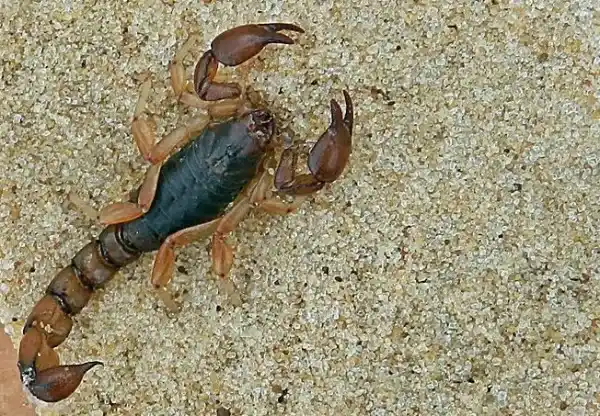
7. Buenos Aires Scorpion (Bothriurus bonariensis)
It is mainly distributed in Argentina, Uruguay, and southern Brazil. It is of medium size, and its stings are not fatal, sometimes even failing to penetrate the skin.
Other scorpion families and representative species
The following lists 13 scorpion families and some of their typical species.
1. Buthidae family (over 800 species)
Widest distribution, covering the entire globe except Antarctica and New Zealand:
Afghanobuthus naumanni
Tityus bahoruco
Rhopalurus junceus
Pantobuthus complicatus et al.
2. Bothriuridae family (158 species)
Mainly distributed in tropical or temperate regions of the Southern Hemisphere:
Bothriurus burmeisteri
Brachistosternus angustimanus
Urophonius iheringii et al.
3. Caraboctonidae family (23 species)
Its body surface has sensory hairs, hence it is also known as "hairy scorpion":
Hadrurus arizonensis
Hadrurus hirsutus
4. Chactidae family (170 species)
Distributed in the Americas:
Chactas laevipes
Broteochactas colombiensis
Vachoniochactas amazonicus
5. Chaerilidae family (approximately 20 species)
Unique to South Asia:
Chaerilus borneensis
Chaerilus julietteae
Chaerilus cavernicola
6. Euscorpiidae family (59 species)
It has low toxicity, and is best known for:
Megacormus grubbsi (short-tailed scorpion, endemic to Mexico)
7. Hemiscorpiidae family (approximately 100 species)
They are enormous, reaching up to 20 centimeters in length, and are represented by the genus Opisthacanthus.
Opisthacanthus maculatus
Opisthacanthus asper
8. Iuridae family
Distributed in the United States and Asia:
Calchas anlasi
Calchas nordmanni
9. Microcharmidae family (15 species)
Extremely small, less than 2 centimeters in length, and found only in Madagascar:
Microcharmus djangoa
Microcharmus madagascariensis
10. Pseudochactidae family
Rare and unusual scorpion species, with a slender and transparent body:
Pseudochactas mischi
Vietbocap thienduongensis
11. Scorpionidae family (more than 260 species)
It can grow up to 25 centimeters in length and has huge claws:
Pandinus imperator (Emperor Scorpion)
Tarsoporosus macuira
12. Superstitioniidae family (only 10 species)
The most representative species is found in North America:
Superstitionia donensis
13. Vaejovidae family (more than 170 species)
Distributed in North America, representative species include:
Vaejovis carolinianus
Vaejovis dzahui
Summarize
Scorpions are a highly diverse group of arthropods in nature, playing a predator role in ecosystems and being an important subject of scientific research due to their complex venom gland system. Although most scorpions are harmless to humans, understanding their species and distribution can still help prevent accidents and enhance knowledge.
For more articles about scorpions, please visit the "Wildlife" category in our animal encyclopedia.