If you're interested in aquatic amphibians, then the "water monster" (Greater siren) and the "Mexican axolotl" will surely catch your eye. These two mysterious creatures, though seemingly related, actually have many differences. This article will provide a comprehensive overview, from their appearance and habits to their feasibility as pets.
Table of contents
Introduction to the Water Monster and the Mexican Axolotl
Appearance Comparison: Which one is more unique?
Habitat and Distribution: Where do they live?
Behavioral characteristics: Mysterious vs. Friendly
Eating habits: Who is more "picky" about food?
Regeneration: A Miracle of Nature
Lifespan comparison: Who can live longer?
Wilderness conservation status: What is the current situation?
Pet ownership comparison: Water monster or axolotl?
Conclusion: Who would you choose?
1. Introduction to the Lake Monster and the Mexican Axolotl
Both are aquatic amphibians, but they differ greatly in their biological classification, appearance, and habits.
Siren (a type of lake monster)
The water monster is mainly found in the southeastern United States. It is a slender amphibian without hind limbs. They prefer to hide in the mud of swamps and ponds and rarely show themselves.Mexican axolotl
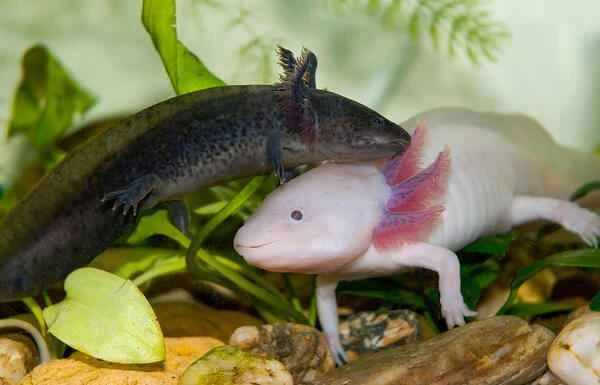
The Mexican axolotl, native to Mexico, is a critically endangered species. Its exposed, feathery gills and adorable appearance have made it a favorite among pet lovers worldwide.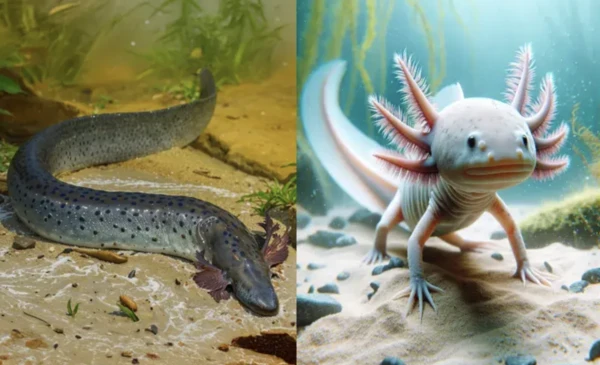
2. Appearance Comparison: Which one is more unique?
| Features | Water Monster | Mexican axolotl |
|---|---|---|
| body shape | Slender, like an eel | Short and sturdy, with well-developed limbs |
| limbs | It has only forelimbs, no hindlimbs. | All limbs are intact |
| External features | No exposed gills, smooth skin | Feather-like external gills |
| color | Gray, green or brown | The wild type is dark, but there are also albino and pink variants. |
| body length range | 18-96 cm | 15-30 cm |
The water monster is more like a "snake in the water," while the blunt-mouthed salamander is a "cute pet in the water."
3. Habitat and Distribution: Where do they live?
Habitat of the Water Monster
Lake monsters prefer slow-moving freshwater environments, such as:
swamp
wetlands
pond
They typically hide in mud and vegetation, waiting for an opportunity to hunt small prey.
Habitat of the Mexican axolotl
The axolotl's native habitat is Lake Sochimilco and Lake Chalco in Mexico. Due to urbanization and pollution, most of these lakes no longer exist, and the axolotl now relies more on captive breeding.
4. Behavioral Characteristics: Mysterious vs. Friendly
The behavior of the water monster
The lake monster is very shy and is mainly active at night.
They prefer to be alone and don't like socializing.
When the water source dries up, they enter a dormant state and wrap themselves in mud to survive the drought.
Behavior of the blunt-mouthed salamander
The blunt-mouthed newt is relatively active and often swims in the water.
They show a certain degree of curiosity towards humans and may even "get close" to observers.
They don't like burrowing in mud and are better suited to aquarium life.
5. Eating habits: Who is more "picky" about food?
| Dietary characteristics | Water Monster | Mexican axolotl |
|---|---|---|
| Main food | Earthworms, small fish, insects | Shrimp, earthworms, artificial feed |
| Eating habits | ambush hunting | They actively forage for food and easily adapt to artificial environments. |
| Preference | live food | Both live and artificial foods are acceptable. |
The axolotl is highly adaptable and more suitable for family pets, while the water monster relies more on prey in its natural environment.
6. Regeneration: A Miracle of Nature
Both have strong regenerative capabilities and can regenerate:
limbs
gill
Part of the spine
Hot Topics in Scientific Research
Although lake monsters can also regenerate, the axolotl has a stronger regenerative ability and is easier to study in the laboratory, thus becoming a "darling" of the scientific community.
7. Lifespan Comparison: Who will live longer?
| Lifespan characteristics | Water Monster | Mexican axolotl |
|---|---|---|
| Wild lifespan | More than 10 years, but uncertain | Due to its endangered status, it is very difficult to observe in the wild. |
| Lifespan in artificially bred animals | 20 years or more | 10-15 years |
Under suitable conditions, the lifespan of the water monster is significantly longer than that of the axolotl.
8. Status of Wilderness Conservation: What is the current situation?
Lake Monster : The population is currently stable, but their habitat is gradually decreasing due to wetland development and water pollution.
The axolotl is listed as critically endangered , with fewer than 1,000 individuals remaining in the wild. Habitat destruction and invasive species are its main threats.
Conservation efforts for the axolotl are even more urgent, with many organizations maintaining its population through artificial breeding.
9. Pet ownership comparison: Water monster or axolotl?
| Feeding tips | Water Monster | Mexican axolotl |
|---|---|---|
| Aquarium requirements | Requires a large tank and a muddy bottom environment | A regular aquarium is sufficient |
| Temperature requirements | 15-25℃ | 15-20℃ |
| Difficulty of raising | High, leaning towards the natural ecological environment | Simple, suitable for beginners |
| Market availability | Rare and difficult to buy | Common, with a wide variety |
The axolotl has an absolute advantage in terms of market availability and ease of keeping.
10. Conclusion: Who would you choose?
If you're new to amphibians and want a cute, easy-to-care-for pet, the axolotl is a better choice. They are highly interactive and suitable for aquarium keeping.
But if you enjoy a challenge and want a more mysterious and unique animal, the low profile and rarity of the sea monster might be more in line with your expectations.
Whichever you choose, both creatures showcase the wonders of nature and are truly breathtaking!