With their vibrant red-orange bellies and gentle temperament, the fire-bellied newt has become an ideal pet for many. This adorable amphibian not only looks cool but is also remarkably easy to care for, suitable for both beginners and experienced keepers. Want to learn about fire-bellied newt care, habits, and common questions? This article will give you a comprehensive overview!
Table of contents
What is a fire-bellied salamander?
Species of Fire-bellied Salamanders: A Sino-Japanese Dispute
How to create a "dream house" for a fire-bellied newt?
What do fire-bellied salamanders eat?
How long can a fire-bellied salamander live?
Common health problems and solutions
Interesting trivia about the fire-bellied newt
Frequently Asked Questions
1. What is a fire-bellied salamander?
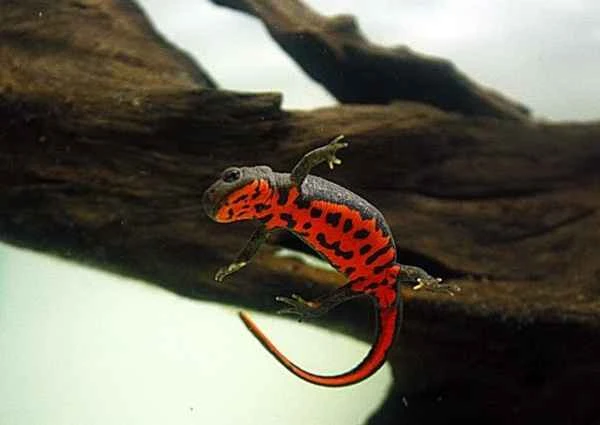
Fire -belly newts are little stars in the amphibian world. Their bellies are brightly colored, with red or orange "warning" markings, hence their name. Fire-belly newts belong to the genus *Cynops* , with the most common species being the Chinese fire-belly newt and the Japanese fire-belly newt .
Although they secrete toxic substances from their skin for protection, these substances are safe for humans as long as they are not ingested or rubbed in the eyes. They are quiet, slow-moving, and very suitable for indoor keeping. They also have long lifespans; with proper care, they can accompany you for over a decade!
2. Types of Fire-bellied Salamanders: The Sino-Japanese Dispute
The two most common types of fire-bellied newts on the market—the Chinese fire-bellied newt and the Japanese fire-bellied newt—look similar, but there are actually some differences:
Chinese fire-bellied salamander
Size : Generally about 7-8 cm (about 3 inches) long.
Appearance : Smooth skin, bright red belly.
Features : Easier to care for, perfect for beginners.
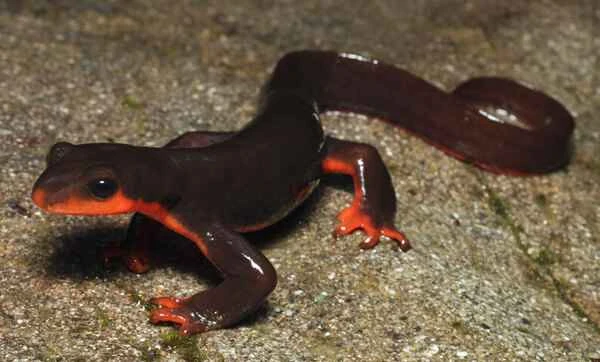
Japanese fire-bellied salamander
Size : Slightly larger, about 10-12 cm (about 4-5 inches) long.
Appearance : Rough skin, slightly dark color, belly is dark orange or dark red.
Features : It has slightly higher environmental requirements and is more suitable for experienced breeders.
3. How to create a "dream home" for a fire-bellied newt?
Fire-bellied salamanders are not picky about their environment, but to keep them healthy and happy, you still need to carefully arrange their "home".
Aquatic and terrestrial habitats :
Fire-bellied salamanders are semi-aquatic animals, so they need an environment that is 70% water and 30% land . You can place floating logs in the water or build gently sloping land to allow them to freely switch between aquatic and terrestrial modes.Water quality requirements :
Temperature : Keep the water temperature between 16-24℃ . Too high a temperature will make them uncomfortable.
Filtration system : The water quality must be clean, but the water flow to the filter should not be too strong to avoid disturbing it.
Substrate : Use rounded gravel or sand as a base, which is both safe and easy to clean.
Avoidance and cover :
Fire-bellied salamanders like to have "hiding places," so you can place some aquatic plants, cave decorations, or driftwood there to provide them with a sense of security and reduce their stress.
4. What do fire-bellied salamanders eat?
Fire-bellied salamanders are true carnivores! They have a diverse diet, and here are some of their "favorites":
Live bait : Bloodworms, water fleas, earthworms, black worms, etc. are their favorites.
Frozen foods : Frozen bloodworms and brine shrimp chunks are convenient choices, nutritious and easy to store.
Pelleted feed : Amphibian-specific feed can be used as a daily supplement, but it's best not to feed them only this.
Feeding tips :
Adult fire-bellied newts only need to be fed 3-4 times a week, while juvenile newts can be fed once a day.
Feed small amounts each time, and promptly remove any uneaten food to prevent water pollution.
Eat a diverse diet to avoid nutritional imbalances.
5. How long can a fire-bellied salamander live?
The lifespan of the fire-bellied salamander is astonishing! In good captive conditions, they can live 10-15 years . The key to their longevity lies in:
Keep the water clean;
Offer a diverse diet;
Avoid drastic temperature changes;
Do not let them be in a state of tension or depression for a long time.
6. Common Health Problems and Solutions
While fire-bellied newts are relatively easy to keep, they can occasionally encounter some health problems. Here are some common issues and solutions:
Skin infections : Poor water quality or overcrowded environments can lead to skin diseases, manifesting as peeling or whitening of the skin. The solution is to improve water quality and isolate infected individuals.
Stress response : If you notice they are not eating or are moving slowly, they may be startled or stressed. Providing more hiding places and reducing disturbances can help.
Abnormal peeling : Insufficient humidity or malnutrition may prevent them from peeling properly. Ensure a humid environment and adjust their diet.
7. Interesting trivia about the fire-bellied newt
"I am poisonous!" The bright red belly of the fire-bellied salamander is a warning to its predators: "Don't touch me, I'm poisonous!" However, it is harmless to humans as long as it is not licked or eaten.
Limb regeneration! The fire-bellied salamander has an amazing regenerative ability; it can regrow severed tails or limbs, making it a true "self-healing master" in nature.
Quiet and unassuming : They are very quiet and never make a sound or disturb others, making them ideal pets for indoor living.
Superb swimming skills : Don't let their slow movements fool you, they are top-notch swimmers!
8. Frequently Asked Questions (FAQs)
Q1: Does the fire-bellied salamander need special lighting?
No. They don't need UVB lights much, but soft lighting can enhance the viewing experience.
Q2: Can fire-bellied salamanders be kept with fish?
It's best not to. Fish might make fire-bellied salamanders nervous, and could even cause them to attack each other.
Q3: Can I touch a fire-bellied salamander with my hands?
Avoid direct contact as much as possible. Their skin is sensitive and toxic, so it's best to use tools to handle them.
Q4: Do fire-bellied salamanders bite?
Almost never. They are docile, but may nip lightly when startled, so try to minimize disturbance.
Q5: How often should the aquarium be cleaned?
It is recommended to change the water every two weeks, replacing about 30% of the water each time, to maintain stable water quality.
Summarize
Fire-bellied newts are ideal pets that combine good looks and fun! They are not difficult to care for; as long as you provide clean water, a suitable environment, and a varied diet, they can grow healthily and accompany you for over a decade. If you want to add a touch of life and fun to your home, consider keeping a fire-bellied newt—they will surely become a highlight of your life!
Are you ready to welcome this little amphibious partner?