If your dog bites someone, you may feel worried and anxious—the last thing you want to see is your beloved pet get hurt. If a dog bite occurs, it's crucial to act quickly, as you don't want it to become a recurring behavioral problem for your dog.

In most cases, dogs bite when people feel threatened in some way. It's a natural instinct, and even the most friendly domestic dogs can bite. However, you can prevent your dog from biting, especially if you know why they might bite. If you suspect your dog has the intention to bite, training and socialization are two solutions. Below, you'll find tips on how to stop a dog from biting and what to do if your dog does bite.
Why do dogs bite people?
As mentioned earlier, dogs will bite when they feel threatened. It is important for everyone who interacts with dogs to understand what might trigger such aggressive behavior.
Dogs may bite to protect themselves, their territory, or members of their pack. A mother dog will also fiercely protect her puppies.
Startling a dog, such as waking it up or having a child suddenly approach from behind, can cause a dog to bite. Even accidentally injuring a dog, such as pushing an older dog's sore rump, can result in a bite.
Running away from dogs, even during play, can provoke them to bite. They may initially see it as part of the fun, but it can quickly turn into aggression.
A dog in a state of fear may bite anyone who approaches it. This could be something as serious as abuse or abandonment, or something you might consider ordinary, such as loud noise.
Injury and illness are also common causes. If a dog is feeling unwell, it may not even want to be approached or touched by its favorite person.
How to prevent dog bites
As a dog owner, you are responsible for training and always controlling your dog. You are accountable for your dog's behavior and are the first line of defense against dog bites. It's important to do everything possible to prevent your dog from biting people; the following tips can help:
At the very least, give your dog basic training. Continue the training program throughout your dog's life to reinforce the lessons you've taught them.
Follow your veterinarian's advice and start socializing your dog from a young age. Begin this when they are puppies and maintain it throughout their life! Socializing your dog involves exposing them to and interacting with different types of people, including children, people with disabilities, and the elderly, in calm and positive situations. This also means regularly exposing your dog to a variety of situations, such as other animals, loud noises, large machines, bicycles, and anything else that might cause fear. If your dog is not socializing well or shows any signs of fear or aggression, consult a professional trainer before attempting any of the above. If possible, a trainer can help develop a plan for your pet's safe and gradual socialization.
Learn dog body language and key signs that may lead to a bite. Be aware of your dog when you are around people and recognize when aggressive behavior occurs. Stop it or remove your dog from the scene before it escalates.
Never punish your dog with physical, violent, or aggressive methods. Instead, use positive reinforcement before resorting to aversion therapy. Remember to reward your dog for good behavior.
Always keep your dog on a short leash or in a fenced area. Get to know your dog before letting him off the leash in permitted areas. Always keep your dog within your sight. If you know your dog may be frightened or aggressive, do not place them in environments where they might become frightened and bite other people or pets. Instead, proceed with caution and work with a professional trainer who can guide you.
If you suspect or know that your dog has fear or aggressive tendencies, be sure to warn others. Do not allow your dog to approach people or other animals unless the situation is firmly under control. Be aware of your dog's limitations and do not place them in environments that would stress them or endanger them or others. If you know your dog has fear or aggressive tendencies, work with your trainer. They can discuss the appropriate use of a basket gun if necessary.
Make sure your dog is vaccinated on time (especially against rabies) and takes it to the vet for regular health checkups.
How to interact with a dog
Dogs are adorable and generally friendly, so it's easy to get excited when you see one. However, they can quickly become aggressive towards strangers. Even if you don't own a dog yourself, it's important to know the correct way to interact with dogs and how and when to approach them.
All children and adults should learn how to stay safe around dogs. Most importantly, dog owners must be responsible for their dogs. Fortunately, responsible dog ownership and public education can ensure everyone's safety.
Never attempt to approach or touch a strange dog without the owner's permission. Do not approach the dog if the owner is not present.
When you encounter an unfamiliar dog, let it come to you. Let it sniff you. Do not touch it unless you have the owner's permission. If the owner and the dog give appropriate cues, you may crouch down or turn to one side. Always let it sniff your hand before petting it.
Do not put your face close to a strange dog; this includes "hugging and kissing".
Learn dog body language. Most dogs will show specific warning signs before biting. But some may not.
If you are cornered by a dog, remain still and avoid eye contact. Do not run or scream. Once the dog is no longer paying attention to you, slowly back away.
If you are knocked down by a dog, lie down next to it in a fetal position, covering your head and face. Remain still and calm.
Never approach a dog that is eating, sleeping, or caring for a puppy. In these situations, the dog is more likely to be protective and may be startled.
Never leave a young child or infant alone with a dog, for whatever reason.
Do not approach, touch, or attempt to move an injured dog. Instead, contact a veterinary professional or animal control for assistance.
If a dog bite occurs
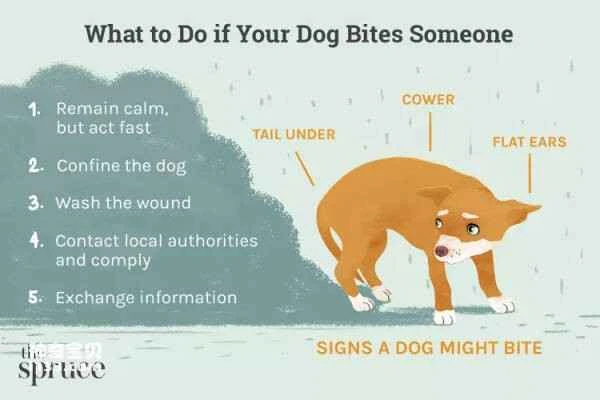
Don't delay; if your dog bites someone, take the following steps:
keep Calm.
Keep your dog confined to a crate or another room.
Help the bitten person thoroughly clean the wound with warm soapy water.
Be polite and compassionate towards victims of bites. Avoid blaming or defensiveness. This doesn't mean you need to admit fault. Remember, what you say could backfire if legal or civil proceedings take place.
Contact a medical professional who has been bitten. Depending on the severity of the bite, an ambulance may be required. No matter how minor the bite, the victim should seek medical attention. What may appear to be a minor dog bite can quickly become serious.
Actively contact the victim's friends or family.
Exchange contact information with the victim. Provide your insurance information (if applicable).
If there are any witnesses, please obtain their contact information.
Contact your veterinarian and obtain your dog's medical records.
Notify the local authorities of the incident and comply with their orders.
Dog bites and the law
Dog bite laws can vary significantly depending on the local jurisdiction. It's important to research the laws in your area so you know what's going on. The following situations typically apply to dog bite cases:
You will need to provide proof of your dog's rabies vaccination history.
A quarantine period may be required. This period could be longer if you have not yet received a rabies vaccine.
Depending on the specific circumstances and your dog's history, your dog may be designated as a "dangerous dog." You may then have to comply with specific laws regarding the handling of your dog.
If your dog is deemed "dangerous," seriously injured, or dies, the law may require euthanasia. Furthermore, you may face legal consequences and criminal charges.
Your role after being bitten by a dog
Dog bite victims can choose to file charges against you or initiate civil proceedings. In either case, you should hire a lawyer immediately.
You may or may not be legally ordered to pay for the victim's medical expenses. Morally, paying in advance might be a good idea. It shows the victim that you are assuming responsibility for your dog. It can even help you avoid a messy lawsuit. Most importantly, it's ethical to do so even if you have an explanation for the dog bite. In fact, unless you can prove the victim committed a crime, proving your dog was provoked or somehow justified is very difficult. This may not be an untenable argument.
If you are fortunate enough to own a dog, it is your responsibility to prevent this from happening again. Take steps to prevent your dog from biting again. In most cases, dog bites can be easily prevented by taking appropriate safety measures.
If you can determine the cause of the bite, try to prevent your dog from getting into the same situation again. Work with your dog to adjust its response to the trigger. Training and socializing with your dog as soon as possible after a bite is absolutely essential. The best course of action is to contact a professional trainer, and possibly a veterinary behaviorist as well.
Many aggressive dogs can be helped through training, socialization, and behavioral correction. Sadly, in some cases, severe aggression is irreversible, and the most humane approach is euthanasia. Of course, this is a last resort.