In short: the "blue" of the cat world isn't sky blue, but rather a slate gray/silver blue caused by diluted genes . The pinnacle of this breed is the Russian Blue : short, dense double coat with silver tips, paired with emerald green eyes and a restrained, gentle temperament—no wonder it's considered a classic breed that's "simple yet sophisticated."
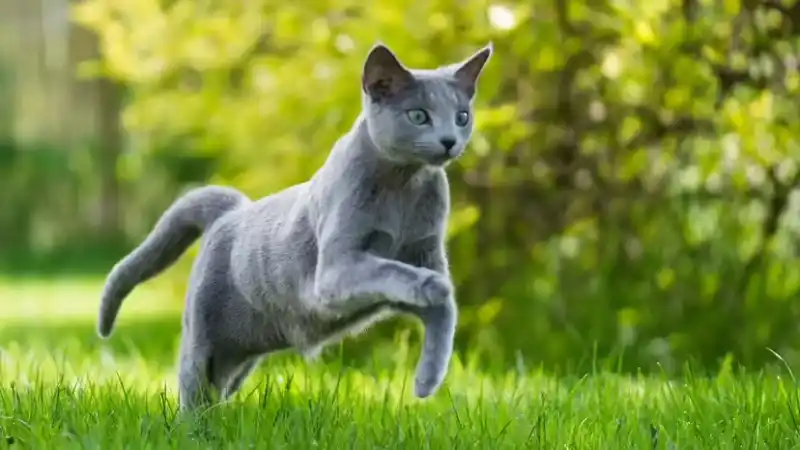
Table of contents
Why are Russian Blue cats "blue"?
Appearance and feel: From "silver tips" to "double-layered fleece"
Personality and Interaction: Quiet, home-loving, shy around strangers
Health and Care: Low shedding ≠ No grooming
Diet and Body Shape: Slender Type That Easily Appears "Round"
Allergic constitution and the misconception of "low allergens"
Breeding and Rarity: Standard, Eye Color and Coat Color Stable
Shopping and Selection Checklist (Super Useful)
Other "blue blanket" cats in comparison
Frequently Asked Questions (FAQ)
Why are Russian Blue cats "blue"?
Genetic principle : Two recessive dilution genes (d/d) "dilute" melanin into blue-gray/silver-blue .
It's not just one breed that can be "blue" : Chartreux, Korat, and British Shorthair cats can also be blue-haired; domestic shorthaired (mixed) cats can also appear blue if the gene combination is correct.
Appearance and feel: From "silver tips" to "double-layered fleece"
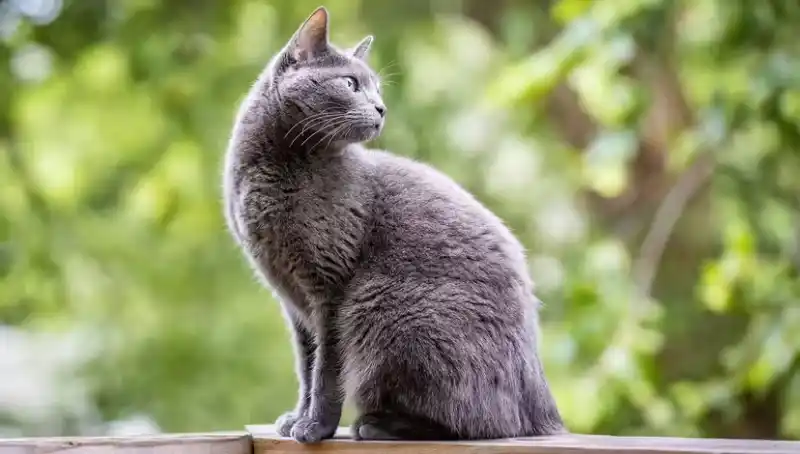
Coat structure : Typical double coat – short, soft guard hairs cover a thick downy undercoat , creating a **"plush-like" feel**.
Silver tip effect : The tips of the bristles have silver tips , giving off a cool silver sheen when backlit.
Body shape and lines : Although it appears to be "hairy", it is actually slender with firm muscles and light movements.
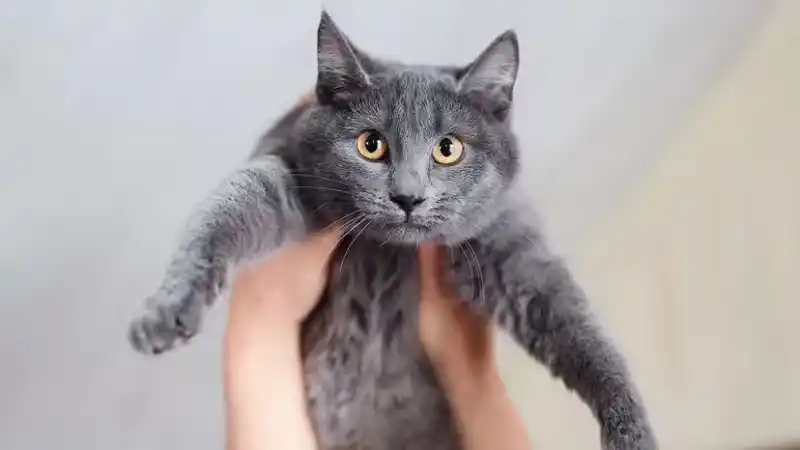
Eyes : The ideal standard is bright emerald green ; kittens may have a yellowish-green tint, which will turn green as they grow.
Identification tips : It should feel soft yet supportive to the touch; the blue-gray color should be uniform and pure , without tiger stripes/smoky gray patches; the nose skin and pads are often blue-gray/lavender gray in tone.
Personality and Interaction: Quiet, home-loving, shy around strangers
For family members : High level of engagement and deep bond; willing to accompany them but not overly demanding.
When facing strangers/new environments : slow to warm up , observant, requires safe hiding places and gentle guidance.
Interaction methods : Intelligent and puzzle-loving, suitable for cat teasers, brain-teasing feeding, and fetch games ("fetching") .
Multi-cat/family with children : Overall compatibility is high , but they need to be introduced gradually into their respective safe zones.
Health and Care: Low shedding ≠ No grooming
Shedding characteristics : Relatively low shedding , but seasonal shedding is still noticeable; regular grooming is important.
Grooming frequency : 2–3 times a week with a pin brush/soft brush to remove dead hair; during molting season, this can be increased to every other day.
Bathing and grooming : Infrequent bathing is possible if there are no unpleasant odors at home; more importantly, it's about maintaining indoor humidity , providing nutrients , and preventing static electricity .
Routine health : Regular oral care (finger brush/gel), heartworm/flea treatment, vaccinations, and annual physical examinations.
Diet and Body Shape: Slender Type That Easily Appears "Round"
They are easily misled by their "coat volume" : they may look "robust" but are actually lean . Overfeeding can make their waistline appear blurred .
Feeding recommendations :
Calorie control : Calculate the daily calorie requirement based on the ideal body weight, and adopt fixed meal feeding or timed and quantitative feeding .
High in protein, moderate in fat , and pay attention to taurine and omega-3 fatty acids.
Brain-boosting feeding : Maze bowls/smell mats/rolling balls can prolong feeding time and increase satisfaction.
Body condition monitoring : monthly weigh-in + BCS (Body Condition Score), target waistline visible, ribs palpable .
Allergic constitution and the misconception of "low allergens"
The truth is : the main cause of allergies is Fel d1 (salivary/sebaceous gland protein), not the amount of hair loss.
Russian Blue = Hypoallergenic? This is a common, exaggerated claim. Individual differences are significant, and there is no guarantee that it will not cause allergies .
Countermeasures : Air purification + high-efficiency filtration, regular grooming and cleaning of bedding, limiting bedroom space, washing hands before touching the face; allergy sufferers should try short-term exposure before making a decision.
Breeding and Rarity: Standard, Eye Color and Coat Color Stable
Rarity : Not the rarest, but high-quality bloodlines are relatively rare .
Key considerations for legitimate breeding :
Stable coat/eye color (pure blue, green eyes);
Character development (early socialization, timidity improvement);
Health screening (such as family history of genetic diseases, routine test reports).
Post-World War II : Product lines were integrated and standards were gradually clarified, resulting in today's typical appearance.
Shopping and Selection Checklist (Super Useful)
Paternity and Registration : Is there formal association registration (pedigree number/parent information)?
Health certificate : immunization and deworming records; physical examination/laboratory test reports (such as stool test, basic blood test).
Socialization : Kittens develop stable socialization at 8–12 weeks ; observe their responses to sounds/toys .
Parents' perceptions : coat color purity, eye color, and friendliness of temperament.
After-sales service and contract : Are clauses regarding returns/exchanges due to illness/sterilization/maintenance instructions included?
Friendly reminder : Be wary of "unlicensed, low-priced blue cats." These are often domestic cats with blue coats or "mixed breeds with blue markings." They are not necessarily bad, but their standards and pricing system differ from those of Russian Blue cats.
Other "blue blanket" cats in comparison
| variety | Visual style | wool blanket | Typical eye color | Personality Impression |
|---|---|---|---|---|
| Russian Blue | Cool silver-blue, slender | Short, dense double layer , silver tip | Emerald green | Quiet and home-loving, slow to warm up to strangers |
| Chartreux | Warm blue-gray, smiling face | Short hair, wool-like feel | Copper/Gold | Gentle and quiet, suitable for beginners |
| Korat | cool silver-blue, heart-shaped face | Short hair, close-fitting | Emerald | Sensitive and curious, needs companionship |
| British Shorthair Blue (BSH Blue) | Calm deep blue, rounded | Short and thick hair | Copper/Gold/Orange | Gentle and steady, suitable for families |
Frequently Asked Questions (FAQ)
Q: Do Russian Blue cats really not shed?
A: Yes, they will shed , but relatively little; during molting season, frequent brushing and cleaning are still necessary.
Q: Can you get along with dogs/other cats?
A: Sure. The key is to introduce them gradually , with each having their own hiding place/high spot , and to build rapport through positive rewards.
Q: How big do green eyes need to be for them to be stable?
A: Kittens often have a yellowish-green hue; as they grow older, they turn into a purer emerald green , but there are individual differences.
Q: Is it suitable for small apartments?
A: Yes, but it needs to be integrated into daily life through vertical space (scaffolding/wall frame) to prevent boredom and anxiety.
Conclusion
The iconic Russian Blue cat comes from its clean, pure silver-blue color and its understated, elegant personality . With a steady pace, appropriate interaction, and proper care , it will become the softest touch of "blue" in your life through quiet and steadfast companionship.