Are salamanders fish or amphibians? Although salamanders live in water, they are actually amphibians, belonging to the phylum Chordata and class Amphibia. This peculiar creature's appearance often leads to misunderstandings: it has both a fish's tail, fins, and gills, and four limbs similar to a tetrapod, hence the nickname "walking fish." Beyond its unique appearance, salamanders possess many amazing physiological characteristics that have sparked public curiosity and attracted considerable attention from the scientific community.
This article will provide you with a systematic introduction to the basic characteristics, types, and interesting biological phenomena of salamanders.
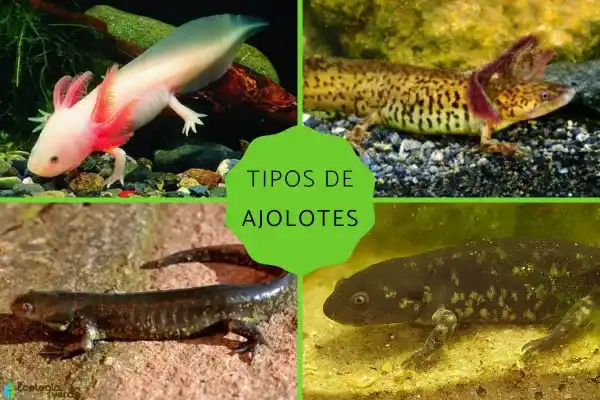
I. Basic Characteristics of Salamanders
Salamanders are animals of great biological value, and their uniqueness is mainly reflected in the following aspects:
1. Permanent juvenile state (juvenile sexual maturity)
The most striking feature of salamanders is "neotenia," meaning they retain juvenile characteristics, such as exposed feathery gills and tail fins, even in adulthood. This is because they do not undergo complete metamorphosis like other amphibians, thus retaining their tadpole-like appearance throughout their lives.
2. Rapid sexual maturity and strong reproductive capacity
Salamanders reach sexual maturity very early and can begin reproducing early in their lives. They are oviparous, with females laying more than 400 eggs at a time. These eggs incubate in the water for approximately 10 to 14 days.
3. Habitat
Salamanders are endemic to North America , mainly distributed in Mexico, especially in the lakes and rivers of the Valley of Mexico. They not only occupy an important position in the ecosystem, but also have profound cultural symbolism, representing one of the most representative aspects of Mexico's biodiversity.
4. Nocturnal and resting during the day.
Salamanders are relatively quiet and inactive during the day, but become active at night, foraging and reproducing.
5. Meat-based diet
Salamanders are purely carnivorous animals , feeding on insects, worms, fish, and small invertebrates.
II. Types of Salamanders
There are currently 33 known species of salamanders, most of which are endemic to Mexico . Below are some representative species with explanations:
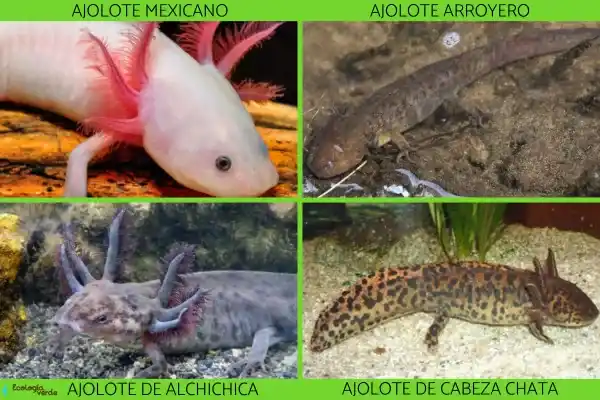
1. Mexican newt (Ambystoma mexicanum)
The most famous salamander species is commonly found in pet markets and scientific research. Wild species are mostly black or dark brown with green or gray markings, possessing excellent camouflage abilities. In captivity, multiple generations of hybridization have produced albino, golden, pink, and other colors.
2. Stream Salamander (Ambystoma rivulare)
It is found only in rivers near the Toluca volcano in Mexico. Its body color is mostly black with light-colored spots, and its lower jaw and abdomen are gray.
3. Lake Alchichka salamander (Ambystoma taylori)
An endemic species that lives only in Lake Alchička (2300 meters above sea level) in the Puebla region, it has a yellow body with irregular black spots.
4. Flat-headed newt (Ambystoma amblycephalum)
Its head is flat and broad, a distinctive feature; its length is twice its width. Its body is dark in color, with cream-colored spots scattered throughout.
5. List of other salamander species (names only):
Ambystoma altamirani
Ambystoma andersoni
Ambystoma annulatum
Ambystoma barbouri
Ambystoma bishopi
Ambystoma bombypellum
Ambystoma californiense
Ambystoma cingulatum
Ambystoma dumerilii
Ambystoma flavipiperatum
Ambystoma gracile
Ambystoma granulosum
Ambystoma jeffersonianum
Ambystoma laterale
Ambystoma leorae
Ambystoma lermaense
Ambystoma mabeei
Ambystoma macrodactylum
Ambystoma maculatum
Ambystoma mavortium
Ambystoma opacum
Ambystoma ordinarium
Ambystoma rosaceum
Ambystoma silvense
Ambystoma subsalsum
Ambystoma talpoideum
Ambystoma texanum
Ambystoma tigrinum
Ambystoma velasci
III. Interesting Facts About Salamanders
1. What do newts eat?
Salamanders are predatory animals, and their main diet includes mosquito larvae, tadpoles, tubifex worms, small fish, small crustaceans, and insect larvae.
2. Can salamanders really regenerate their bodies?
The answer is yes! Salamanders are among the vertebrates with the most advanced regenerative abilities known. They can regenerate not only limbs, but also partially regenerate the heart, spinal cord, and even brain tissue. This characteristic has attracted the attention of scientists worldwide, making them an important subject of research in tissue regeneration and regenerative medicine.
IV. Are salamanders endangered?
Yes, salamanders are currently critically endangered . According to the International Union for Conservation of Nature (IUCN) Red List, most salamander species face a serious threat of extinction, primarily due to the following reasons:
Habitat pollution (such as agricultural drainage and urban sprawl).
They were illegally captured to be kept as pets or used in experiments;
Invasive alien species (such as fish) lead to ecological imbalance.
Currently, Mexico has introduced a number of environmental protection regulations to protect salamander resources and prevent them from going extinct.
Summarize
Salamanders are not only a marvel of the biological world but also an important member of the ecosystem. Their unique appearance, powerful regenerative abilities, and increasingly severe survival crisis make them one of the species we must pay attention to and protect. Only through scientific research, legislative protection, and public education can we secure a longer future for these aquatic "spirits."
If you enjoyed this article, please continue reading our series on endangered animals.