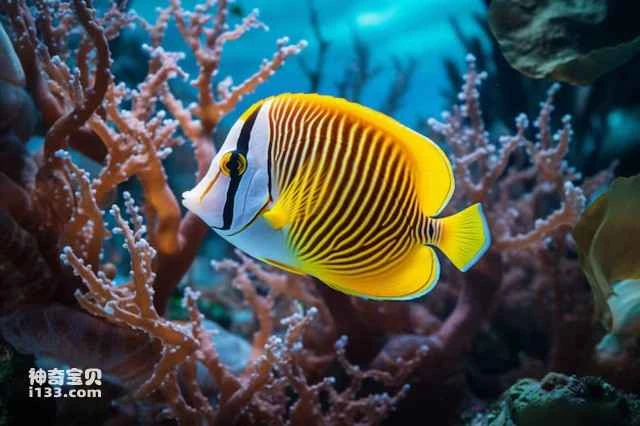
Among the colorful and diverse marine life, the lanternfish (Centrophyne spinulosa) stands out as one of the most eye-catching "monsters" in the deep-sea world due to its terrifying appearance and mysterious lifestyle. Compared to other cute fish, the lanternfish is distinguished by its huge head, its large mouth filled with sharp teeth , and its bioluminescent "fishing rod"-like organs.
This article will provide an in-depth introduction to the lanternfish's physical characteristics, bioluminescence, habitat, feeding strategies, reproductive methods, and astonishing lifestyle.
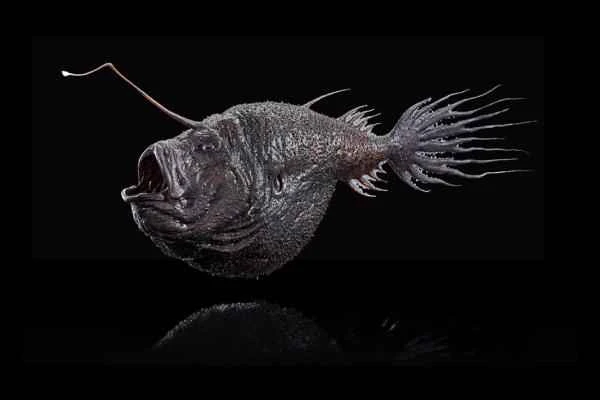
What is an anglerfish? What are its main characteristics?
Lanternfish are not a single species, but rather a broad taxonomic group belonging to the order Lophiiformes, encompassing multiple genera and species. They are among the most representative "ambush hunters" of the deep sea, possessing the following surprising characteristics:
Main features:
Only female fish possess "lanterns" : these are derived from the first ray of their first dorsal fin, called spiny ray , which are not used for swimming but have become "bait" to lure prey.
The "lantern" is located at the front of the head : its position varies depending on the species, and may be above the eyes or near the end of the mouth, with a bioluminescent organ at the end that can emit light;
The teeth curve inward and are movable : once prey enters the mouth, it is difficult for it to escape;
Its body is extremely flexible and stretchy : it can swallow prey twice its own size ;
Obvious sexual dimorphism : the male fish is extremely small and cannot feed independently, relying solely on parasitism on the female fish for survival;
Male fish can parasitize the female fish's body surface : using special enzymes to "dissolve" the female fish's epidermis, connect with the blood vessel system, absorb nutrients from the female fish's body, and reproduce.
How do lanternfish glow?
The lanternfish's "lantern" glows thanks to a light-emitting organ at its end, and the light source is symbiotic bioluminescent bacteria within it. These bacteria come from the environment and are not inherited from their parents.
This is a classic symbiotic relationship : bacteria attach themselves to the lanternfish to obtain nutrients, while the fish uses the bacteria's biochemical reactions (such as luciferin oxidation) to emit light, attracting prey. This "deep-sea light" is exceptionally effective in the completely dark environment of the deep sea and is a key component of its ambush strategy.
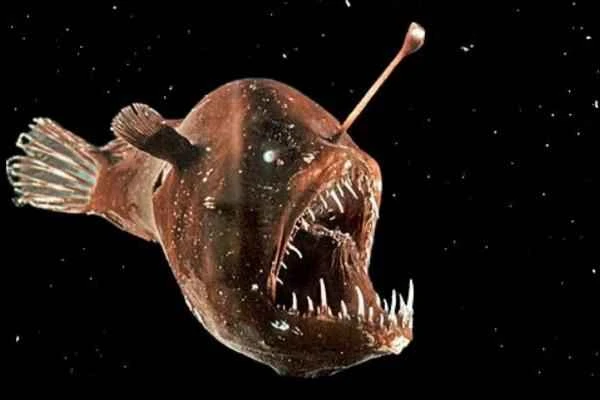
lanternfish habitat
Lanternfish mainly live in deep-sea areas , especially the dark waters below the edge of the continental shelf . Their distribution can be divided into the following two categories:
● Bottom-dwelling lanternfish (Benthopelagic) :
They live on the surface of the seabed sand, or have part of their bodies buried in the sand;
Its body is flattened on its back and abdomen , making it easy to ambush while lying close to the ground;
With its mouth facing upwards, it is advantageous for "inhaling" prey upwards;
● Pelagic lanternfish :
Active in the middle to deep layers of water (up to 4000 meters deep) ;
Its body is relatively large and laterally flattened, making it suitable for suspending in water;
They have a wide range of activity, but also rely on bioluminescence for hunting.
What do lanternfish eat?
Lanternfish are primarily ambush predators , using the light emitted from the "lantern" on their heads to lure prey in the dark. Once the prey is close, they open their mouths, creating negative pressure to swallow it whole.
The main foods include:
small fish
Crustaceans : such as shrimp and crab
Mollusks : such as octopus, squid, and snails
Occasionally, it can even swallow prey larger than itself.
Because of the highly expandable structure of its skeleton and stomach, it can swallow even large prey whole.

Lanternfish Reproduction Methods
Because lanternfish live in the open, dark waters of the deep sea , the chances of males and females meeting under natural conditions are extremely low. As a result, they have evolved extreme sexual dimorphism and parasitic reproductive mechanisms .
● Male parasitism mechanism:
Male fish are smaller and cannot survive independently;
Once it finds a female fish, it releases digestive enzymes to dissolve the female's skin and embeds itself under her skin;
They fuse with the female fish's vascular system , share nutrients, and form an **"integrated reproductive pair"**.
A single female fish can harbor up to six male fish .
The reproductive organs of both partners then fully develop, and they enter the reproductive stage;
In vitro fertilization : The male fish releases sperm, and the female fish releases eggs. The eggs develop on their own without the need for parental care.
Fun facts about lanternfish
Lanternfish are not only unique in appearance, but their lifestyle is also amazing. Here are some interesting facts you may not know:
Male fish lack genes related to immune rejection : therefore, they do not experience rejection after fusing with the vascular system of female fish.
A female fish can parasitize up to 6 male fish at the same time , sharing nutrition and participating in reproduction;
The deep-sea anglerfish (Lophius piscatorius) is also a relative of the lanternfish , commonly found in fish markets, and belongs to the same order (Anglerfish).
The largest lanternfish species is Ceratias holboelli , with females reaching up to 1.2 meters in length ;
Lanternfish are among the most representative deep-sea fish species that exhibit bioluminescence and are of great significance in the study of deep-sea ecosystems.
Summarize
Lanternfish are among the most mysterious deep-sea predators in nature. They combine extreme environmental adaptations, bioluminescence, parasitic reproduction, and ambush hunting , making them a marvel of biological evolution. In the dark world of the deep sea, these "horror movie protagonists" not only thrive but also master a sophisticated and efficient survival system.
Want to learn more about strange deep-sea creatures like lanternfish? Welcome to our "Wildlife" section, which will take you into the unknown world of the deep sea.
References
Tory A. Hendry, Lindsay L. Freed, Dana Fader, Danté Fenolio, Tracey T. Sutton, Jose V. Lopez, Nancy A. Moran. (2018). Persistent transposon-mediated genome reduction in bioluminescent symbionts of deep-sea anglerfish. Accessible: https://journals.asm.org/doi/abs/10.1128/mBio.01033-18
Great Barrier Reef Library. (2018). Lophiiformes. Accessible at: http://thegreatbarrierreeflibrary.org/lophiiformes/
Quigley, Declan. (2014). Anglerfish (Lophiiformes: Ceratioidei) in Irish waters. Commentary by Sherkin. 58. 7.
Bray, DJ 2020, Anglerfish (Order Anglerfish) from *Fish of Australia*. Available at: https://fishesofaustralia.net.au/home/order/25