Seadragons, also known as sea dragonfish, are a unique marine fish belonging to the family Syngnathidae, along with seahorses and tubefish. They are renowned for their distinctive appearance and sophisticated camouflage, and are endemic to the southern and western coasts of Australia. Due to the difficulty of research, relevant data is relatively limited. This article will provide a comprehensive overview of seadragons' characteristics, distribution, diet, reproduction, predators, and conservation status, helping readers gain a deeper understanding of this mysterious marine creature.
Main characteristics of sea dragons
Body type and appearance :
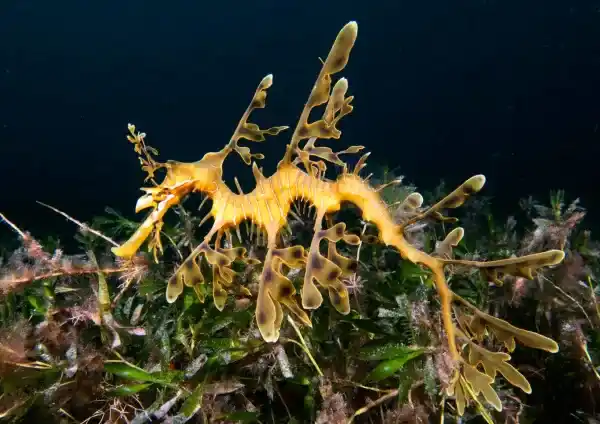
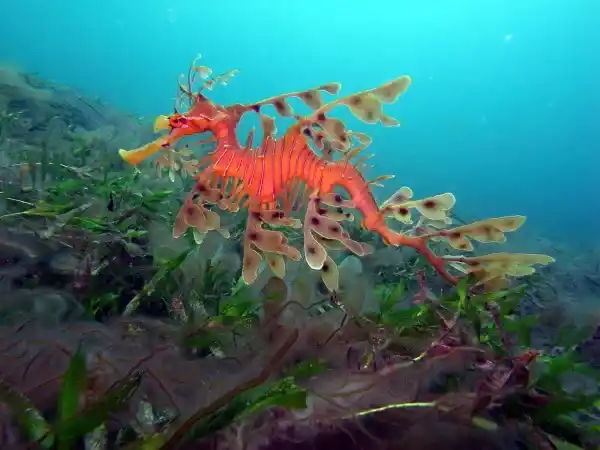
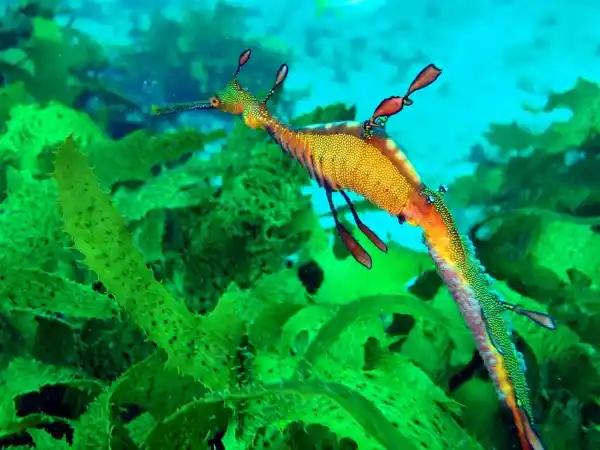
Seadragons have slender bodies with many leaf-like protrusions on their surface, making them easily confused with seaweed and one of the most camouflaged fish in the ocean. The main known species are the leafy seadragon (Phycodurus eques) and the common seadragon (Phyllopteryx taeniolatus).Excellent disguise skills :
The leaf-like protrusions on their bodies can mimic the surrounding seaweed, thus avoiding predators, making them a prime example of camouflage in marine animals. Their excellent camouflage results in their rarity in the wild and makes them difficult to observe.Color can be changed :
Seadragons can change their body color depending on age, environment, stress, or diet.Body length :
The maximum body length can reach 50 centimeters, and the average body length is about 30 centimeters.Swimming method :
They mainly swim slowly using their dorsal and pectoral fins, whose rays are extremely small and almost invisible to the naked eye.Habits :
They are primarily solitary, but can also be found in pairs or small groups. They possess unique navigational abilities and often manage to return to their habitat via the same route.Differences from seahorses :
Unlike seahorses, sea dragons cannot use their tails to secure themselves, making them more vulnerable to strong currents.Lifespan and Threats :
Due to various threats, including human activities, the survival status of wild populations is currently not optimistic.
Distribution and Habitat of Sea Dragon
Seadragons are found only in the temperate shallow waters of the southern and western coasts of Australia, commonly in ecosystems such as sandy areas, rocky reefs, seaweed beds, or seagrass beds. Due to their limited range and unique habitat, they are extremely sensitive to environmental changes and easily affected by local environmental factors.
Seadragon's diet
Seadragons are carnivorous fish, primarily feeding on small crustaceans (such as amphipods, mysids, and other zooplankton) and fish larvae. Their long mouths are located at the end of their heads, allowing them to swallow prey whole by sucking it in. Lacking teeth and chewing structures, they are highly efficient feeders. Utilizing their excellent camouflage and slow approach to prey, they are highly efficient predators.
Seadragon's breeding methods
Seadragons are ovoviviparous, with the male responsible for carrying the eggs. The female lays a large number of eggs in the male's brood pouch at the tail, which are then transferred through a special oviduct. The male then swims to a shallower area with weaker currents to await hatching. After hatching, the fry can live independently and feed on zooplankton.
Seadragon's natural enemy
Adult seadragons, with their excellent camouflage abilities, can effectively evade most predators, but newly hatched larvae face predation from various fish and invertebrates, resulting in a low survival rate. For more information, please refer to "The Relationship Between Predators and Prey".
Current status of sea dragon protection and major threats
Main threats :
Habitat destruction: reduction of kelp forests and seagrass beds.
Illegal fishing: used for ornamental fish trade and traditional medicinal purposes.
Natural predation pressure: slow swimming speed, poor escape ability, and easy prey for hatchlings.
Protection level :
Seadragons are a protected species endemic to Australia. The International Union for Conservation of Nature (IUCN) previously listed them as "data-deficient" due to insufficient data. While research and conservation efforts are being strengthened, the wild population size still requires further monitoring.
If you would like to learn more about rare animals similar to seadragons, please visit the "Wildlife" section.
References
IUCN, the International Union for Conservation of Nature. Website: https://www.iucn.org/en
References
Stiller, J., Wilson, NG, Donnellan, S., Rouse, GW (2017). *Phycodurus eques* is a landmark species with low but structural genetic variability. (Link: https://academic.oup.com/jhered/article/108/2/152/2631585)