I. Introduction: Why does the water in a fish tank turn green?
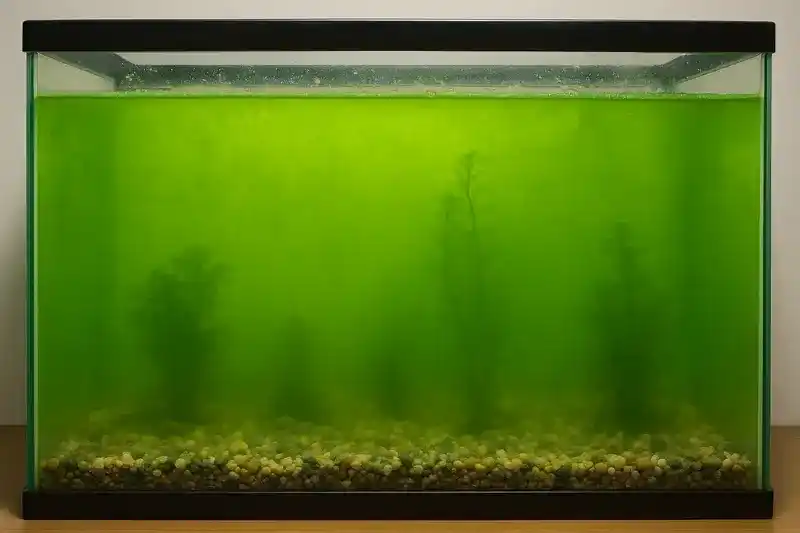
Many fish enthusiasts encounter the problem of their aquarium water turning green during aquarium keeping. This "green water" phenomenon not only affects the aesthetics but can also harm the health of fish and plants in the water. To solve this problem, it is first necessary to understand its causes.
II. Main reasons for green water in fish tanks
2.1 Massive proliferation of suspended algae
The most common cause is an outbreak of phytoplankton . They multiply rapidly in nutrient-rich water with plenty of sunlight or artificial light, causing the water to become turbid and green.
2.2 Excessive light exposure time
If a fish tank is exposed to strong light or sunlight for a long time, it will stimulate the growth of algae.
2.3 Excessive nutrients in the fish tank
Overfeeding, uneaten food, and fish feces not being cleaned up in time lead to increased concentrations of nutrients such as nitrogen and phosphorus, providing a material basis for algae reproduction.
2.4 Inadequate filtration system
Inadequate filtration equipment or failure to clean it in a timely manner can fail to effectively remove pollutants from the water, leading to water quality deterioration.
III. Effective methods to solve the problem of green water in fish tanks
3.1 Controlling the duration and intensity of light exposure
Daily lighting time should be controlled at 6 to 8 hours.
To avoid direct sunlight, use blackout curtains or change your location.
Choose a suitable LED light and install a timer.
3.2 Reduce nutrient load in water bodies
Feed properly and leave no uneaten food.
Change 1/4 to 1/3 of the water each week.
Use a siphon to remove the dirt from the bottom.
3.3 Enhanced Filtration System
Utilizes multi-layered filtration, incorporating mechanical, biochemical, and chemical methods.
Replace the filter media and clean the filter cotton regularly.
3.4 Use algae-inhibiting tools
Ultraviolet germicidal lamps (UV lamps): can effectively kill planktonic algae in water.
Activated carbon or specialized adsorbent materials: reduce dissolved nutrients.
Biological algae suppression: such as releasing algae-eating fish (such as plecos and black-striped flying foxes) or snails.
3.5 Introducing aquatic plants to compete for nutrients
Planting large quantities of fast-growing aquatic plants can compete with algae for nutrients and inhibit their growth.
IV. Prevention is better than cure: Establishing a healthy aquarium ecosystem
4.1 Maintaining ecological balance
The number of fish is moderate, and the aquatic plants are arranged reasonably, avoiding excessive decoration that may affect the water flow.
4.2 Regularly test water quality
Use water quality test strips or detectors to monitor parameters such as ammonia, nitrite, and nitrate, and make timely adjustments.
4.3 Establish a maintenance plan
Establish a weekly cleaning day: change the water, wipe the tank walls, clean the filter media, and trim the aquatic plants.
V. Conclusion
While green aquarium water is common, it can be effectively resolved and prevented from recurring by using scientific methods. Clear water not only enhances the aesthetic appeal but also ensures the health of the fish.