Cats refusing to eat cat food is a common problem faced by many cat owners. Some cats are picky eaters, some are tired of the same food, and some may have health issues. So, what should you do if your cat refuses to eat cat food? As a pet expert, this article will provide a professional perspective, systematically analyze the possible causes, and offer scientifically effective solutions to help your cat return to a normal eating habit.
I. Common Reasons Why Cats Won't Eat Cat Food
1.1 Picky eating habits
Some cats are naturally extremely sensitive to smells and tastes, and have a particular preference for wet food, meat, or human food, thus refusing relatively "bland" dry food.
1.2 Monotonous diet leads to anorexia
If cats are fed the same flavor of cat food for a long time, they may become tired of the taste and refuse to eat.
1.3 Cat food quality or new formula not tolerable
Cats may reject low-quality cat food or switch to a new brand or formula because of changes in smell or ingredients.
1.4 Physical discomfort
Oral diseases, indigestion, liver and kidney problems, parasites, or fever can all affect a cat's appetite.
1.5 Environmental or emotional changes
A new home, strangers, noise, moving, changing litter boxes, etc., can also cause stress in cats and affect their eating behavior.
II. Scientific Solutions
2.1 Check health status
If a cat suddenly refuses to eat for more than 24 hours, it is recommended to take it to a veterinarian for a full examination as soon as possible to rule out illness.
2.2 Switch to high-quality cat food
Choose cat food that is high in protein, low in grains, and free of artificial additives to better meet your cat's natural dietary needs.
2.3 Gradual Grain Switching
If you need to change your cat's food, you should follow the "7-day food change method": On the first day, the new food should make up 10% of the total food, and increase it day by day until it reaches 100% on the seventh day.
2.4 Adjust feeding method
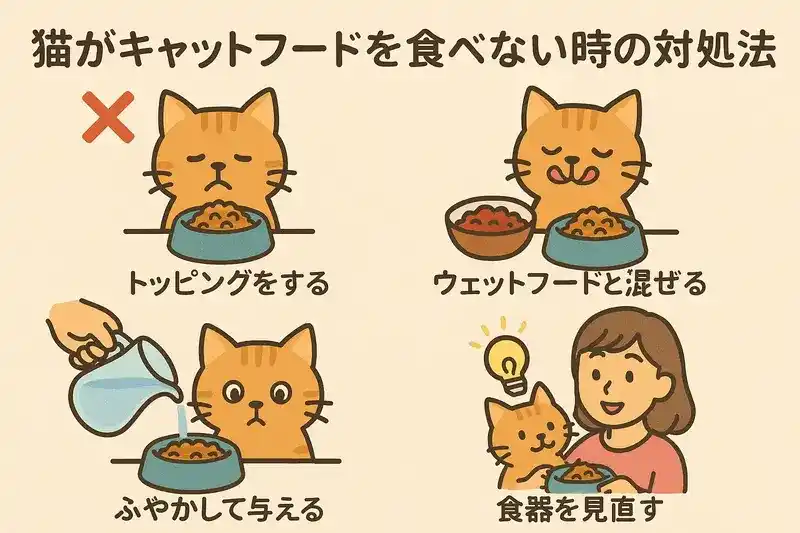
Slightly heating the dry food (not exceeding 40°C) can enhance its aroma.
Mixing dry food with a small amount of wet food increases its appeal.
Feed them at set times, removing them after 15–20 minutes.
2.5 Create a pleasant eating environment
Maintain a quiet and stable dining area.
Use a bowl that your cat likes (a shallow bowl, preferably made of stainless steel).
Encourage eating by praising or gently patting the child afterward.
2.6 Control snack intake
Reduce the proportion of treats such as dried fish, canned food, and human food to prevent cats from becoming dependent on highly flavorful foods.
III. Feeding Strategies and Techniques
3.1 Starvation therapy (moderate)
Healthy cats can use a "short-term hunger" strategy, removing cat food for 8–12 hours before offering it again to stimulate their eating motivation.
3.2 Food Rotation Mechanism
Regularly switch between two or three cat food brands (following the food switching rules) to avoid taste fatigue.
3.3 Utilizing social/imitative behavior
In multi-cat households, the act of a companion eating can stimulate the appetite of other cats.
3.4 Add nutritional flavoring agents
You can use appropriate amounts of cat-specific nutritional sauce, freeze-dried powder, and other natural seasonings to enhance the appeal of cat food.
IV. Correction of Common Misconceptions
4.1 "Give the cat canned food if it won't eat it"
If this continues, the cat will become even more resistant to dry food, which is detrimental to dental hygiene and nutritional balance.
4.2 "Leave it whether you eat it or not"
Allowing cats to eat freely will reduce their interest in and freshness of dry food; they should be fed regularly and in measured amounts.
4.3 "Food tastes better to humans, and cats love it too."
Human diets are high in oil and salt, which may lead to problems such as kidney disease and obesity. Long-term feeding of such animals is prohibited.
V. Conclusion: Rebuilding the Healthy Relationship Between Cats and Cat Food
Cats refusing to eat cat food is not insurmountable; the key is to identify the root cause and guide them step by step. Through scientific dietary management, patient behavioral training, and appropriate health interventions, most cats can regain their acceptance and love for cat food.
Every step of feeding is an accumulation of trust. With professionalism and love, we help cats get back on track to balanced nutrition and healthy growth.