Dogs are not a separate species; they are a subspecies of wolves. This can be seen in the article "Dogs and wolves have the same number of chromosomes, but dogs are not a separate species."

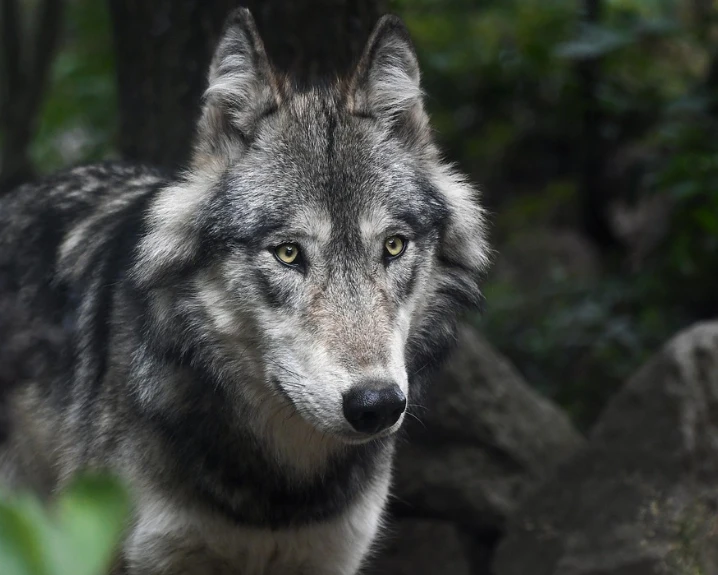
Can you tell which of the two pictures above is a wolf and which is a dog?
In the mysterious biological world, "species" and "subspecies" are key keys to unlocking the door to biodiversity. They are not only important cornerstones of biological taxonomy, but also bear witness to the marvelous journey of biological evolution.
I. Species: The basic unit of biological classification
In the vast system of biological classification, the "species" is the most basic unit. It consists of a group of organisms with similar morphology and physiological characteristics, capable of natural mating and producing fertile offspring (the most important marker for identifying a species). Simply put, members of the same species have similar appearances and internal structures and functions, and can successfully reproduce.
The concept of species was first proposed by Carl Linnaeus in 1753. He believed that each species should have a unique name that reflects the unique characteristics of the species.
The existence of species is a product of biological evolution and natural selection. Over long periods of time, organisms have continuously evolved and transformed to adapt to their environment, gradually forming unique species. Each species occupies a specific ecological niche and plays an indispensable role in the material cycle and energy flow of nature. It can be said that species are the basic form in which organisms establish themselves in nature and an important carrier for the continuation and development of life.
II. Subspecies: Geographical isolation within the species
So, what is a subspecies? When the same species of organism, due to factors such as geographical isolation and differences in ecological environment, leads to stable differences in morphology, physiology, and behavior among populations, but without reproductive isolation, these populations with significant differences are classified as subspecies. Simply put, subspecies are like different branches within the species family; although they all belong to the same family, each branch has its own unique "personality."
These different tiger subspecies, although they differ in size, coat color, stripes, etc., can still interbreed and produce fertile offspring, and therefore all belong to the tiger species.
III. Classification Criteria: Unveiling the Differences Between Species and Subspecies
(a) Criteria for classifying species
The most crucial criterion for determining whether organisms belong to the same species is reproductive isolation. If two groups of organisms cannot mate naturally, or if they cannot produce fertile offspring after mating, then they belong to different species. For example, although horses and donkeys are similar in appearance and can mate to produce mules, mules are infertile, which indicates that horses and donkeys are different species.
In addition, morphological characteristics, genetic characteristics, and ecological habits are also important references for classifying species. Through comprehensive analysis of an organism's skeletal structure, organ morphology, gene sequence, as well as its living environment, diet, and reproductive methods, scientists can accurately determine the species to which an organism belongs.
(II) Criteria for Subspecies Classification
For animals, two populations within the same species that are geographically separated and exhibit significant differences in classification, with at least 75% of their individuals differing, can be considered distinct subspecies. Furthermore, two subspecies of the same species cannot occupy the same distribution area (breeding area). For example, wolves from different regions may have varying coat colors (some darker, some lighter), as well as differences in size and habits. When these differences reach a certain level, they are classified as different subspecies.
The classification of plant subspecies generally occurs when a plant exhibits significant variations in its stems, leaves, flowers, or fruits, and these variations are confined to a specific distribution area (or growing environment). However, if the changes do not extend beyond the original species and are insufficient to establish a new species, then a subspecies is designated. For example, some plants growing in high-altitude areas may exhibit variations such as stunted growth or thicker leaves due to the harsh environment. These variations are stably inherited and confined to a specific region, thus forming a subspecies of that plant.
The criteria for classifying bacterial subspecies are that some strains within a bacterial species share characteristics that are largely consistent with typical strains, but differ in a few phenotypic or genetic traits that are stable. These bacteria are then called subspecies of that species. For example, *Escherichia coli* has many different subspecies, which differ in antibiotic resistance, metabolic products, and other aspects.
IV. Naming Rules: Unique Biological "ID Cards"
To accurately identify and distinguish different species and subspecies, scientists have developed a strict set of naming rules. Species names use a binomial nomenclature system, consisting of the genus name and a specific epithet, with the genus name first, capitalized, and the specific epithet following, all lowercase. For example, the scientific name for humans is *Homo sapiens*, where *Homo* is the genus name and *sapiens* is the specific epithet. This naming method is concise and clear, ensuring that each species has a unique scientific identifier.
Subspecies names follow a trinomial system, adding the subspecies epithet after the binomial name of the species. Animal subspecies names consist of a simple trinomial, such as the Siberian tiger's name, *Panthera tigris altaica*, where *Panthera* is the genus name, *tigris* is the specific epithet, and *altaica* is the subspecies epithet. However, plant and bacterial subspecies names must include the rank designation "subspecies" before the subspecies epithet, usually abbreviated as "subsp." For example, the Beijing lilac's name is *Syringa reticulata* subsp. *pekinensis*, and the animal *Bifidobacterium animalis* subsp. *lactis*. Seeing the word "subsp." undoubtedly indicates a subspecies.
V. Significance and Value
The study of species and subspecies is of paramount importance and value. From a scientific research perspective, they provide crucial clues for exploring the evolutionary process of organisms. By comparing the morphological, genetic, and other characteristics of different species and subspecies, scientists can trace the evolutionary paths of organisms and understand how they adapted to their environment and diversified over long periods of time.
In biodiversity conservation, research on species and subspecies also plays a crucial role. Each species and subspecies is an important component of biodiversity and plays a unique role in the ecosystem. Understanding their distribution, abundance, and ecological needs helps us formulate scientifically sound conservation strategies to protect these precious biological resources and maintain ecological balance.
Furthermore, the research findings on species and subspecies are widely applied in agriculture, medicine, and industry. In agriculture, studying the characteristics of species and subspecies of crops and livestock allows for the cultivation of superior varieties, improving yield and quality. In medicine, research on medicinal plants and microbial species and subspecies helps in the discovery of new drug components and treatment methods. In industry, utilizing different species and subspecies of microorganisms for fermentation, biodegradation, and other processes can produce a variety of useful products, promoting the development of green industry.
Species and subspecies represent a mysterious realm in the biological world. They not only showcase the diversity and wonder of life but also provide crucial information for understanding nature, protecting biodiversity, and advancing science and technology. As science and technology continue to advance, our understanding of species and subspecies will deepen, and we believe they will reveal even more of life's mysteries in the future.
Finally, let's return to the title of this article: Why isn't a dog a separate species, while a wolf is?
The reason why wolves are recognized as a separate species:
Independent evolutionary process—In the long process of natural evolution, wolves have formed a unique evolutionary path to adapt to various natural environments. They occupy a specific ecological niche in the ecosystem, live by preying on other animals, and are typical carnivores. Their behavior patterns and physiological characteristics have evolved to adapt to wild survival and predation.
Genetic uniqueness – wolves have a unique genetic combination that determines their appearance, physiological characteristics, and behavioral habits, making them clearly distinguishable from other species.
The reason why dogs are not a separate species:
Originating from wolves—dogs were domesticated from wolves. During the domestication process, although dogs have undergone some changes in appearance and behavior, from a genetic perspective, dogs and wolves are extremely similar in genes. They have the same number of chromosomes and belong to the same species in biology.
No independent evolutionary path – After domestication, the evolution and development of dogs have been largely influenced by humans, relying on food and living environment provided by humans. They have not formed an evolutionary path independent of wolves, fully adapted to the natural environment, or a unique ecological niche.
Therefore, based on factors such as evolutionary history, genetic characteristics, and ecological niche, wolves are considered a separate species, while dogs are a subspecies of wolves, not a separate species.