The blue axolotl is one of the most unique and captivating creatures in the animal kingdom. Its mesmerizing blue color and rarity make this amphibian a favorite among aquarium enthusiasts and biologists alike. So, what exactly is the blue axolotl? Why is it so different? This article will delve into the blue axolotl 's biological characteristics, habitat, care, and cultural significance, revealing why it garners so much attention.
What is the blue Mexican axolotl?
Scientific classification
The blue axolotl is a color variant of the axolotl ( Ambystoma mexicanum ). This is an aquatic salamander native to Mexico, and its scientific classification is as follows:
Kingdom : Animalia
Phylum : Chordata
Class : Amphibia
Order : Urodela
Family : Ambystomatidae
Genus : Ambystoma
Species : Ambystoma mexicanum
physical characteristics
Unique colors :
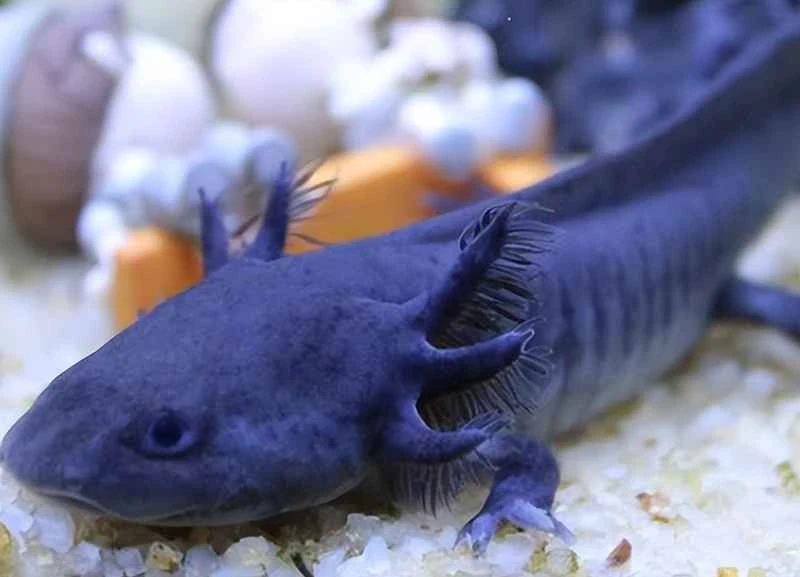
The blue axolotl (often called "black-blue" or "dark blue") stands out for its deep blue to black skin, which contrasts sharply with other color variations.
External gills :
Like other axolotls, the blue Mexican axolotl has feather-like external gills for underwater breathing.
Body type :
Their body length is usually between 23 and 30 centimeters.
life :
Under good husbandry conditions, the blue Mexican axolotl can live for about 15 years.
Where does the color blue come from?
The blue axolotl's color is determined by its specific genetic traits and the concentration of melanin in its skin. This rare variant is highly sought after for its rarity and beauty.
The natural habitat of the blue axolotl
Distribution of the blue Mexican axolotl
Like other axolotls, the blue Mexican axolotl is native to Mexico's lakes and canals, with its main habitats including:
Lake Xochimilco :
It is currently the main habitat of wild axolotls.
Lake Chalco :
It was once their habitat, but the lake has now been drained.
Environmental requirements
Water quality conditions :
The blue Mexican axolotl is adapted to living in cool freshwater environments, with temperatures ranging from 16 to 20°C.
vegetation :
They prefer areas with aquatic plants, which provide them with hiding places and foraging grounds.
Water quality :
Clean, oxygen-rich water is essential for its survival.
threats to habitat
pollute :
Urbanization and agricultural runoff have led to a decline in the water quality of their habitats.
Invasive species :
Non-native fish compete with axolotls for food and prey on their eggs and larvae.
Habitat loss :
The draining of lakes and canals has led to a sharp decline in wild populations.
Behavior and lifestyle of the blue Mexican axolotl
aquatic characteristics
Unlike most salamanders that undergo metamorphosis in adulthood, the blue axolotl remains aquatic and retains juvenile characteristics throughout its life due to a property called larval continuation .
diet
Carnivorous habits :
Shrimp
Little Fish
aquatic insect larvae
earthworm
The blue axolotl is a carnivorous animal, primarily preying on:
Predation method :
They capture their prey by sucking it into their mouths quickly.
social behavior
Living alone :
Blue axolotls are mostly solitary creatures and prefer to keep their distance.
Reproductive behavior :
During the breeding season, the male releases spermatophores, which the female collects and fertilizes the eggs.
How to care for blue Mexican axolotls in captivity
Building an ideal aquarium
Aquarium size :
A single blue axolotl requires a tank of at least 75 liters (20 gallons).
Substrate :
Use fine sand or a bare container to avoid intestinal blockage caused by accidentally swallowing gravel.
Filtration equipment :
A gentle filter is needed to maintain water quality without creating a strong water flow.
Water quality requirements
temperature :
The water temperature needs to be maintained between 16 and 20°C.
pH :
The ideal pH value is 6.5–8.0.
Ammonia and nitrite :
Change the water regularly to ensure these harmful substances remain at 0 ppm.
Feeding diet
Staple food :
Offer live or frozen food, such as bloodworms, brine shrimp, and black worms.
Supplementing food :
Feed them an appropriate amount of pelleted feed specifically designed for carnivorous fish.
Feeding frequency :
Adult blue Mexican axolotls should be fed 2–3 times per week.
Is it suitable for mixed breeding?
Blue axolotls are best kept alone, as they may attack other fish or mistake smaller companions for food.
Conservation status of the blue axolotl.
Is the blue Mexican axolotl endangered?
Although the blue axolotl exists only in captivity, the species (Axolotl mexicanus) is listed as critically endangered in the wild, with major threats including:
Habitat loss :
Urbanization in Mexico City has drastically reduced the area of its native habitat.
Overfishing :
The axolotl was captured for traditional medicine and the pet trade.
Climate change :
Rising global temperatures threaten their adaptation to cold water environments.
Conservation Action
Artificial breeding :
Breeding programs at zoos and aquariums help maintain their genetic diversity.
Habitat restoration :
Existing projects are underway to clean up and restore Lake Sochmilko.
Public outreach :
Raising awareness of the axolotl's plight will attract more conservation support.
The cultural significance of the blue Mexican axolotl
Myths and Legends
The axolotl holds an important place in Aztec mythology, and is said to be associated with Xolotl, the god of fire and lightning, who transformed into an axolotl to avoid sacrifice.
Modern Popular Culture
Video games :
The blue axolotl has become a popular character in games like Minecraft due to its rarity.
Social media :
Their adorable appearance has made them internet sensations on platforms like Instagram and TikTok.
Fun facts about the blue axolotl.
Regeneration ability :
The blue axolotl can regenerate lost limbs, gills, and even parts of the heart and brain.
A "smiling" appearance :
Their facial structure makes them appear to be smiling, adding to their attractiveness.
Never changeable :
They retain juvenile characteristics throughout their lives (neomorphic continuation).
Genetic miracle :
Blue variants are highly sought after in the pet market due to their rarity.
Research Stars :
The blue Mexican axolotl has become a popular subject of medical research due to its regenerative abilities.
Frequently Asked Questions about the Blue Mexican Axolotl
1. Why is the blue axolotl blue?
The blue color comes from its genetic characteristics and the high concentration of melanin in its skin.
2. Can the blue Mexican axolotl be kept with other axolotls?
While it is possible, it is recommended to keep them in isolation to avoid aggression or stress.
3. How long does the blue Mexican axolotl live?
Under good husbandry conditions, they can live up to 15 years.
4. Is the blue axolotl a natural species?
The blue Mexican axolotl is a captive-bred variant; this coloration does not exist in the wild.
5. Is the blue Mexican axolotl suitable for beginners?
Yes, with the right care and environment, they are very suitable pets.
Conclusion: Exploring the allure of the blue axolotl.
The blue axolotl is a remarkable creature combining stunning beauty with unique biological characteristics. From its captivating blue color to its powerful regenerative abilities, this amphibian has captivated scientists and pet lovers alike. However, their survival is threatened, making understanding and protecting this species not only part of scientific exploration but also a contribution to ecological conservation. By appreciating the beauty of the blue axolotl , we can contribute to the protection of this extraordinary species.