Chameleons ( Furcifer pardalis ) are among the most fascinating species of reptiles. They are renowned for their unique ability to change color and are native to Madagascar and its surrounding islands. Whether you are a reptile enthusiast or simply curious about the wonders of nature, understanding the habits of chameleons will take you deeper into exploring the behavior, habitat, and care of these amazing creatures.
What is a chameleon?
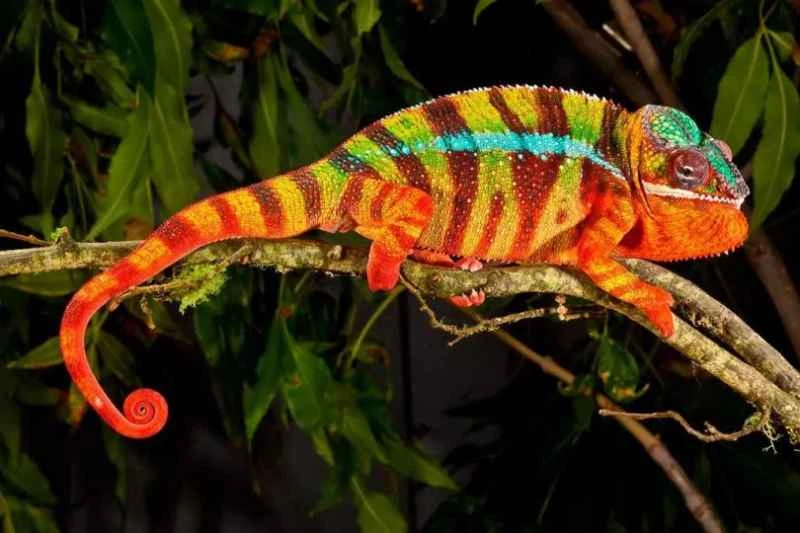
Scientific classification
Kingdom : Animalia
Phylum : Chordata
Class : Reptilia
Order : Squamata
Family : Chamaeleonidae
Genus : Furcifer (short mutant chameleon)
Species : Chameleon ( Furcifer pardalis )
Chameleons belong to the genus Furcifer , which also includes several other brightly colored and uniquely characteristic chameleons.
Physical characteristics
Body type :
Male chameleons are larger, reaching up to 50 centimeters in length, while females are usually smaller, about 25–35 centimeters.
color :
Males are more brightly colored, including red, green, blue, and orange, with specific colors varying depending on the region of origin; females are more subdued in color.
Tail :
They have curled tails with strong gripping power, which helps them climb and maintain balance.
Eye :
The independently rotating eyes provide a 360-degree field of vision.
Unique characteristics
Color-changing ability :
Color-changing is not only used for camouflage, but also for communication and temperature regulation.
Antidote foot :
Their foot structure is adapted to grip branches, giving them an extremely strong climbing ability.
Chameleon's Habitat and Distribution
native habitat
Chameleons are native to the forests and surrounding islands of Madagascar. They are adapted to tropical environments, including:
Tropical rainforest :
The dense vegetation provides them with cover and opportunities to climb.
Coastal forests :
Warm and humid climates are ideal for their survival.
Preferred environmental conditions
temperature :
The ideal daytime temperature is 24–29°C, which will drop slightly at night.
humidity :
High humidity (60–80%) is essential for their health.
Sunlight requirements :
They need UVB light to synthesize vitamin D3 and absorb calcium.
Wild distribution
In addition to their widespread distribution in Madagascar, chameleons have also been introduced to nearby islands such as Reunion Island and Mauritius.
Chameleon behavior and lifestyle
Color-changing ability
Communication tools :
Color change is an important way to express emotions, territoriality, and reproductive intentions.
Bright colors often indicate dominance or aggression, while dull colors suggest submissiveness.
Thermoregulation :
Dark colors absorb heat, while light colors reflect heat, helping to regulate body temperature.
Dietary habits
Chameleons primarily feed on insects, including:
insect :
Their main diet includes crickets, grasshoppers, cockroaches, and locusts.
Occasionally, prey :
In the wild, they may prey on small vertebrates or other reptiles.
Social behavior
Living alone :
Chameleons are highly territorial and prefer to live alone.
Aggressiveness :
Especially during the breeding season, males exhibit significant aggression towards other males.
Reproduction and life cycle
Breeding season :
This usually occurs during the warmer seasons.
Courtship behavior :
Males attract females with bright colors.
Egg-laying method :
Females lay 10–40 eggs at a time, burying them in the soil for 6–12 months to incubate.
How to raise a chameleon?
Breeding environment settings
size :
The habitat of a mature chameleon should be at least 60x60x120 cm.
ventilation :
Sufficient air circulation can effectively prevent respiratory problems.
Branches and plants :
Provide ample climbing space, with options for live or artificial plants.
Light and temperature control
UVB light exposure :
UVB lamps are essential for calcium absorption and bone health.
Heating point :
Set a tanning point with a temperature of 29–32°C.
Diet and water
insect :
Provide a diverse range of insect foods and fortify them nutritionally (e.g., by stuffing them with intestines or sprinkling them with calcium powder).
Moisture :
Use a sprayer or drip system to provide moisture, as chameleons prefer to drink from water droplets.
Health Management
Frequently Asked Questions :
Metabolic bone disease (MBD) is a common problem caused by calcium deficiency.
Dehydration and stress-related illnesses can also affect their health.
Regular inspections :
Take your chameleon to a reptile specialist for regular checkups.
The role of chameleons in the ecosystem
Predator-prey relationship
As a predator :
They maintain ecological balance by preying on insects.
As prey :
They are an important food source for birds, snakes, and large mammals.
Environmental health indicator species
Chameleons are extremely sensitive to environmental changes and are therefore considered an important indicator species of ecosystem health.
The current state of chameleon conservation
Current situation
Chameleons are listed as “Least Concern” by the International Union for Conservation of Nature (IUCN), but habitat destruction and the illegal pet trade pose a threat to their wild populations.
Protective measures
Habitat protection :
Protecting Madagascar's forests is crucial for their survival.
Legitimate trade :
Legitimate artificial breeding programs can help reduce pressure on wild populations.
Fun facts about chameleons
Color difference :
Chameleons from different regions exhibit unique color patterns, which are known as "regional variants".
A powerful tongue :
Their tongues can extend to twice the length of their bodies, which they use to catch prey.
life :
Under proper care, chameleons can live for 5–7 years.
Independent Eyes :
Each eye can move independently, allowing it to observe both prey and predators simultaneously.
Uses of the tail :
The curled tail acts like a fifth "hand," providing support during the climb.
Frequently Asked Questions about Chameleons
1. What do chameleons eat?
Chameleons primarily eat insects, such as crickets, grasshoppers, and locusts. In the wild, they occasionally also eat small reptiles or vertebrates.
2. How do chameleons change color?
Chameleons change color by controlling the expansion or contraction of special pigment cells (pigment cells) in their skin to reflect different light.
3. Are chameleons suitable as pets?
Yes, with proper care, chameleons are great as pets because of their vibrant colors and captivating behavior, but they are best suited for experienced reptile keepers.
4. Do chameleons drink water?
They don't drink directly from the water bowl, but prefer to get moisture from water droplets on their leaves, so a misting or drip system is needed.
5. Are chameleons endangered?
Although it is not currently considered an endangered species, habitat loss and overhunting pose a threat to its population.
Conclusion: Exploring the Wonderful World of Chameleons
Chameleons are a unique species that combines vibrant colors with distinctive behaviors. From their ability to change color to their solitary lifestyle, these reptiles always evoke curiosity. Understanding their habitats, behaviors, and care requirements helps us better protect this fascinating creature. Whether observed in the wild or kept as pets, chameleons remain one of the most captivating members of the reptile world.