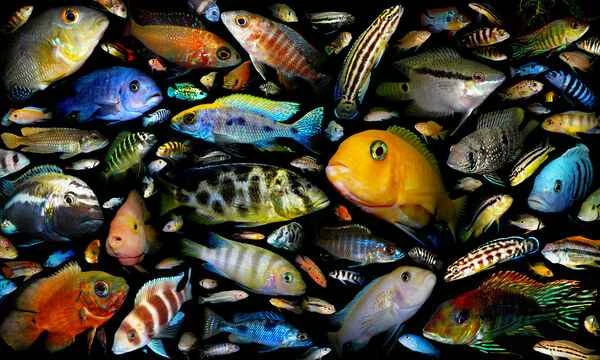
Cichlids from the Three Great Lakes refer to cichlids found in the three major lakes of East Africa—Lake Tanganyika, Lake Malawi, and Lake Victoria—comprising approximately 700 species. They have long been renowned for their vibrant and colorful appearances. Are you familiar with some of these beautiful cichlids from the Three Great Lakes? Below are ten of the most beautiful cichlids from the Three Great Lakes, including the Zaire Blue Six-banded Cichlid, Cleopatra, Blue Jasmine, Kuzilla, Emperor Cichlid, Venus Cichlid, and Blue Zebra Cichlid. Their captivating appearance makes these cichlids a focus of attention; let's appreciate their unique beauty together.
1. Six rooms of Sai Lan
Which cichlid species from the African Great Lakes is the most beautiful? Most fish enthusiasts agree it's the Zaire Blue Six-banded Cichlid. Originating from the deep waters off the coast of Zaire in northern Tanganyika Lake, Africa, this fish is the most famous of the more than ten species of six-banded cichlids in Lake Tanganyika and is also one of the world's most prized fish.
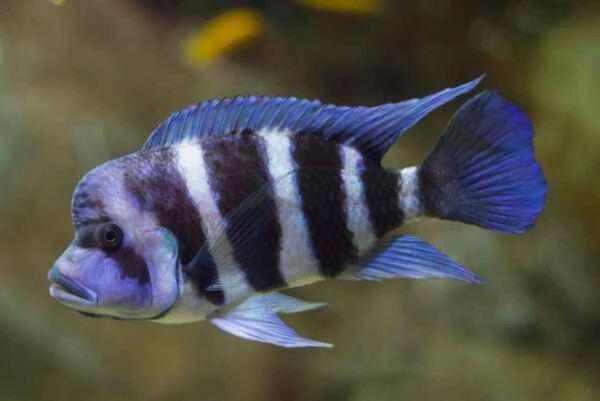
The Zaire Blue Six-Cichlid is renowned for its striking contrast of pale blue and black, resulting in exceptionally clear lines. Its versatile colors, robust physique, elegant form, and remarkable adaptability make it a favorite among cichlid enthusiasts. In suitable water quality and environments, the Zaire Blue Six-Cichlid can display breathtakingly beautiful colors, further enhancing its appeal.
2. Cleopatra
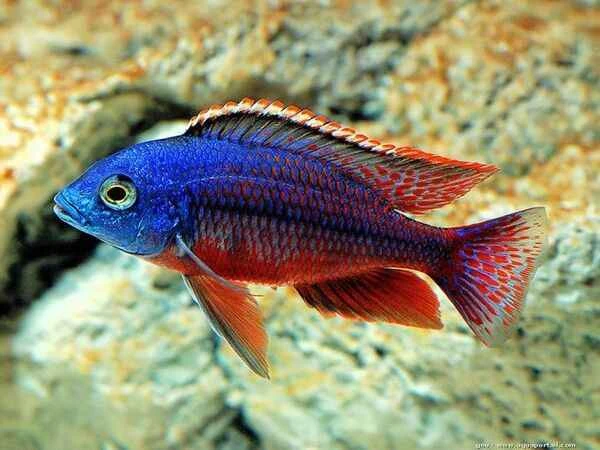
Cleopatra is mainly found in Lake Malawi, Africa. Its distinctive physical feature is a wide, prominent horizontal band along its side. The fish's coloration is characterized by a blue base color on its sides, a bright blue head and back, and a large border of red scales around most of its body. Its dorsal fin is blue with a fiery red upper edge, while its pelvic, anal, and caudal fins are entirely fiery red. Its eyes are coppery-yellow with black pupils.
The male fish has a bright red body color, while its head is blue-green, creating a striking contrast that makes it quite beautiful.
3. Blue Jasmine
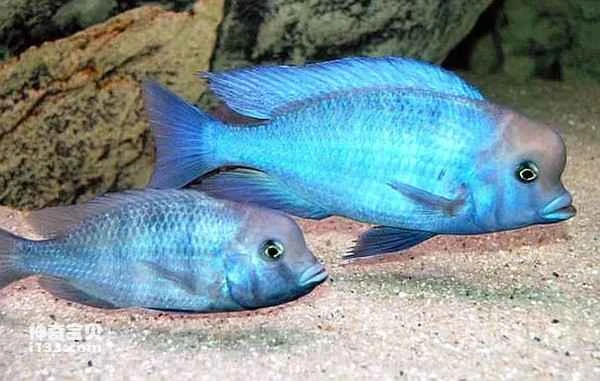
I especially love the Blue Jasmine cichlid from the African Great Lakes. This fish is known as the "Lake Malawi Blue Dolphin" in European and American markets because of its dolphin-like protruding forehead and its overall bright cabbage-blue color. Its sides are covered with irregular dark spots, adding to its unique charm.
Although initially classified under the genus *Haplochromis*, the Blue Jasmine is now the only species in the genus *Cyrtocara*. Since its initial market entry in 1968, the Blue Jasmine has been highly favored by tropical fish enthusiasts. Its unique appearance and captivating colors have made it one of the most popular ornamental fish.
4. Godzilla
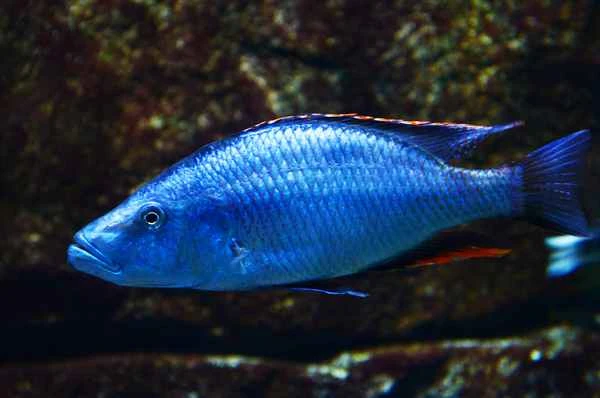
The Kuzora is a relatively large cichlid that can reach about 40 centimeters in length. Its body is slightly laterally compressed and elongated, with a triangular head, a protruding snout, a wide mouth, and powerful, sharp jaws.
After reaching adulthood, the Gozilla develops an extremely vibrant and magnificent body color. It typically displays a purplish-blue or bright blue hue, sometimes even green. The anal fin ranges in color from blue to orange-red, while the rear sides of the body and the caudal fin are covered with bright red spots, and the anal fin also has bright white egg spots. Its wild and untamed appearance, coupled with its stunningly beautiful coloration, has earned it the reputation of being the "Crown of Lake Malawi."
5. Emperor Fish
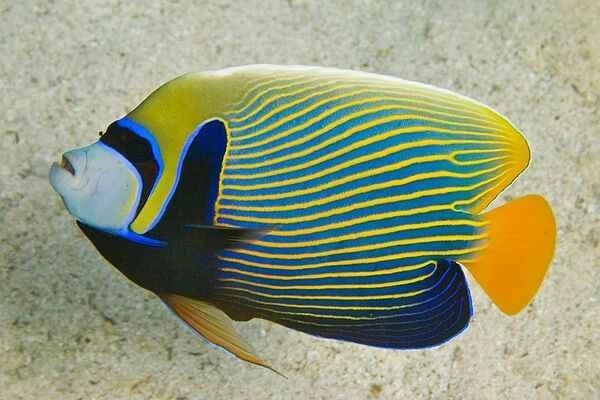
Which cichlid from the African Great Lakes is the most captivating? The Emperor Cichlid has always been highly regarded, prized for its beautifully patterned body. This fish's markings change dramatically as it grows. Juvenile Emperor Cichlids are entirely blue with spiral patterns.
However, as the Emperor Fish grows to approximately 23 centimeters, its white spiral patterns transform into more than ten yellow vertical stripes. Once it dons its yellow robe, the adult fish resembles a monarch, hence its name. The striking yellow stripes exude majesty and nobility, conveying the grandeur of an emperor's arrival.
6. Venus
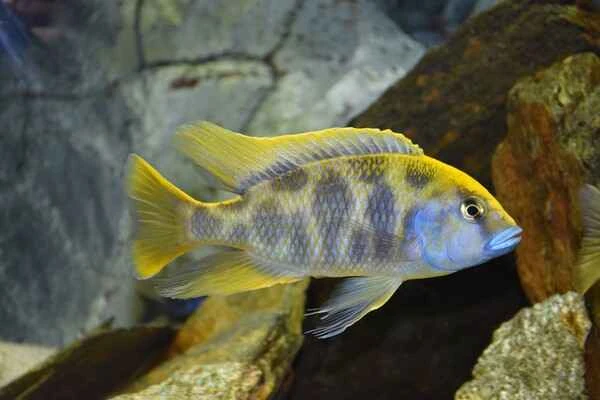
Venus species commonly found in aquariums are usually small, but in Lake Malawi they are called Kaligono, a name that means "sleeper." Female Venus often have yellow and brown markings, while male Venus have blue faces and yellowish-brown bodies.
However, not all individuals are like this; some Venus have blue bodies, and both males and females have camouflage-like patterns on their bodies. Overall, Venus is a very gorgeous and charming fish, pleasing to the eye in both appearance and color.
7. Blue Zebra
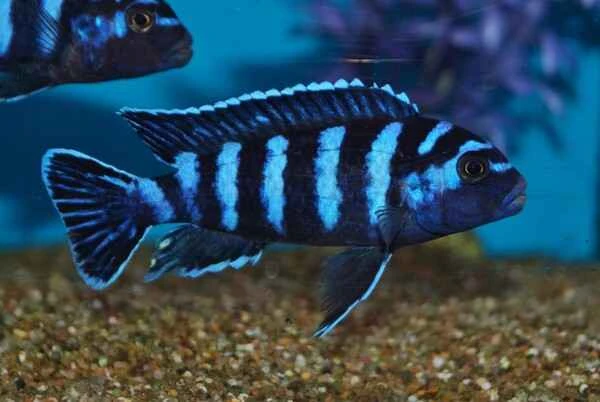
The blue zebra displays a striking deep blue and space blue hue, a beautiful coloration present in both males and females. Due to its high ornamental value, the blue zebra has been widely bred in captivity in Europe and America.
Blue zebras love to chase each other, so if you put several in the same aquarium, you'll often see them frolicking and playing in the water. Please note: Blue zebras mainly feed on plankton at the water's surface, so it's best to provide them with some meat to ensure their health and vitality.
8. Blood Red

The Blood Red Fish is about 10-15 cm long and oval in shape. Its head and gill covers are pale blue with blue markings, while its scales are a vibrant red with white edges. The body surface shimmers like a ruby, with black and red markings on the pelvic and anal fins, and a white lace edge on the dorsal fin. The male, in particular, has an electric blue head contrasting sharply with its purplish-red body, creating a striking effect that makes it exceptionally beautiful and unique.
Blood Red Snapper are gentle in nature and generally do not bully other small fish. They are also omnivorous, making them relatively easy to keep.
9. African Phoenix

The African Phoenix, native to Lake Malawi, can reach a length of about 15 cm when fully grown. Juveniles are bright yellow with two black stripes running from the head to the tail fin. As adults, females retain this coloration, while males turn a deep blue-black with a metallic light blue stripe running down their sides from the back edge of the gill cover to the tip of the tail.
African phoenixes have very unique living habits. They can only survive in hard water with a high alkalinity (pH 7.5-8), and the suitable water temperature range is between 22℃ and 26℃. 【Special Reminder】When purchasing, please note that these fish have a strong sense of territory, and males often engage in fierce fights. Therefore, adult fish should be kept alone to avoid conflict.
10. Sun Peacock
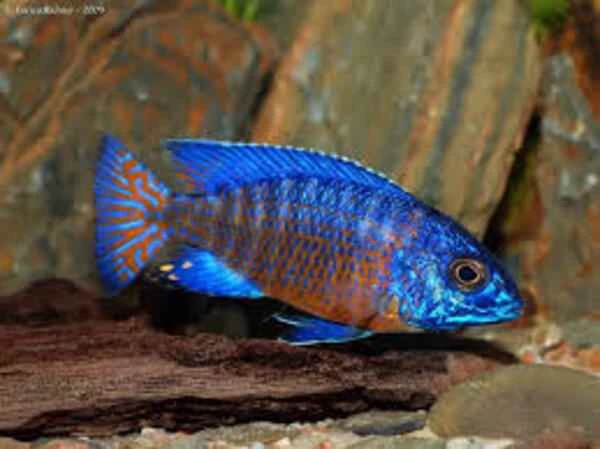
Sun peacocks primarily inhabit transitional zones between rocky and sandy areas on the lakebed. Adults, juveniles, and females often swim alone or in small groups. Within these groups, fully colored and exceptionally vibrant males can usually be seen, displaying territorial guarding and vigilance. Sun peacocks typically feed on small invertebrates found in the sand or lakebed sediment.