Overview
The axolotl (scientific name * Ambystoma mexicanum *) is a very special amphibian native to Mexico. Due to its amazing regenerative ability, lifelong retention of juvenile characteristics (neomorphism), and regional distribution, the axolotl has become a focus of attention for researchers, breeders, and conservation organizations worldwide.
The lifespan of the axolotl varies greatly between the wild and captive environments. This difference is not only related to its biological characteristics, but also closely related to its habitat, food sources, and survival pressures.
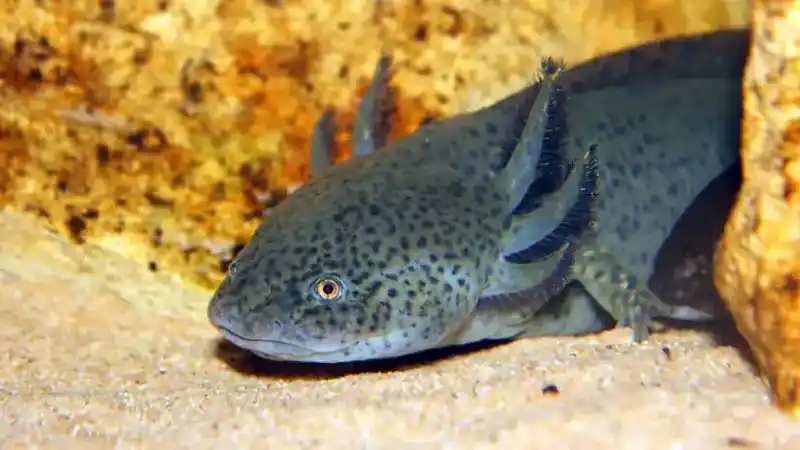
Pet axolotls that are well cared for live two to three times longer than wild axolotls.
How long can an axolotl live?
The average lifespan of a wild axolotl is about 5 years , and very few individuals live longer.
However, under artificial breeding conditions, as long as they are provided with stable water quality, abundant nutrition and suitable temperature, their lifespan can easily reach 10-15 years , and there are even cases that approach 20 years.
The main reasons for the lifespan difference include:
Safety and stress are different
Dietary quality differences
The impact of water quality, temperature and pollution
Risk of predation
Body surface health and immunity
What factors affect the lifespan of the axolotl?
The axolotl is a " neomorphic amphibian ," retaining its larval appearance and physiological structure throughout its life. These characteristics include:
Typical larval characteristics
External feathery gills
broad and flat head
underdeveloped occlusal teeth
Soft and easily damaged skin
Long and flat tail
These structures allow them to maintain a high degree of flexibility underwater, but also make them extremely sensitive to changes in water quality.
Why do these characteristics reduce lifespan in the wild?
Because axolotls cannot live without water:
Pollution, chemicals, and deposits can directly affect breathing and skin.
Rapid changes in water temperature can lead to heatstroke or a breakdown of the immune system.
A strong current can damage its gill filaments.
Hypoxia and eutrophication can cause a sharp drop in survival rates.
All of these factors make it extremely difficult for wild axolotls to live to old age.
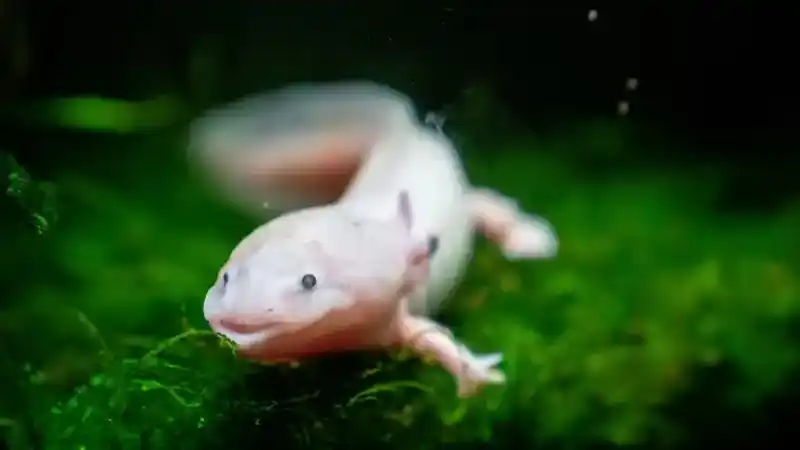
Mexican axolotls can only live longer if they are properly cared for.
Where do wild axolotls live?
Today, wild axolotls are almost entirely found in the waterways of the Xochimilco Lake District near Mexico City.
The original Lake Chalco was drained in the 20th century, causing its natural habitat to shrink dramatically.
The main threats in the wild include:
Urban pollution
Agricultural chemicals
Habitat fragmentation
Competition and predation by invasive fish species (tilapia, carp)
The sharp decline in native species has led to the disruption of the food chain.
The once-rich aquatic ecosystem has now severely degraded, resulting in the destruction of the axolotl's food and breeding environment.
Food and predators of wild axolotls
The axolotl is a carnivorous predator that uses a sensitive kinesthetic system to capture its prey.
The main foods include:
small fish
Aquatic insects
Earthworms and water worms
Crustaceans
Tadpoles and larval amphibians
Tiny invertebrates (larval stage)
Sources of threats in the wild
Tilapia and carp will eat the eggs and larvae of axolotls.
Waterbirds prey on adults in shallow waters
Pollution damages their protective mucous membranes
Competition makes food scarce
The young are completely unprotected and must find their own food from birth.
Why do artificially bred animals live longer?
In captivity, axolotls no longer face pollution, predators, and food shortages, naturally leading to a significant increase in lifespan.
Common foods for artificially raised animals:
Specialized high-protein granules
Frozen red worms
Artemia
small insects
earthworm
An ideal aquarium environment should include:
Cool water temperature (16–18°C)
Slight water flow or still water
oxygen-rich environment
Hidden places (living plants, caves, PVC, etc.)
Fine sand or a bare tank surface (to avoid deadly "stone swallowing")
Axolotls do not provide parental care at any stage, so a stable environment is crucial for their development.
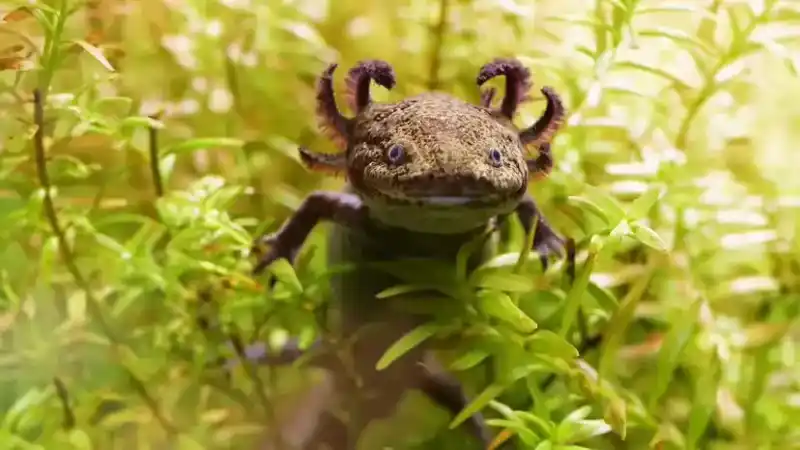
Xochimilco and Lake Charco were natural habitats for the Mexican axolotl until Lake Charco dried up.
Amazing regenerative capacity and scientific research value
The axolotl is a star species in biological regeneration research; they can regenerate:
limbs
Part of brain tissue
Heart tissue
Muscles and cartilage
spinal cord
Scientific research value
Studying the axolotl helps in understanding:
Neural repair
Scarless healing
regenerative medicine
Neopregnancy and the Endocrine System
Developmental biology
Because they do not actively undergo metamorphosis and maintain a "larval form" for a long time, they provide a unique window for scientific research.
Protecting the present and efforts for the future
The American axolotl has been listed as a critically endangered species (CR) by the International Union for Conservation of Nature (IUCN).
The main protective measures include:
Restoring vegetation in the Sochimilko waterway
Eliminate invasive fish
Construction of the "Floating Island Wetland" (ChinaMPA) Nature Reserve
Artificial breeding followed by release
Monitoring the wild breeding season
Educate the public to avoid buying or releasing animals into the wild.
The impact of the pet trade
Some pet stores advertise that "American axolotls are easy to raise," leading to impulsive purchases and improper care.
A few owners have even released them into non-native areas, posing ecological risks or causing the axolotls to die due to environmental maladjustment.
Summarize
The lifespan differences among axolotls are the result of the combined effects of biological characteristics and environmental stress.
In the wild, they face:
pollute
prey
Food shortage
Habitat loss
Their lifespan is significantly shortened; however, in artificial environments, as long as the water quality is stable, the diet is reasonable, and the temperature is suitable, they can live a long and healthy life.
Protecting these unique amphibians is not just about extending their lifespan, but also about maintaining their unique ecological status and scientific value.