Rays (Batoidea) belong to the superorder Cartilaginous Fishes and are commonly known as rays or manta rays. They are large, flat-bodied fish with broad pectoral fins and a central section called a "disc body." These elegant swimmers primarily inhabit coastal and deep-sea areas. It's worth noting that while most rays live in marine environments, a few species inhabit freshwater. This article will focus on seven major marine rays and their key characteristics.
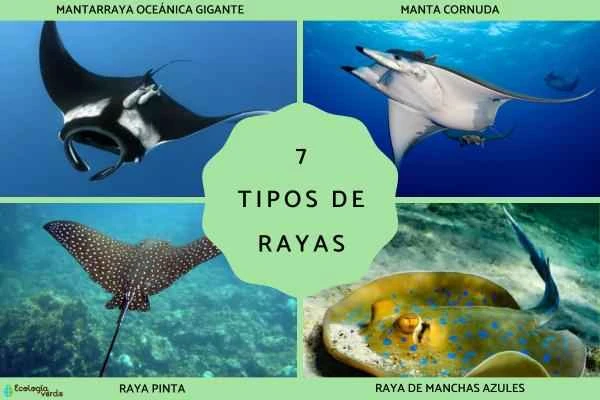
Table of contents
Giant manta ray
Reef ray
Horned Manta Ray
Common whiptail ray
Spotted Ray
Blue-spotted ray
Bull Ray
Giant manta ray (Mobula birostris)
Giant manta rays are widely distributed, mainly inhabiting tropical and subtropical waters. They are the largest of all manta ray species, reaching up to 9 meters in length and weighing up to 2400 kilograms. They possess a unique "horn-like" structure in their heads—the cephalic lobe—which helps guide plankton into their mouths for filter feeding. Unlike other rays, the venomous spines in the giant manta ray's tail are no longer functional. Their brains are the largest known to any fish, comparable in size to those of primates. Each giant manta ray has unique pigmented markings, aiding in individual identification.
Reef ray (Mobula alfredi)
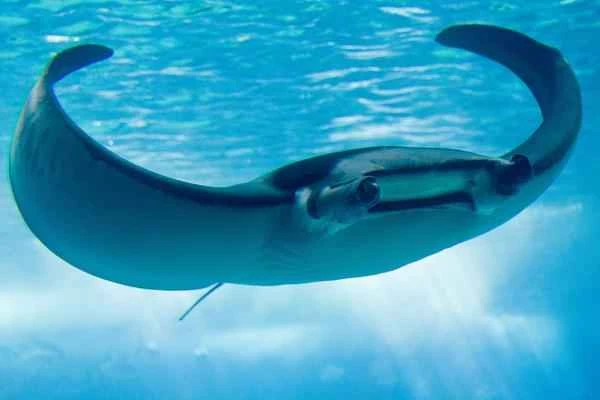
Reef ray is the world's second largest manta ray, distributed in the tropical and subtropical waters of the Pacific and Indian Oceans, commonly found in shallow coastal waters. Its body color differs significantly from that of the giant manta ray; color and pattern are key distinguishing features. Their main predators are large sharks (such as hammerhead sharks and bull sharks) and certain members of the dolphin family (such as killer whales).
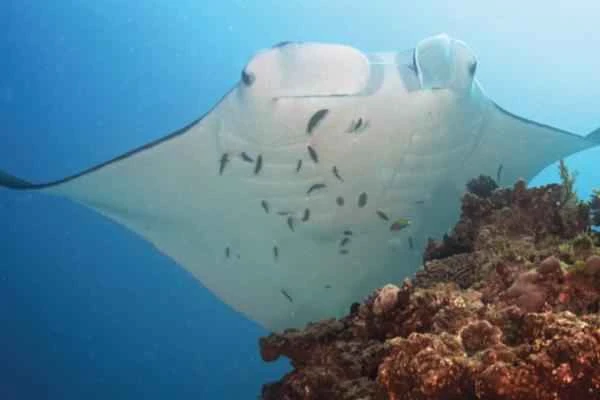
Horned manta ray (Mobula tarapacana)
Also known as the Chilean devil ray, it inhabits warm, open waters and around islands, and is capable of diving into deep water. It can reach a length of 4 meters and weigh up to 350 kilograms. It primarily feeds on small fish and plankton. Due to its extremely low reproductive rate (producing only 2 to 3 fry per year), it is listed as a vulnerable species.
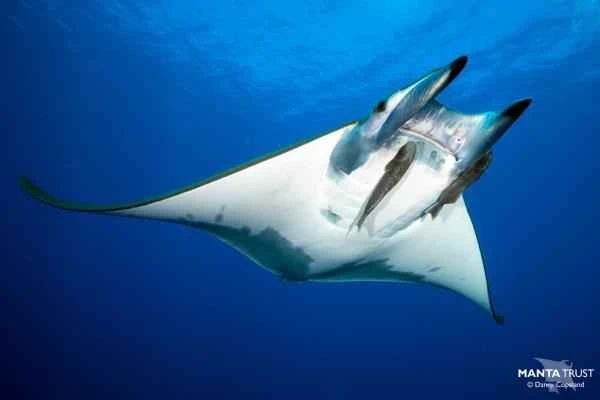
Common whiptail ray (Dasyatis pastinaca)
Distributed in the Mediterranean, Black Sea, and eastern Atlantic Ocean, it inhabits sandy and muddy seabeds and reaches a length of about 2 meters. Its disc-shaped body is covered with wart-like protrusions and protective scales. Its tail is whip-like, and its tail spines contain potent venom, serving as its defensive weapon. Stepping on it will cause severe stinging pain.
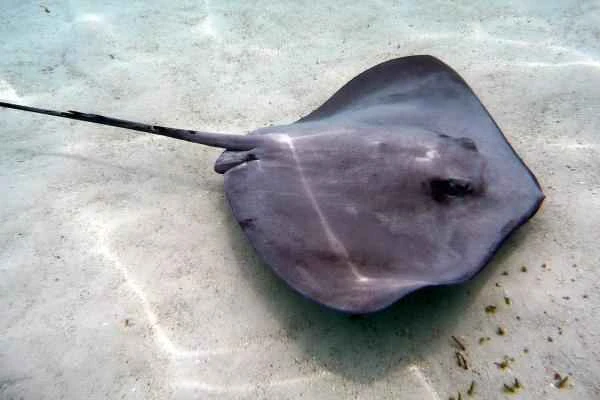
Spotted Ray (Aetobatus narinari)
It is known for its dark skin dotted with white round spots on its back, short, rounded mouth, small dorsal fin, absent caudal fin, and spines on its tail. It is mainly distributed along coral reefs. Research suggests that the spotted ray may belong to a complex species group due to its significant morphological variations.
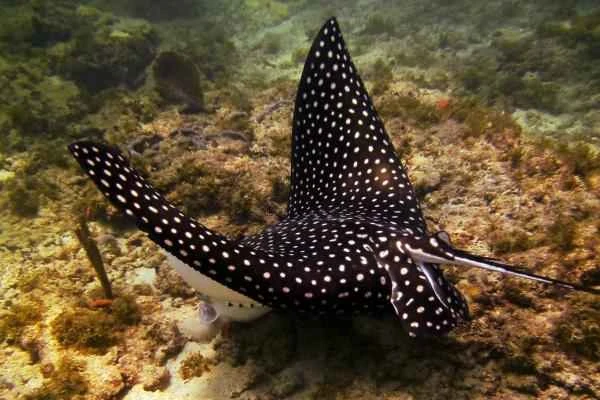
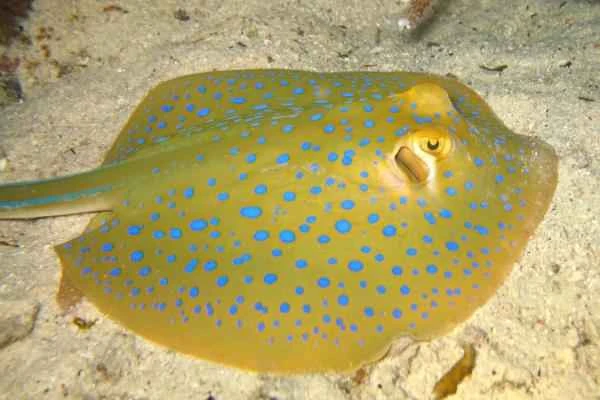
Blue-spotted ray (Taeniura lymma)
Its body is grayish-green with scattered blue spots, and it is widely distributed on the sandy bottoms of coral reefs in the Indian and Pacific Oceans. Unlike other rays, the blue-spotted ray rarely buries itself in the sand, preferring to hide in caves or coral thickets. When hunting, it digs into the substrate to find prey, traps it with its body, and swallows it whole. It has a venomous barb at the end of its tail.
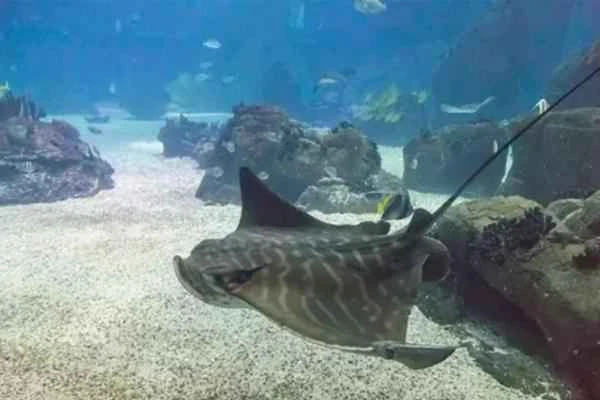
Cow Ray (Pteromylaeus bovinus)
Measuring over 2 meters in length, this species is primarily distributed in the warm coastal waters of the eastern Atlantic. Its back is brown with dark stripes, and it has a long, pointed snout. It is typically solitary or lives in small groups, feeding mainly on mollusks and crustaceans. Populations in the Mediterranean and Black Seas are gradually declining due to overfishing and bycatch.
If you would like to learn more about ray species and other wild animals, please visit our [Wildlife Classification] section.
References
Bonfil, R., based his technical reasoning for including the Chilean stingray (Mobula tarapacana) in the threatened (A) risk category, according to the Mexican Wildlife Extinction Risk Assessment Methodology.
De Jesús Gómez-García, M. and Godínez-Siordia, DE (2013). Biological and ecological aspects of the giant manta ray (Manta birostris, Walbaum, 1792).
"Immerse yourself in the enchanting world of manta rays." Accessible at: https://www.fishipedia.es/pez/type/raie
Milessi, Andrés C. and Oddone, MC (2003). "A new record of the two-snout manta ray (Donndorff 1798) (Mantarayoidea: Mophaniidae) discovered in the Río de la Plata, Uruguay."