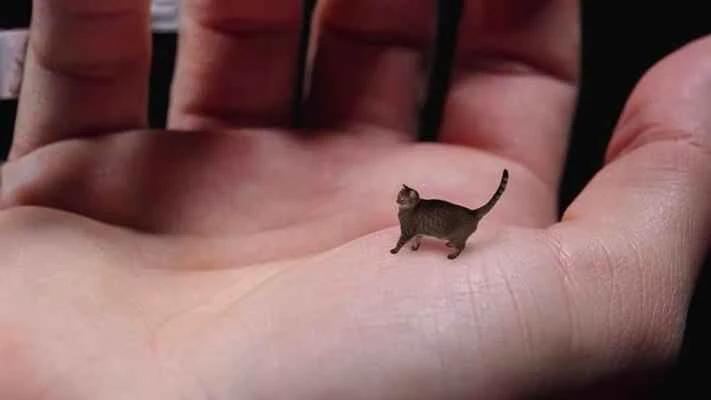
Who can resist the charm of adorable kittens? Almost no one can resist their allure. But do you know how small the smallest cat in the world is? Which breed is the most petite? Leaving aside those fictional miniature cats that are popular online and created using Photoshop, such as the "Pippo's cat," today we'll take a serious look at the top ten truly tiny cat breeds that exist in reality.
This article features several representative small cat breeds, including the Himalayan cat, Singapura cat, Black-footed cat, Rusty-spotted cat, German Rex, Devon Rex, Sand Dune cat, and Pomeranian cat. Despite their small size, each of them possesses unique characteristics and charm. What do these smallest cats in the world look like, and what makes them so special? Let's explore together!
1. Himalayan cat
The Himalayan cat is a hybrid breed developed from Siamese and Persian cats. It is gentle, intelligent, and elegant. Despite its name, it has no connection to the Himalayas; rather, it is named after an animal called the Himalayan rabbit due to its coat coloration resembling that of the Himalayan hare.
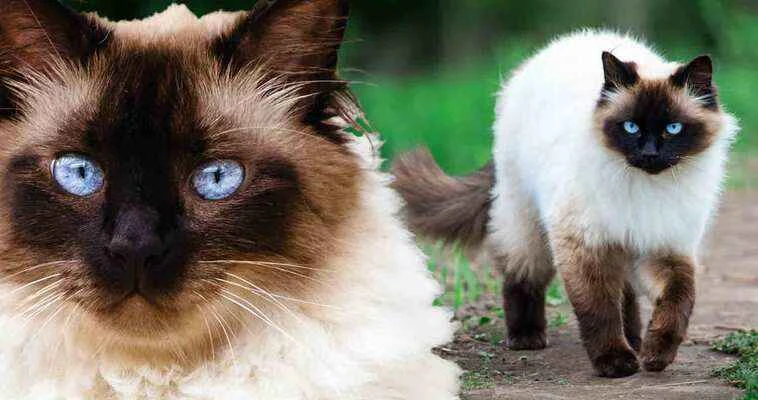
This cat combines the gentle, alluring appearance of the Persian cat with the intelligent and docile temperament of the Siamese cat. It possesses the rounded body and fluffy long fur of the Persian, while its coat color retains the characteristic pointed pattern of the Siamese, along with a pair of captivating large blue eyes—the deeper the blue, the more desirable. The Himalayan cat has a short, stocky body, short, thick, straight limbs, a broad chest, and small, delicate ears. Its overall image resembles an elegant and quiet little gentleman or lady, making it one of the most popular pet cats.
2. Singapura cat
The Singapura cat originated in Singapore and is an extremely small breed of cat, first discovered in the early 1970s. They are gentle and quiet, yet curious and agile, making them one of the most charming pet cat breeds.
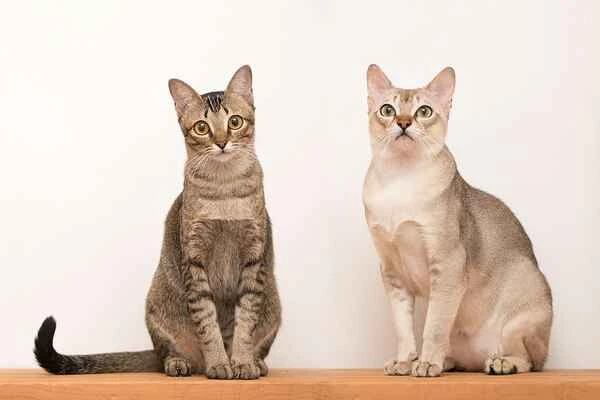
As one of the smallest domestic cats in the world, the Singapura cat typically weighs around two kilograms when fully grown, and its slender, petite size makes it especially endearing. Because it was initially not valued by local residents in Singapore, these cats often roamed the streets and even the sewers, earning them the nicknames "gutter cats" or "sewage cats." The harsh living conditions negatively impacted their physical development, contributing to their miniature size. It wasn't until 1975, when the cat was brought to the United States, that it gradually gained international attention and was formally bred and promoted.
3. Black-footed cat
The black-footed cat (scientific name: Felis nigripes ) gets its name from the black markings on its paws and is one of the smallest wild cats in the world. They weigh an average of only 1.6 kg, and their fur is between cinnamon, tan and light white, covered with black spots, with black stripes on their shoulders, and distinct black ring patterns on their limbs and tail.
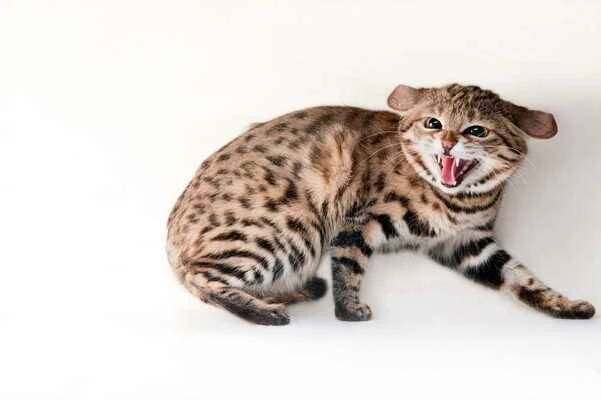
Despite their small size, these miniature cats possess extremely strong attack capabilities, capable of preying on lambs four times their size, hence their nickname "miniature cheetahs." Black-footed cats are typical nocturnal animals, resting during the day in caves or bushes and only venturing out at night to hunt.
They are mainly distributed in southern Africa, such as South Africa, Namibia, Botswana, Zimbabwe, and Angola, inhabiting open areas such as dry grasslands and savannas. Despite their small size, the black-footed cat has an amazing hunting success rate, making it a "high-powered king" among small felines.
4. Rusty-spotted Leopard Cat
The rusty-spotted cat is one of the smallest known feline species, with adults weighing less than 1 kilogram and reaching a maximum length of only 48 centimeters, about half the size of a typical domestic cat. Its small, delicate head makes it appear even more miniature. Its most distinctive feature is the unique rusty-red horizontal stripes covering its body, with a striking white stripe around its eyes, making it highly recognizable.
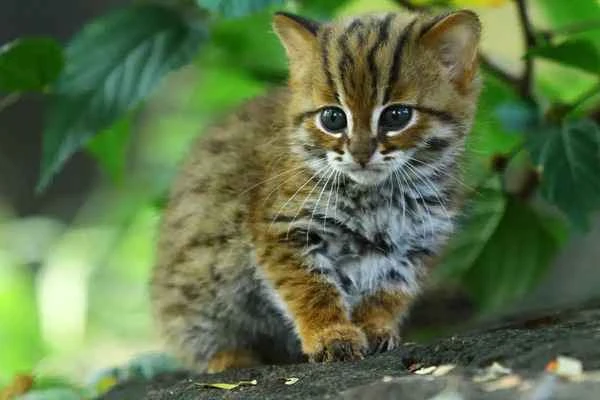
Due to their small size, the rusty-spotted cat is extremely agile, adept at climbing and jumping. They are mostly nocturnal, resting during the day in tree hollows or bushes, making them typical nocturnal animals. The rusty-spotted cat spends most of its time in trees, primarily feeding on birds and small rodents, making them nimble and alert small hunters of the forest.
5. German Rex cat
The German Rex can be traced back to 1931, but even in Germany today, this breed is quite rare. Although some variations of the German Rex have been recorded in North America, their numbers have also dwindled. The known German Rex breed was primarily established in the 1960s and officially recognized in 1968.
This cat has a unique appearance, with large, round eyes, a short muzzle, prominent cheekbones, and a pair of large, low-set ears that make it particularly noticeable, giving it an elfin-like look. The German Rex has a well-proportioned and compact body, covered in soft, slightly wavy curly fur that is delicate to the touch and irresistible to pet.
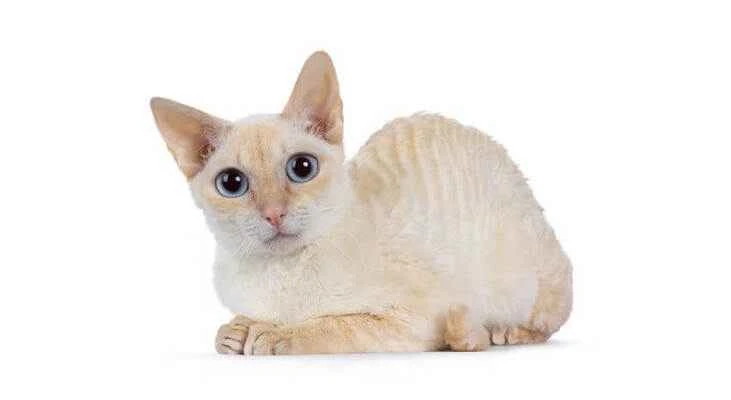
Their head structure is also highly distinctive, with a slightly tilted forehead that connects to a flat skull, forming a well-defined outline. German Rex cats are independent and, unlike other cats, don't eagerly try to please humans. Instead, they possess a more aloof and elegant demeanor, giving them a noble and mysterious feel. It is precisely this unique temperament that makes them a "noble cat" in the hearts of many cat lovers.
6. Devon Rex Cat
The Devon Rex cat, also known as the Devon King cat, Devon Imperial cat, or Devon Rex cat, is a member of the Rex cat family. This unique breed originated in Devon, England in the 1960s, first discovered near an abandoned tin mine. It is a natural variation of the shorthaired cat.
The Devon Rex cat has a slender, lean body with well-defined, strong muscles. Its limbs are long and slender, and its tail tapers gradually from the base to a sharp, flexible tip. Its neck is long and elegant, and its head is V-shaped, with high cheekbones paired with a powerful jaw, and a short, narrow muzzle contrasting beautifully with its small nose. The forehead curves slightly backward, continuing to a flat top, giving it a very three-dimensional overall profile.
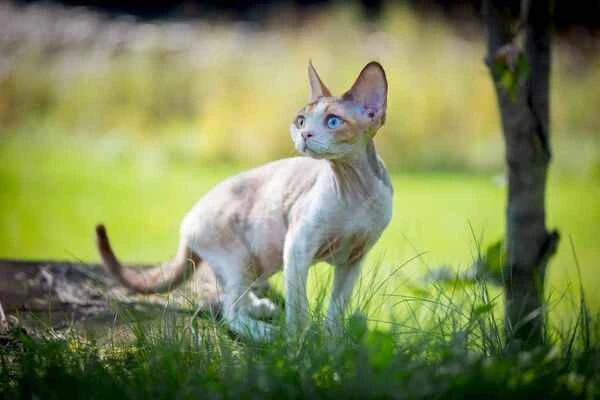
A key characteristic of these cats is their large ears—broad-set, low-hanging, and perky, giving them a playful and lively appearance, adding to their elfin charm. Their large, slightly slanted, oval eyes lend their faces an air of mystery and curiosity.
Its most distinctive feature is its unique curly coat. Like all Devon Rex cats, the Devon Rex cat has soft and elastic fur with natural wavy curls. It feels extremely smooth to the touch and has a highly recognizable appearance, making it a favorite among cat lovers.
7. Sand Cat
The sand cat (scientific name: *Felis margarita *) is one of the smallest cat species, with adults typically weighing between 2.8 and 3.5 kilograms. They have short limbs, a slightly broad head, and a pair of prominent, large ears, giving them an alert and agile appearance. Their bodies are covered in soft, dense fur, a sandy-yellow color that closely matches their habitat, and black stripes on their legs, providing excellent camouflage.
As a typical desert carnivore, the dune cat has thick pads on its paws and dense fur, which effectively insulates it from the scorching heat of the ground, allowing it to move nimbly across the sand. During the day, they usually hide under rocks or burrows to rest, avoiding the intense desert sun; they only emerge at night to hunt.
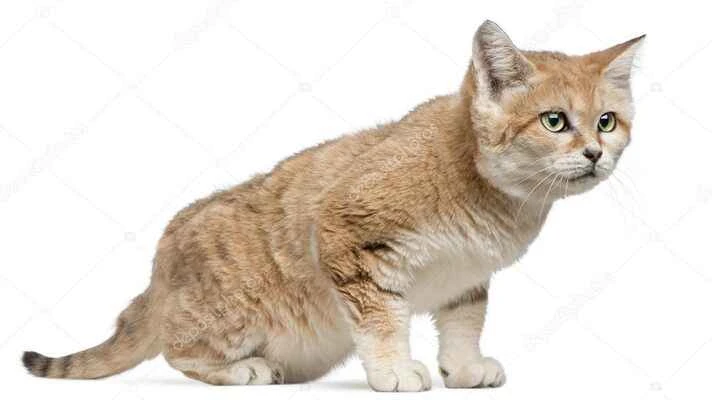
Sand cats primarily feed on small rodents, lizards, and insects, rarely drinking water and surviving almost entirely on the moisture in their prey. This species is solitary, typically living alone and only briefly congregating during the breeding season. Sand cats are mainly distributed in arid regions of North Africa, the central Arabian Peninsula, and parts of Southwest Asia, and are highly adaptable desert hermits.
8. Pomella Cat
The Pomeranian cat, also known as the silver Chinchilla cat, is a breed developed by crossing a silver Chinchilla longhair cat with a lilac Burmese cat. This breed was first created in the UK in 1981 and made its debut at a cat show in 1983, quickly attracting public attention and affection.
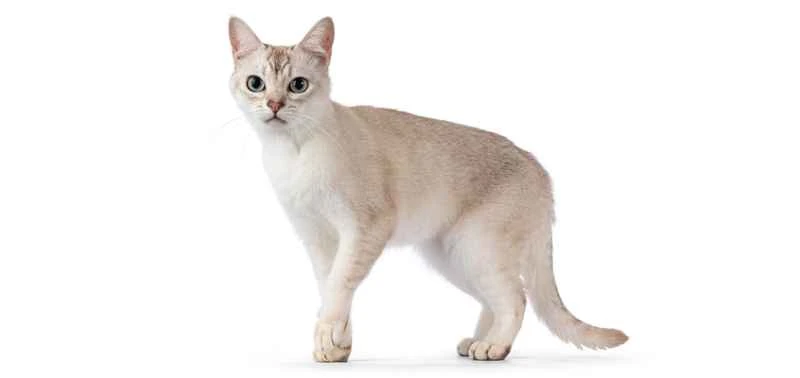
As a descendant of the Chinchilla and Burmese cats, the Bombay cat combines the best of both—possessing not only the captivating appearance of the Chinchilla but also the gentle and affectionate nature of the Burmese. Elegant in appearance and graceful in build, with a mild and friendly temperament, they are ideal companion cats. It is precisely for this reason that many people, after spending time with Bombay cats, are captivated by their charm, gradually developing a deep affection and becoming inseparable from them.
9. Oriental Shorthair Cat
Oriental Shorthair cats are lively, energetic, and adventurous. They love climbing and jumping and enjoy interacting with people. They are extremely loyal to their owners, bold, and don't show excessive fear at noises or sudden movements, displaying remarkable courage. Compared to their ancestor, the Siamese cat, the Oriental Shorthair has a more stable temperament and is less prone to mood swings.
These types of cats are particularly clingy and love to be pampered. They might even get jealous and throw a tantrum if their owners neglect them. If they spend a lot of time with their owners from a young age, their personalities will become as affectionate and clingy as dogs. Sometimes, they might even look back at you as you're about to leave or do something else, as if seeking approval or expressing their attachment.
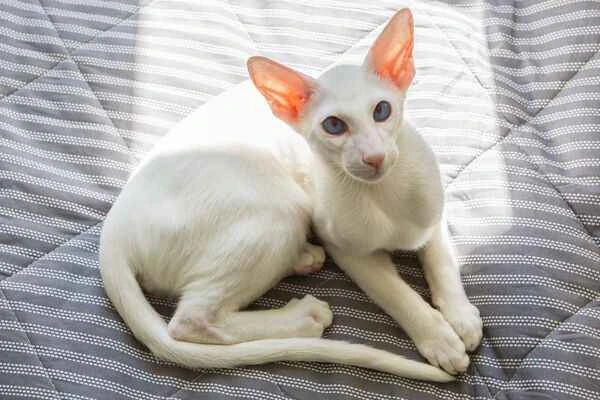
Oriental Shorthair cats are remarkably intelligent, exhibiting behaviors that often exceed our understanding of felines. They are naturally lively, seemingly always in "play mode," making them a breed that combines agility, intelligence, and individual charm.
10. Siamese cat
The Siamese cat, named after its origins in Siam (present-day Thailand), is one of the world's most famous short-haired cat breeds. They are long and slender, with well-defined muscles and graceful lines, giving them an elegant yet powerful appearance. As a popular pet cat, the Siamese not only adapts well to different climates but also possesses a lively, intelligent, and playful personality.
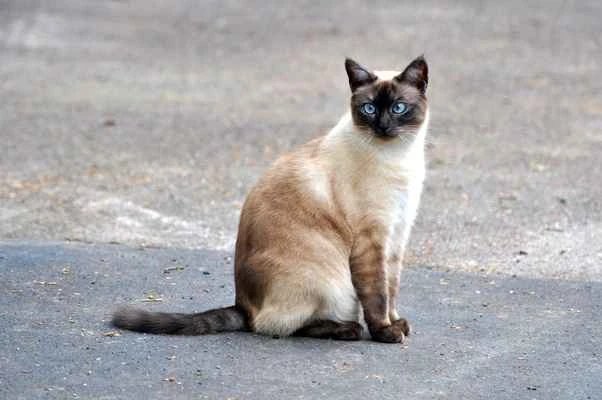
They are curious, quick-witted, emotionally rich, and very understanding. They have a close relationship with their owners and are extremely loyal. If forced to separate from their owners for extended periods, some Siamese cats may even experience depression due to emotional distress. It is precisely because of these unique traits and high adaptability that Siamese cats are beloved by cat owners worldwide.