The cuckoo (scientific name: *Cuculus canorus *), also known as the common cuckoo, is one of the most famous birds in animal behavior research. It is renowned for its brood parasitic reproductive strategy—the female lays her eggs in the nests of other birds, allowing the "foster parents" to incubate and raise the chicks. This behavior not only reflects the cuckoo's high intelligence but also prompts scientists to conduct in-depth research into the mechanisms of adaptation and counter-adaptation between hosts and parasites.
I. Main characteristics of the cuckoo
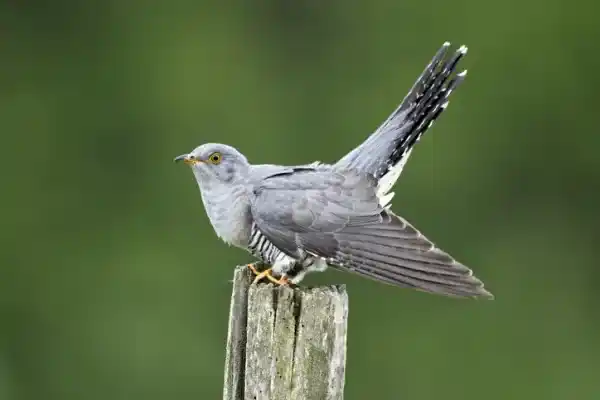
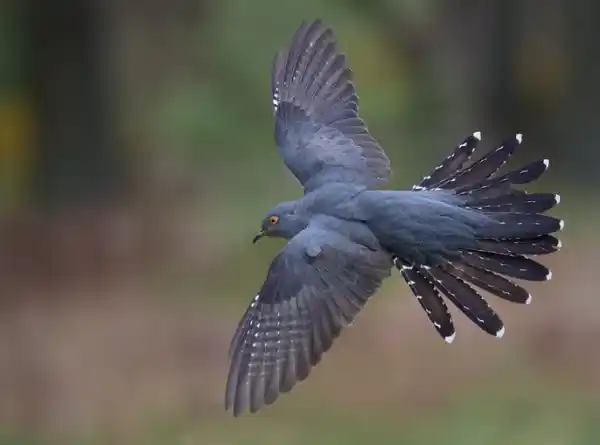
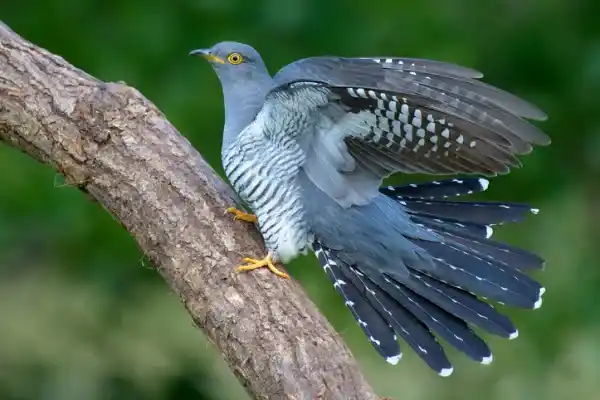
Appearance and Plumage <br />Adult cuckoos are about 25 cm in length. The male's back is coppery-brown or greyish-brown, and its belly is light grey; the female is predominantly grey. There is a clear sexual dimorphism in plumage between males and females.
Diet <br />Cuckoos primarily feed on insects, especially caterpillars and beetles; they also occasionally prey on small amphibians and will even peck at the eggs of birds smaller than themselves. Adult males are more likely to employ this "egg-eating" strategy.
Call <br />The cuckoo's call, "cuckoo-cuckoo," is highly recognizable and is the origin of its name. This call is especially frequent in spring and is an important way for the male to attract mates and declare its territory.
Migratory Habits <br/>Cuckoos are distributed in temperate and cold forests of Europe and Asia. Every autumn, they migrate to warmer regions of Africa to overwinter and return to their breeding grounds in the spring.
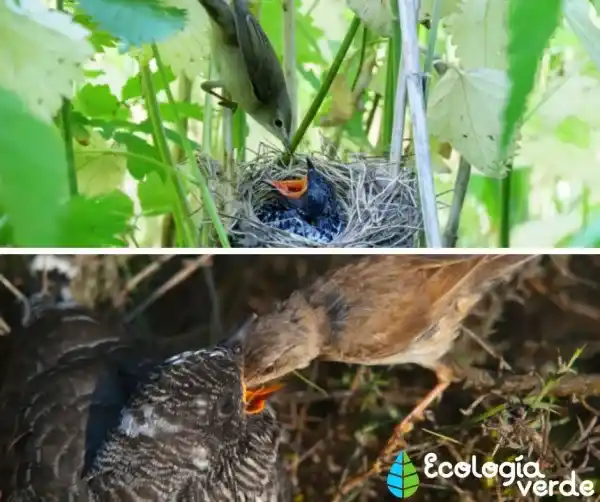
Nest parasitic breeding strategy <br/>This is the most unique characteristic of cuckoos. Female cuckoos will choose specific host species (such as warblers, willow warblers, etc.), and quickly lay their eggs in the host's nest while the host is away foraging, and remove or destroy the host's original eggs to increase the survival rate of their offspring.
II. The Cuckoo's Hatching Process
The cuckoo's nest-parasitism is an innate evolutionary strategy closely related to its incubation cycle:
Female birds typically lay eggs every 2–3 days, and each egg requires about 5 days for yolk and embryonic development before being laid.
Cuckoo eggs typically hatch faster than their host birds, meaning cuckoo chicks hatch earlier than their "adopted siblings".
Shortly after hatching (within about 10 days), cuckoo chicks will use their backs to push other eggs or chicks of the host out of the nest, thus monopolizing all food and care resources.
The host bird does not recognize the "imposter" identity of the cuckoo chick, but feeds it diligently until it is fully grown and leaves the nest.
This strategy allows adult cuckoos to free up their energy to begin migration earlier while ensuring that chicks receive high-quality care, thus improving their survival rate.
III. The Cuckoo's Habitat
The cuckoo's distribution spans three continents:
Breeding grounds : Temperate and cold regions of Europe and Asia
Wintering grounds : Sub-Saharan Africa and tropical regions
They prefer temperate and tropical woodlands, scrublands, and wetland edges because these places are more likely to provide suitable nesting sites for small birds as parasites.
Cuckoos are difficult to observe directly in the wild, due to their cautious nature and secluded habitat. However, their calls can often be heard clearly in the early morning and evening during spring and summer.
IV. Ecological Significance and Conservation Status
Ecological role : Cuckoos act as “natural pest controllers” in the ecosystem by preying on large numbers of insects (especially caterpillars that are harmful to crops).
Population status : The cuckoo population is relatively stable globally, but in some areas it is declining due to pesticide use, habitat loss and climate change.
References
Martínez, JG et al., (2009) Distribution of the common rhododendron (Cuculus canorus) and its host in the Sierra Nevada Mountains of southern Spain. National Parks Research Project: 2006-2009.
Soler, M. (2000) Can birds recognize their own chicks? Ardeola Journal, Vol. 47(2), pp. 279-286.